
Dr. Evans Kwasi Arizi, a Senior Lecturer at the University of Cape Coast (UCC) and Chair of the Technical Advisory Committee on Marine Protected Areas, has cautioned that the survival of Ghana’s recently-established first-ever Marine Protected Area (MPA) depends on an immediate pivot toward funded, data-driven management.
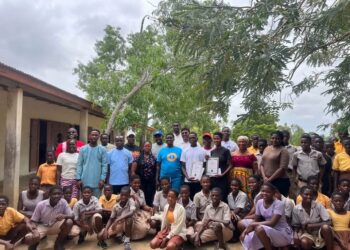
Speaking at a National Workshop in Aburi, Dr. Arizi noted that the nation’s current goal isn’t the legal designation of marine zones but preventing the “paper park” syndrome – a condition where conservation areas exist only as bureaucratic documentation while the underlying ecosystems continue to face unmitigated depletion.
Managing a protected area in this sub-region is, in the words of Dr. Arizi, both “herculean and expensive.” Unlike terrestrial parks, marine zones require sophisticated monitoring systems, regular offshore patrols, and constant data collection to be effective.
“Ghana has succeeded in establishing its first-ever MPA, but it needs to be well managed, especially in our part of the world. This is where collaboration among government institutions, development partners, researchers, and other stakeholders becomes very important”
Dr. Evans Kwasi Arizi, Senior Lecturer at the University of Cape Coast
The core of the lecturers’ concern lies in the practical reality of West African maritime governance. For the Department of Fisheries and Aquatic Sciences (UCC) and its partners, the successful establishment of the MPA was merely the first phase. The current priority is to build a collaborative, well-resourced management system.

The most significant strategic development that arose from the deliberations in the Eastern Region was the quantification of the MPA roadmap. Historically, conservation efforts in the region have often failed due to a lack of clear budgetary allocation.
To counteract this, the Technical Advisory Committee and workshop participants refined an existing roadmap that assigns specific, estimated budgets to every key management activity, “fiscalizing” the roadmap to move beyond abstract policy goals and provide a concrete financial plan that can be presented to international funding organizations and development partners.
This move toward budgetary transparency is designed to make the MPA initiative a “bankable project for organizations interested in marine conservation and fisheries sustainability.” When activities such as monitoring, stakeholder engagement, and implementation are clearly costed, it allows donors to see exactly where their support will be utilized.
According to Dr. Arizi, this level of technical detail is a prerequisite for attracting the “sustained support” necessary to keep the MPA from becoming an empty legal gesture. The quantification of these activities reflects a sophisticated approach to Marine Spatial Planning, where resource allocation is as much about financial planning as it is about environmental science.
Marine Spatial Planning
The integration of Marine Spatial Planning (MSP) and data collection was a primary focus of the three-day workshop, as participants utilized the platform to make technical inputs into the roadmap, ensuring that the management framework is built on a foundation of rigorous data.
This data-centric approach was essential for identifying the specific needs of the MPA, from mapping biodiversity hotspots to understanding the movement of local fish stocks. The refinement of the roadmap ensured that the MPA is not an isolated conservation project but a functional component of Ghana’s wider maritime strategy.
The collaborative nature of the workshop – bringing together government agencies and scientific bodies – was a nod to a more unified institutional front. Dr. Arizi emphasized that the roadmap is a living document that requires constant refinement based on practical recommendations.
He argued that this “active management” philosophy is what will distinguish a functioning MPA from a “paper park.” By continuously updating the roadmap with stakeholder input, the Technical Advisory Committee ensures the initiative remains responsive to the evolving challenges of Ghana’s marine environment.
At the heart of the push for a funded MPA is the recovery of Ghana’s fish stocks. The Ministry of Fisheries and Aquaculture Development (MoFAD) and the academic community view the Marine Protected Area as an essential fisheries management tool.
When properly managed, these zones act as biological engines, providing a safe haven for fish to spawn and replenish their populations, which in turn supports the surrounding fishing grounds. However, this biological success is entirely dependent on the rigor of the management measures applied.
Dr. Arizi noted that the MPA must be combined with other fisheries management strategies to be truly effective, adding that the cost of allowing the MPA to fail would be catastrophic for Ghana’s blue economy. A failed MPA would not only represent a waste of institutional effort but would also signify a missed opportunity to stabilize a critical food resource.
The workshop’s focus on “practical recommendations” and “long-term sustainability” underscored the high stakes of the project. For the Technical Advisory Committee, the success of this initiative is a test of Ghana’s ability to manage its natural resources with a high degree of technical and fiscal professionalism.

Ghana has done the work of establishing the territory; now it must fund the defense. With a costed roadmap in hand and a collaborative framework in place, the path forward is clear. The transition from a “paper park” to a functioning marine sanctuary is a fiscal and operational race that the state cannot afford to lose.
As Dr. Arizi and the Technical Advisory Committee have demonstrated, the real challenge has only just begun.