UK government has unveiled sweeping reforms designed to make higher education more flexible and accessible, allowing adults balancing work, childcare and other responsibilities to access new routes into study under a modernised student finance system.
From September 2026, learners will be able to use government-backed funding not only for traditional three-year university degrees but also for shorter, modular courses.
This move marks a major shift in the structure of higher education in UK, with the government aiming to better align study opportunities with modern working and family life.
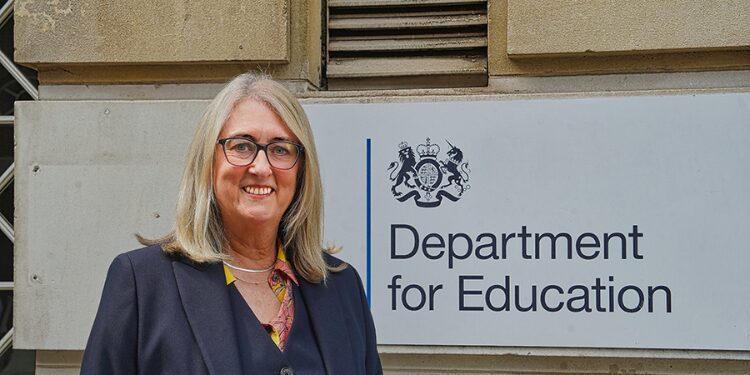
According to Skills Minister Jacqui Smith, “Financial support should be available whether you want to do a degree, take a short course, or retrain later in life. Our changes will make that happen, with the option to access student finance at any stage of life.”
“Whether it’s fitting study around a job, retraining for a completely new career, juggling childcare, or getting qualifications later in life, the new Lifelong Learning Entitlement will open up new opportunities for thousands more people to build the careers they want and get on in life.”
Jacqui Smith
The government has confirmed the first 130 universities and colleges approved to deliver the new flexible courses under the reformed system. Applications for the modules will open this September, giving prospective students the chance to begin planning study pathways that can be completed in stages over time.
The reforms form part of the Lifelong Learning Entitlement, a flagship policy set out in last year’s Post-16 Education and Skills White Paper. It is intended to replace the long-standing expectation that higher education must be completed in one continuous period after school or college.
According to the government, the traditional model has excluded many people who are unable to commit to full-time study because of financial pressures, caring responsibilities, or the need to remain in employment. Under the new system, learners will be able to “stack” qualifications over time, building credits towards full awards while studying at their own pace.
The approved modules will focus on areas where the UK faces acute skills shortages, including computing, engineering, architecture, economics, and health and social care. Officials emphasised that this approach is designed to ensure education provision is more closely aligned with labour market demand and to support long-term economic growth.
The reforms are also tied to the government’s wider ambition for two-thirds of young people to be in a “gold-standard” apprenticeship, higher technical training or university by age 25. The government noted that the changes will help reduce the number of young people not in education, employment or training while strengthening national productivity.
The government further maintains that the changes will make the education system more inclusive, flexible and better aligned with the needs of a rapidly changing economy.
Flexible Student Finance System to Expand Lifelong Learning Access
Additionally, under the new Lifelong Learning Entitlement framework, students will be able to draw on funding equivalent to four years of post-18 study, currently valued at up to £39,160, which can be used flexibly across full degrees, shorter courses, or new modular programmes throughout their working lives.
Eligible students will also be able to access maintenance support to help with living costs, while funding will be issued in smaller amounts linked to the size of each course rather than solely through traditional academic-year payments.
People who already hold a degree may still be eligible, either by using remaining entitlement in their student finance ‘pot’ or by retraining in priority subject areas aimed at addressing skills gaps in the economy.
Reacting to the reforms, the National Union of Students and higher education leaders welcomed the shift toward flexible lifelong learning.
Alex Stanley, National Union of Students Vice President, noted that, “Everyone should be able to study in the way that works best for them,” adding, “For some that is going to university at 18, for others a changing job market might mean getting new qualifications at 40.”
“We welcome the flexibility that the Lifelong Learning Entitlement allows, especially through the modular study. Higher education plays a vital role in our society, and we hope that this funding shift will allow more people to study, gain new qualifications and invest in their future.”
Alex Stanley,
Moreover, Professor Dave Phoenix, Vice-Chancellor of The Open University, indicated that the institution has long led the way in flexible learning by supporting students to study in ways that suit their circumstances.
He added that the Lifelong Learning Entitlement offers a major chance to reshape post-18 education for the modern era, making it more aligned with how people today balance living, learning, and working.
“It has the potential to truly stimulate lifelong learning, by enabling institutions to build more flexible, modular pathways both into and through higher education, enabling people to train, retrain and upskill throughout their lives.”
Professor Dave Phoenix
He added that, “realising that potential will depend on ensuring the system works in practice for learners, employers, and further and higher education providers alike and requires providers to challenge themselves as to what the future could look like.”
READ ALSO: Xi, Trump Claim Progress In Stabilizing U.S-China Relations