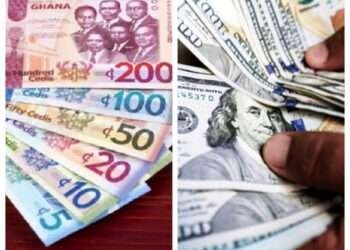
Ghana’s public debt dynamics presented a mixed picture at the close of 2025, as fresh data revealed a marginal rise in domestic borrowing even while the country’s overall debt burden declined.
According to the latest Summary of Economic and Financial Data, total public debt fell to GH¢641 billion, reflecting a notable improvement in fiscal stability. However, domestic debt edged upward to GH¢333.8 billion, signaling continued reliance on the local market to finance government obligations.
The figures, released by the Bank of Ghana, highlight a delicate balancing act in public debt management. While authorities made progress in reducing total liabilities, the structure of the debt stock indicates shifting pressures between external and domestic sources.
Overall Debt Burden Eases
Ghana’s total debt stock declined from GH¢726.7 billion recorded in 2024 to GH¢641 billion at the end of 2025. This marks one of the most significant nominal reductions in recent years and suggests that fiscal consolidation efforts are beginning to yield measurable results.
Equally important was the improvement in the debt-to-GDP ratio, which slowed sharply to 45.3 percent from 61.8 percent the previous year. This ratio is widely used by investors and global financial institutions to assess a country’s capacity to manage its debt relative to the size of its economy. The latest reading signals stronger sustainability and a reduced risk profile.
Data trends further show that the debt stock declined steadily between November and December 2025, reinforcing confidence that the reduction was not a statistical anomaly but part of a sustained fiscal adjustment.
Domestic Debt on the Rise
Despite the broader improvement, domestic debt increased marginally to GH¢333.8 billion. Analysts note that this rise reflects the government’s continued dependence on the local bond and treasury markets to finance budgetary needs and refinance maturing obligations.
Domestic borrowing is often considered less vulnerable to foreign exchange shocks because it is denominated in local currency. However, it can exert pressure on interest rates and reduce credit availability for private sector borrowers if not carefully managed.
Compared to December 2024 levels, the latest figures show a noticeable uptick in local debt accumulation. Market watchers say this pattern underscores the need for a balanced borrowing strategy that supports fiscal operations without crowding out private investment or straining liquidity in the financial system.
External Debt Holds Steady
Ghana’s external debt stood at $29.4 billion, according to the central bank’s data release. While foreign liabilities remain substantial, they did not experience the same upward movement as domestic obligations.
Some analysts interpret this as a sign that Ghana is cautiously limiting new foreign borrowing, especially in a global environment characterized by high interest rates and tighter credit conditions. External debt typically carries exchange rate risks, making it more expensive to service when the local currency weakens.
Cedi Appreciation Plays a Role
Financial analysts attribute much of the decline in overall debt to the Ghanaian cedi’s strong appreciation during 2025, particularly in the final quarter of the year. Currency gains reduce the local currency value of external debt, easing repayment burdens and improving headline debt figures.
The stronger cedi also reflects improved investor confidence, better foreign exchange management, and supportive macroeconomic conditions. These factors collectively helped stabilize public finances and contributed to the reduction in total liabilities.
Expanding Economy Strengthens Metrics
Economic expansion also played a crucial role in improving Ghana’s debt indicators. Updated figures from the Ghana Statistical Service show that the country’s economy is now estimated at GH¢1.4 trillion, a substantial increase from GH¢1.1 trillion recorded during the same period in 2024.
A larger economy naturally improves debt ratios by increasing the denominator used in key sustainability metrics. This growth signals rising productivity, stronger sectoral performance, and expanding economic activity across industries.
The revised GDP estimate strengthens Ghana’s macroeconomic outlook and provides a firmer foundation for fiscal planning and debt management.
Credit Rating Implications
The improving debt metrics could influence Ghana’s next sovereign credit rating review by international agencies. Ratings firms closely monitor debt sustainability, fiscal discipline, and macroeconomic resilience when assessing a country’s creditworthiness.
Analysts believe the combination of declining total debt, stronger currency performance, and expanding GDP presents a positive narrative that may enhance investor sentiment. A favorable rating adjustment could reduce borrowing costs, attract foreign investment, and support broader economic recovery.
Even with encouraging signs, economists caution that the rise in domestic debt requires careful monitoring. Sustained increases in local borrowing can elevate interest obligations and complicate monetary policy efforts.
Policymakers are therefore expected to maintain prudent fiscal controls while pursuing strategies that stimulate growth and protect macroeconomic stability. Strengthening revenue mobilization, improving expenditure efficiency, and diversifying financing sources remain central to long term sustainability.
READ ALSO: Bears Finally Prevail at GSE as Market Records 7 Losers