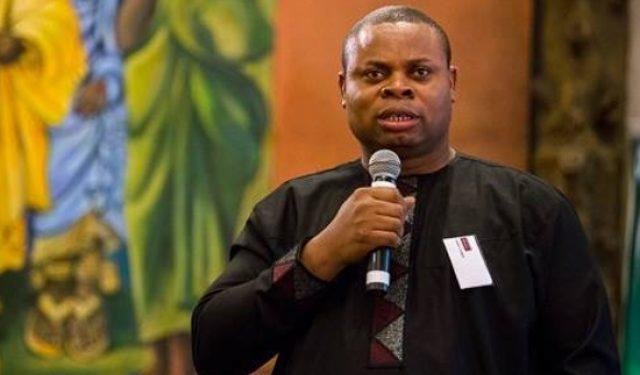
Franklin Cudjoe, a renowned policy advocate and the President of the IMANI Centre for Policy and Education, has commended the Ghana Gold Board (GoldBod) for its high international standing while simultaneously raising concerns over a perceived dip in standards regarding local dealings.
The policy advocate highlighted a disconnect between the agency’s globally recognized professional ethics and its recent involvement in local sponsorship arrangements that have sparked public debate.
“Many of GoldBod’s dealings with international partners, prospective and substantive have been above board, professional and ethical.”
Franklin Cudjoe

By contrasting the CEO’s “professional and ethical” conduct abroad with controversial domestic decisions, Cudjoe suggests that the institution risks its hard-earned reputation if it continues to align with “local champions” in ways that deviate from its core excellence.
This critique comes on the heels of an alleged sponsorship scandal involving Stan Dogbe, currently the Deputy Chief of Staff, which has put GoldBod’s partnerships, procurement and promotional activities under intense scrutiny.
Cudjoe expanded on his observations by noting that international partners have frequently expressed how “impressed they were of the CEO’s effectiveness,” specifically citing his refusal to solicit “deals or percentages” and his commitment to self-funding official travel for investment discussions.
He however, expressed his disappointment in the board’s local deals. “So, l really wonder why Goldbod should be seen to lowering standards for some local champions whether in terms of sponsorships or procuring office ware,” Franklin Cudjoe bemoaned.
Such a high level of integrity, described by multinational principals as “rare in Africa,” has been the bedrock of GoldBod’s “gold standard” on the global stage.
The IMANI boss warned that venturing into questionable local sponsorships or lowering the bar for office-ware procurement threatens to “reset” the agency’s progress in the wrong direction.
The Risk of Diluted Standards

The extractive sector is built on trust, and any shift toward “lowering standards for some local champions” can have a ripple effect on investor confidence.
When a state entity like GoldBod, which is mandated to oversee and regulate the nation’s most precious mineral, becomes embroiled in “alleged sponsorship scandals,” it creates a perception of political interference.
Analyst suggests that these local deals, particularly those involving high-ranking political figures like the Deputy Chief of Staff, may lead to a “scandal-weary” investment climate.
By straying from the “above board” dealings that defined its rise, GoldBod risks signaling to the international community that its internal controls are porous when faced with local political pressures.
Dented Operations and Global Credibility
Operational integrity is the currency of the mining industry, and the current controversy threatens to devalue GoldBod’s brand.
Reports indicate that the “procuring of office ware” and other administrative expenditures are being viewed through a lens of skepticism, potentially overshadowing the CEO’s earlier successes.
If the agency is seen to be “lowering standards,” it could lead to increased scrutiny from international anti-corruption watchdogs and financial partners who once lauded its “professional and ethical” framework.
This domestic friction acts as a drag on the agency’s ability to focus on its primary mandate: maximizing national benefit through the gold value chain.
Restoring the Gold Standard

To move forward, the IMANI President insisted that Ghana Gold Board must “reestablish the gold standard” by separating its regulatory duties from political optics.
The call for a “reset” is a demand for a return to the “substantive and above board” dealings that initially earned the respect of multinational groups.
For a policy advocate like Cudjoe, the issue is not just about a single sponsorship but about maintaining the structural integrity of a key national asset.
GoldBod must ensure that its domestic operations reflect the same “professional” rigor it displays at international forums, ensuring that “local champions” do not become the Achilles’ heel of an otherwise stellar African success story.
READ ALSO: EA Launches Nuclear Energy Programme to Support Ghana’s Energy Future