
The National Steering Committee (NESC) on E-Commerce and Digital Trade has recently concluded a high-stakes, two-day operational summit in Accra, marking the formal end of “policy dialogue,” and the beginning of aggressive industrial execution.
Led by Madam Stella A. Ansah, Director of the Foreign Trade and Negotiations Directorate at the Ministry of Trade, Agribusiness and Industry (MoTAI), the committee moved to institutionalize the 2026 National E-Commerce and Digital Trade Work Plan.
This strategic pivot is designed to dismantle the physical and regulatory barriers that have historically limited Ghanaian MSMEs to local markets, instead positioning them as digital-first competitors within the AfCFTA framework.
“We have started well… but after this meeting, we must go beyond talking and start real implementation. When we meet, we should be discussing the impact we have made. We must adopt a results-oriented approach, avoiding the tendency of prolonged discussions without concrete outcomes”
Madam Stella A. Ansah, Director of the Foreign Trade and Negotiations Directorate at MoTAI
For the Ministry, the 2026 Work Plan is the digital nervous system of the progressing 24-Hour Economy, since digitizing trade flows means that the buy and sell cycle no longer pauses at sundown or at physical border crossings.
Madam Ansah, speaking on behalf of the Ministry’s Chief Director, delivered a blunt mandate to the assembled regulators, private sector titans, and development partners: the era of talking is over. The focus has shifted entirely to “measurable impact,” and the “tangible action,” required to move Ghanaian goods through global digital pipelines.
MoTAI revealed that the most immediate and ambitious target of the 2026 Work Plan is the formal onboarding of 2,000 Micro, Small, and Medium Enterprises (MSMEs) onto specialized e-commerce platforms.
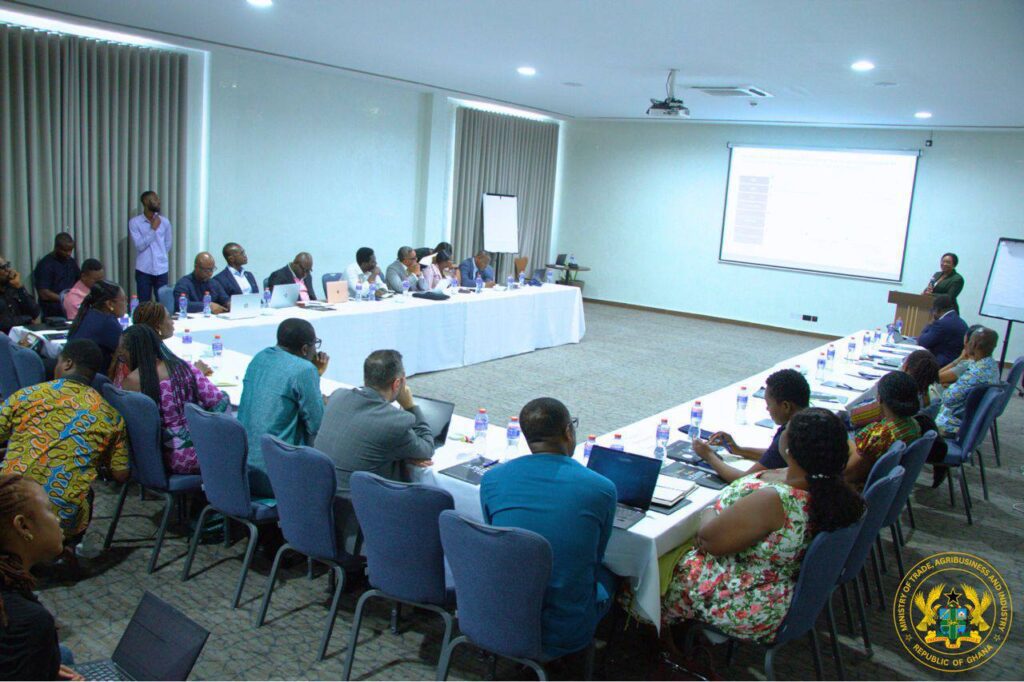
Presented by Eric K. Asamoah, a Senior Trade Officer at the Ministry, this intervention is to bridge the digital divide that currently keeps high-quality Ghanaian products – from processed agribusiness goods to locally fabricated machinery – off the global radar.
The government aims to democratize export potential by providing these firms with the digital tools, invoicing flows, and marketplace structures necessary to compete. This onboarding process will be supported by the establishment of Regional E-Commerce Resource Centres, which will serve as physical hubs for digital literacy and technical support.
According to Mr. Asamoah, these centres are the “last-mile of the Ministry’s digital strategy,” ensuring that a furniture maker in Sokoban or a kente weaver in Bonwire has the same access to global customers as a tech firm in East Legon.
He emphasized that the goal is to “boost MSME competitiveness,” by integrating them into a seamless ecosystem of digital payments, logistics, and cybersecurity.
Logistics Revolution
The NESC meeting featured critical insights from Jumia Ghana, highlighting the “implementation realities” of the Ghanaian landscape. To address these operational challenges, the 2026 Work Plan prioritizes the enhancement of last-mile delivery networks and the expansion of broadband access to rural industrial zones.
This infrastructure push ensures that the country’s industrialization programs are supported by a logistics backbone that can handle the increased volume of domestic and trans-border trade. The committee also engaged with Boston Consulting Group (BCG) to align these local efforts with global best practices.
The consensus was clear: Ghana must move beyond “basic” e-commerce and embrace the full Digital Trade Protocol of the AfCFTA.
This includes the development of Cross-Border Payment Systems that eliminate the friction of currency conversion and high transaction fees, creating a frictionless financial corridor that allows Ghanaian entrepreneurs to receive payments as easily from Lusaka or Nairobi as they do from Kumasi.

“The work plan is anchored on six strategic outcomes, including strengthening the policy and regulatory environment, enhancing digital infrastructure, improving MSME participation in e-commerce, facilitating trade logistics, reinforcing data governance, and ensuring effective coordination”
Ministry of Trade, Agribusiness and Industry
Digital Identity and Continental Integration
MoTAI added that one of the most technically significant sessions of the summit involved ODI Global, which audited Ghana’s Digital Identity System and its readiness for continental integration.
Citing identity as the currency of trust in digital trade, the 2026 Work Plan includes a robust framework for Data Governance and Consumer Trust, ensuring that Ghanaian digital marketplaces are secure, transparent, and compliant with international standards.
This “trust architecture” is essential for attracting large-scale investment into the nation’s digital trade infrastructure.
The Co-Chair of the meeting, Mr. Emmanuel Ofori, urged stakeholders to develop “realistic and sustainable financing models,” to support these technological leaps, noting that the transition to a digital trade economy requires a collaborative funding approach between the state and private sector players.
As the committee entered breakout sessions, the focus remained on defining institutional roles and timelines, as MoTAI made it clear that the strategic direction for the year is practical execution, and every institution will be held accountable for its role in the digital rollout.
As the 3rd National Steering Committee Meeting concluded, the roadmap for Ghana’s digital future was no longer a matter of debate, with the 2026 National E-Commerce and Digital Trade Work Plan now an active operational document.
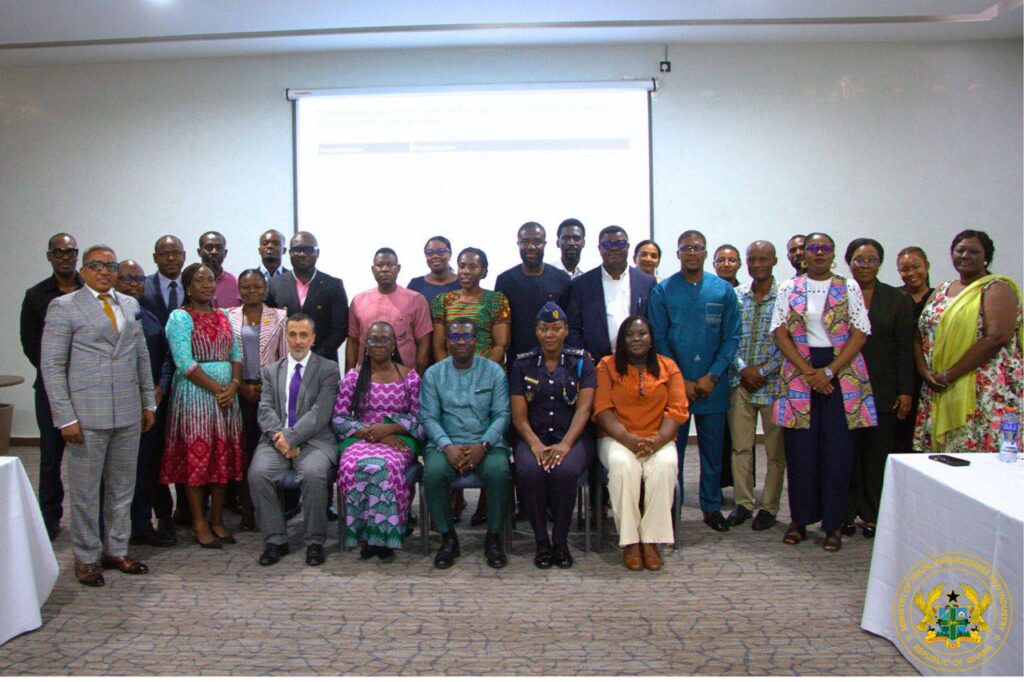
From the onboarding of the first 2,000 MSMEs to the expansion of regional broadband, the “practical execution” phase has officially begun, and Madam Stella Ansah’s warning to move beyond “talking” has become the mantra of the digital trade ecosystem.
The Ministry of Trade, Agribusiness and Industry has positioned digital trade not as a luxury, but as the primary vehicle for the Accelerated Export Development strategy.
By securing the digital identity of the Ghanaian trader and the physical delivery route of the Ghanaian product, the state is building a resilient, modern economy that is fully integrated into the African story of transformation.
READ ALSO: Chamber of Mines Champions Sustainable Mineral Development at ‘Mining Masterclass’