Explosive threats in Sudan and Ethiopia have sparked alarm about their capacity to endanger civilians in both post-conflict and active war zones.
Recently, the United Nations Mine Action Service (UNMAS) warned of the adverse effect associated with explosive threats. This warning comes as limited humanitarian funding makes it more difficult for post-conflict countries to secure attention and resources.
Unexploded ordnance from Ethiopia’s civil war continues to threaten communities across affected regions, and in Sudan, the ongoing conflict since April 2023 has led to increasing explosive contamination, especially in urban areas where civilians are exposed to hazardous remnants in homes, infrastructure, and public spaces.
Rob Syfret, Head of the UN Mine Action Programme in Ethiopia, stated that civilians continue to face significant danger and warned that Ethiopia risks being overlooked as a “forgotten post-conflict” country.
He emphasized that as global attention shifts elsewhere, countries recovering from conflict remain vulnerable to renewed instability and noted that neglecting these nations can lead to renewed conflict and cited the widespread devastation and explosive contamination left by the 2020-2022 civil war.
Ethiopia’s Post-Conflict Recovery at Risk Amid Growing Explosive Threats
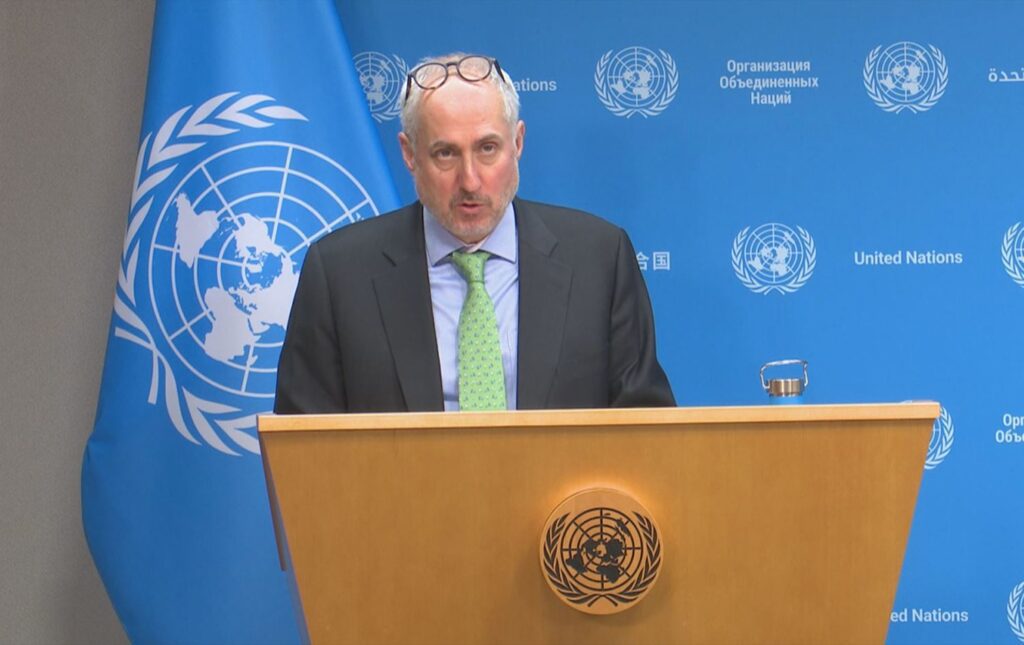
The Chief of the UN Mine Action Programme in Ethiopia reported findings based on firsthand observation and stated that recent field visits confirm that civilians continue to live near unexploded ordnance and deteriorating artillery stockpiles, which are dangerously stored within populated areas.
As the largest country in the Horn of Africa, renewed conflict could create instability across a vast region, from the Red Sea to the borders of Egypt, Libya, Chad, the Central African Republic, the Democratic Republic of Congo, Uganda, and Kenya. “There are many crises in the world today that are taking up attention and resources. But neglecting countries on the path to peace will result in them sliding back to war,” he noted.
The civil war that took place from 2020 to 2022 across northern Ethiopia left widespread contamination, with explosive remnants of war still killing and injuring civilians years after hostilities formally ended under the Pretoria Agreement.
Syfret also disclosed that resources for clearance operations are steadily declining as international attention shifts to more visible global crises.
“Some resources must be dedicated to prevention, and removing and destroying explosive remnants of war is essential. This prevents their conversion into IEDs, their repair and reuse as weapons, and the fear they cause in communities. Such fear undermines prospects for peace and can fuel hatred and a desire for revenge when loved ones are lost. One casualty affects an entire family. Children are the most common victims, and when they are injured, women, mothers, and sisters are disproportionately impacted as caregivers, often becoming even more confined to domestic duties.”
Rob Syfret
Syfret further emphasized that explosive contamination is both a humanitarian issue and a significant barrier to development and explained that clearance is essential for achieving nearly all Sustainable Development Goals in affected areas.
Sudan’s Urban Warfare Drives Rapid Expansion of Explosive Threats

Mohammad Sediq Rashid, Chief of the UN Mine Action Programme in Sudan, described a rapidly worsening crisis in Sudan, where the conflict that began in April 2023 has turned urban areas into hazardous zones contaminated with explosive remnants.
He identified Khartoum as the centre of a devastating war that has lasted nearly two years, emphasising that Sudan remains “a deeply underreported crisis” despite experiencing one of the world’s largest displacement emergencies.
“In Khartoum, explosive hazards are widespread, found in homes, on roads, in schools, in hospitals, across critical infrastructure, often mixed with rubble. In addition, a landmine threat has emerged, with seven minefields identified so far in the city. As families begin to return, they are doing so into a highly dangerous environment, often without awareness of the risks. In Darfur, the situation remains extremely concerning. Al-Fasher has endured sustained shelling for over 500 days, leaving extensive contamination and continued risk to civilians.”
Mohammad Sediq Rashid
Rashid further warned that the conflict remains active and is intensifying in many areas. Ongoing use of heavy weapons and unmanned aerial systems continues to increase contamination daily and estimated that “around 14 million people are at risk from explosive hazards,” including civilians, returnees, and humanitarian workers.
Humanitarian access is severely restricted and explosive ordnance is now one of the “most significant threats to safe humanitarian access,” limiting aid workers’ ability to move, deliver assistance, and operate safely.
READ ALSO : Sudan’s Clinics on the Brink of Medicine Shortages