
The Minister for Roads and Highways, Hon. Kwame Governs Agbodza, has announced that construction of the long-anticipated Accra-Kumasi Expressway is expected to begin by June 2026, marking a major step forward in Ghana’s infrastructure development agenda.
According to the minister, preparatory work on the project has reached an advanced stage, with key technical assessments already completed. He explained that the government is now moving toward finalising detailed designs to pave the way for contractors to commence work within the projected timeline.
“We have surveyed about 200 kilometres now from Accra to Kumasi. That is done. So we know the alignment and the coordinates,” he stated, confirming that the initial phase of studies has been successfully concluded.
The expressway, a flagship initiative under the government’s broader infrastructure programme, is designed as a high speed corridor linking Ghana’s political and commercial capitals. The completion of feasibility studies and route alignment represents a critical milestone in the project’s development.
Hon. Agbodza noted that the alignment process was particularly important because the road is being developed as a greenfield project. This means the route is being created from scratch rather than expanding an existing road network.
He explained that determining the path of the road required careful planning to minimise disruption to communities while ensuring efficiency in travel.
“We are avoiding communities as much as possible because the character of this road is not to link little communities. It is supposed to create uninterrupted access between Accra and Kumasi”.
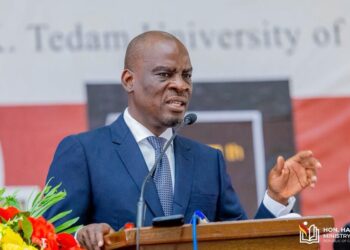
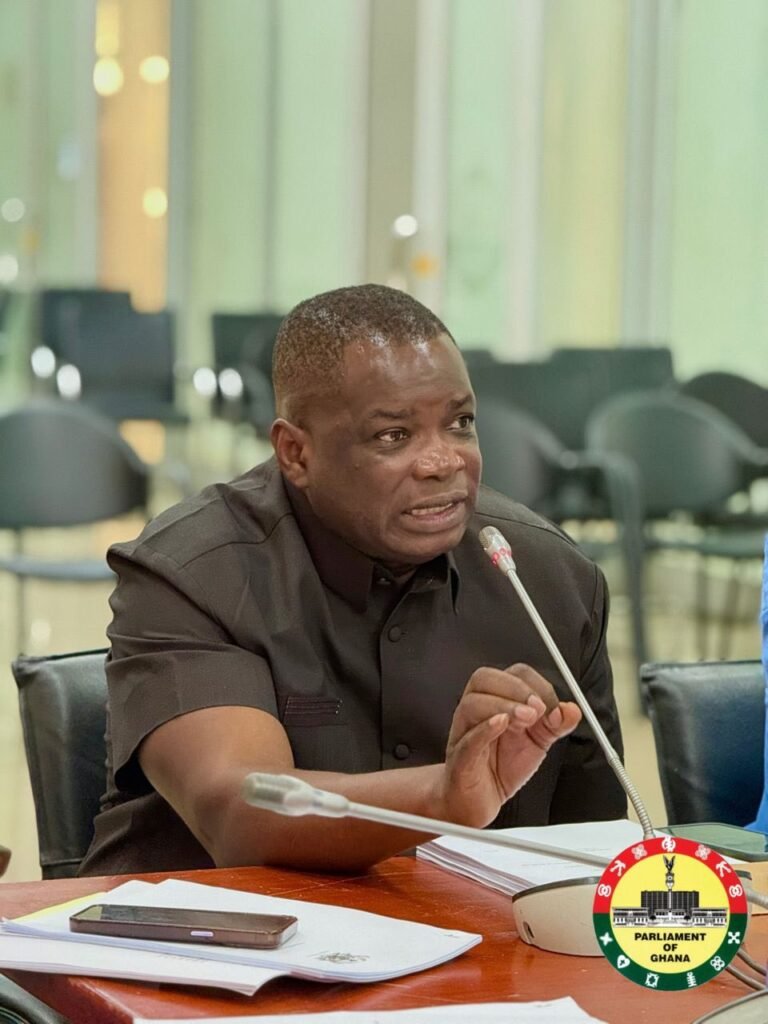
Minister for Roads and Highways, Kwame Governs Agbodza
The focus on uninterrupted movement reflects the project’s goal of significantly reducing travel time between the two cities while improving safety and efficiency.
Collaboration with Ghana Armed Forces
As part of the next phase, the Ministry is seeking technical support from the Ghana Armed Forces, particularly in addressing challenges related to land acquisition and right of way.

The minister disclosed that he would formally engage the Acting Defence Minister, Dr Cassiel Ato Forson, to secure the necessary collaboration. He highlighted the expertise of the military’s engineering units as a valuable resource for the project.
“The military has an engineering regiment who are also an expert in doing some of these things. So we will collaborate with them,” he noted. This partnership is expected to help resolve complex logistical issues, including surveying, land demarcation, and infrastructure support, thereby ensuring that the project progresses without unnecessary delays.
A key component of the project involves acquiring land along the designated route. The government is expected to issue an executive instrument to formalise the acquisition process, after which affected property owners will be compensated.
Hon. Agbodza emphasised that compensation will be handled fairly and transparently, covering all individuals and entities impacted by the project.
“When you determine where the road will pass, you need to apply for an executive instrument to acquire such areas. Then you determine what is there, whether it is a farm or a house. Everybody who ought to be compensated will be compensated”.
Minister for Roads and Highways, Kwame Governs Agbodza
The minister acknowledged that the process requires detailed assessment of land use, including farms, residential properties, and other developments, to ensure that compensation reflects the value of affected assets.
Design Phase Near Completion
With feasibility and alignment work completed, the project is now entering the detailed design stage. This phase will define the technical specifications required for construction, including engineering designs, structural layouts, and environmental considerations.
Hon. Agbodza indicated that the full design is expected to be ready by June 2026, allowing contractors to mobilise and begin work shortly thereafter. “We are on track. We expect to have the full detailed design somewhere in June to pave the way for contractors to start work,” he said.
The transition from planning to execution signals a major breakthrough for a project that has long been considered critical to Ghana’s transport infrastructure.
The Accra Kumasi Expressway is envisioned as Ghana’s first high speed, access controlled highway. Stretching approximately 198.7 kilometres, the six lane road will be designed to significantly reduce travel time between the two cities to under two and a half hours.
The project will feature eight interchanges and four bypasses to divert traffic away from congested towns such as Nsawam and Suhum. These design elements are intended to improve traffic flow while enhancing road safety.
In addition, the expressway will include modern tolling infrastructure, with large capacity toll plazas designed to accommodate high traffic volumes efficiently.
By providing a direct and uninterrupted route, the highway is expected to ease congestion on existing roads, reduce vehicle operating costs, and improve logistics for businesses.
Economic and Strategic Importance
The expressway forms part of the broader Big Push Infrastructure agenda by the government under President John Dramani Mahama to modernise infrastructure and stimulate economic growth.
Improved connectivity between Accra and Kumasi is expected to strengthen trade, support industrial activity, and enhance regional integration. The corridor serves as a vital link for the movement of goods and services across the country.
Beyond economic benefits, the project is also expected to create employment opportunities during both construction and operational phases, contributing to local economic development.

As Ghana moves closer to the construction phase, the Accra Kumasi Expressway represents a significant milestone in the country’s infrastructure ambitions. The government’s focus on careful planning, collaboration, and transparency is aimed at ensuring successful delivery.
While challenges such as land acquisition and financing remain, the progress made so far suggests that the project is on a steady path toward implementation.
With detailed designs expected by mid 2026 and construction set to follow, the expressway is poised to redefine road transport between Ghana’s two largest cities and play a central role in the country’s long term development.