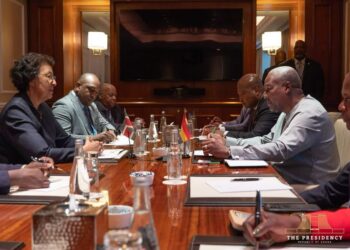
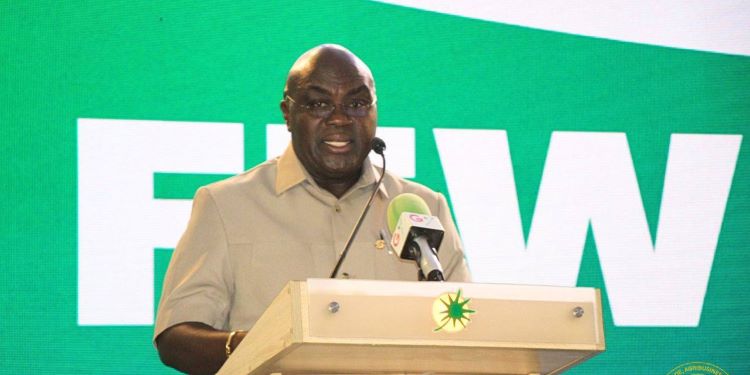
The Ministry of Trade, Agribusiness and Industry (MoTAI) has spotlighted a recent clarion call by the Chief of Staff at the Office of the President, Hon. Julius Debrah, to West African industry captains to dismantle the structural barriers hindering regional prosperity through trade.
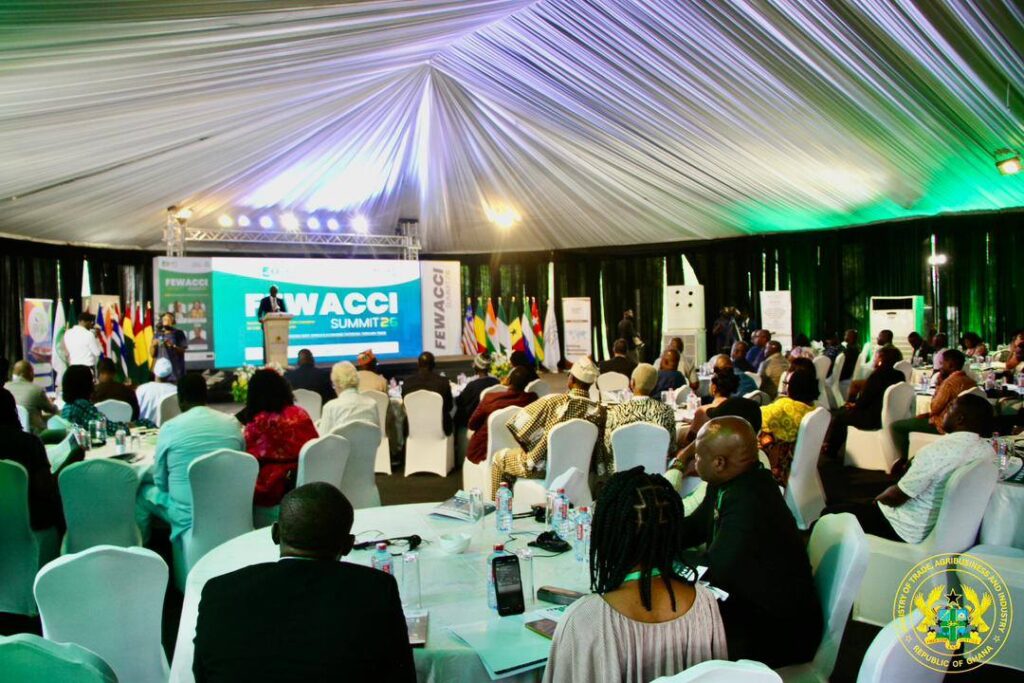
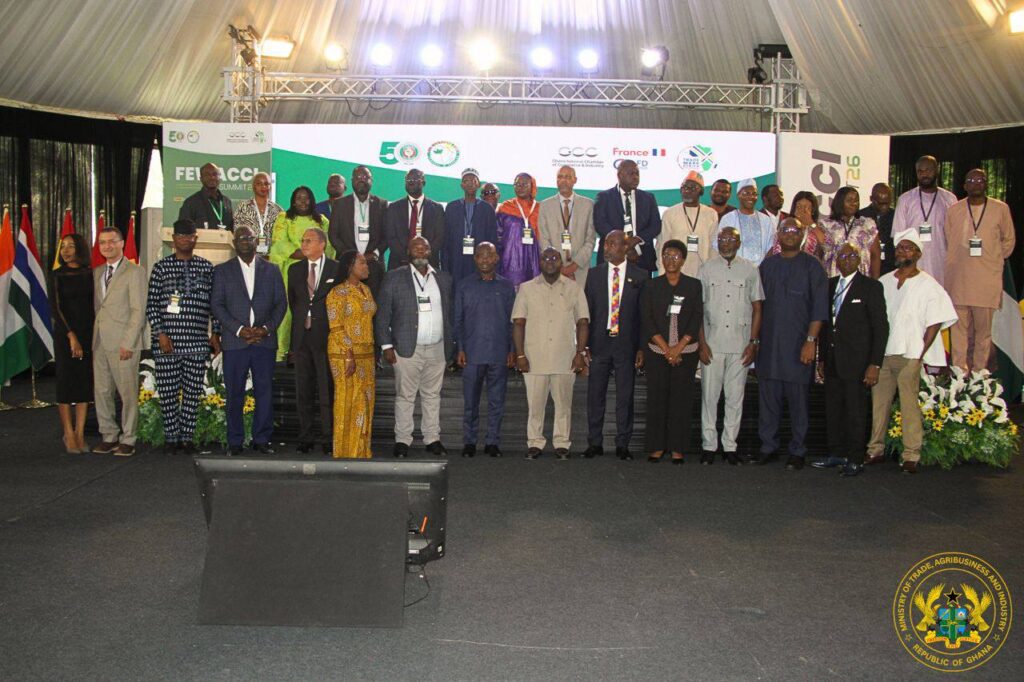
Speaking at the opening of the 2026 Federation of West African Chambers of Commerce and Industry (FEWACCI) Summit in Accra, Hon. Debrah highlighted a sobering reality: intra-African trade remains “unacceptably low,” with trade within the ECOWAS sub-region accounting for a mere 10-12% of total economic activity.
“To reverse this trend, the Chief of Staff emphasized that the region must move beyond rhetoric and aggressively leverage the African Continental Free Trade Area (AfCFTA) to enhance regional value chains and global competitiveness”
Ministry of Trade, Agribusiness and Industry
The summit served as a primary gathering for the sub-region’s private sector leaders, where Hon. Debrah explained that the low percentage of internal trade is not just a statistical failure but a missed opportunity for job creation and industrial stability.
He argued that while the global market is volatile, the West African market – if properly integrated – offers a shielded environment for local businesses to scale before attempting to compete on the global stage.
A recurring theme throughout the first day of the summit was the logistical divide, which posited that while policy documents like the AfCFTA provide the legal framework for trade, the physical reality of moving goods across West African borders remains fraught with inefficiency.
Kamal-Deen Ali, the Director-General of the Ghana Maritime Authority, addressed the assembly on the critical role of logistics in making trade agreements effective. He pointed out that high trade costs are often the result of “poor connectivity and maritime bottlenecks that delay shipments and inflate the final price of goods.”
To combat this, the Ghana Maritime Authority outlined several ongoing infrastructure projects aimed at improving regional connectivity, especially by making sure Ghana’s accelerating Blue Economy becomes a reliable corridor for West African trade.
Through modernizing ports and streamlining the sea-to-land transition, the region can significantly reduce the landlocked penalty faced by interior nations. For the captains of industry present, the message was clear: without a robust logistical backbone, the AfCFTA remains a theoretical exercise.
The SME Engine
The Deputy Minister for Trade, Agribusiness and Industry, Hon. Sampson Ahi, shifted the focus to the human element of the trade equation, and called for a radical alignment of trade facilitation policies with the actual capacity of Small and Medium Enterprises (SMEs).
Hon. Ahi acknowledged that while large corporations often have the resources to navigate complex trade laws, SMEs – particularly those led by youth and women – are often sidelined by high certification costs and limited access to financing.
His intervention underscored the need to address “inefficiencies in logistics, certification, and production costs,” at the micro-level. If a young entrepreneur in Accra cannot afford the cost of certifying their product for the Nigerian or Senegalese market, the promise of a “borderless Africa,” is broken.
“The Deputy Minister urged FEWACCI members to invest in the organizational infrastructure of these smaller players, ensuring they are export-ready and capable of fulfilling international orders consistently’
Ministry of Trade, Agribusiness and Industry
Adding a regional development perspective, Madam Harriet Gayi from TradeMark Africa noted the vast untapped potential of regional trade that remains locked behind inefficient border systems, arguing that the cost of doing business in West Africa is disproportionately high due to redundant customs checks and the lack of digitalized border clearance.
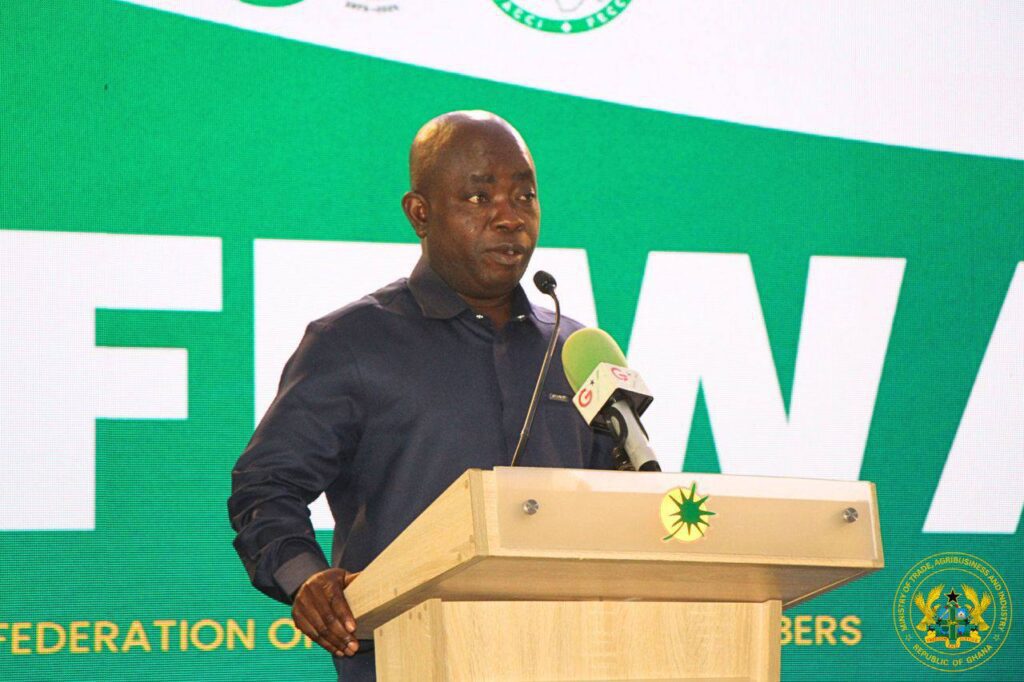
Madam Gayi stressed that the focus must move toward reducing trade costs through the implementation of one-stop border posts and harmonized digital systems. TradeMark Africa’s data suggests that youth- and women-led SMEs stand to gain the most from these reforms.
These demographics are often the most sensitive to “informal” trade costs and delays, and creating a more transparent and predictable trading environment will unlock a surge in entrepreneurial activity. Madam Gayi reminded the summit that trade is not just about moving containers, but about moving the people who manage the supply chains toward a state of sustainable prosperity.
The Finance Gap
While logistics and policy were central to the debate, the “finance gap,” emerged as a primary hurdle for industrial expansion, with Hon. Julius Debrah and the other speakers acknowledging that even with the best products and the most efficient logistics, West African businesses cannot scale without capital.
The limited availability of SME financing remains a significant bottleneck, preventing local manufacturers from investing in the machinery and technology needed to compete globally.
The FEWACCI Summit was tasked with creating a “regional investment framework,” that encourages West African banks to prioritize intra-regional trade finance, since reducing the risk profile of cross-border transactions, can stimulate the flow of capital into the very sectors – agribusiness and light manufacturing – that are best positioned to benefit from the AfCFTA.
The Chief of Staff urged industry captains to lead this charge, proving that West African capital can and should be the primary driver of West African growth.
As the summit continues, the focus remains on the creation of “Regional Value Chains,” and this involves different West African nations specializing in different stages of a single product’s production – leveraging local strengths to create a finished good that is made in ECOWAS.
Hon. Debrah’s keynote served as a reminder that the 10-12% trade figure is not a permanent condition, but a baseline for transformation. The Chief of Staff’s call for urgent action is a directive to the private sector to take ownership of the regional market.
With the Ghana Maritime Authority addressing the physical corridors and the MoTAI tackling the regulatory hurdles, the burden of execution now falls on the members of FEWACCI. The success of the AfCFTA will be measured by the increase in those intra-ECOWAS trade percentages over the next fiscal year.