
Ghana’s Parliament has passed the Legal Education Bill, 2025, marking a major shift in the country’s legal education framework and ending the long standing monopoly of the Ghana School of Law over professional legal training.
The legislation, approved on March 26, 2026, introduces a decentralized system designed to expand access while maintaining national standards.
The reform represents one of the most significant changes to legal education in decades, addressing structural challenges that have limited entry into the legal profession. It reflects growing pressure from students, educators, and policymakers to modernize the system and remove longstanding barriers.
A central feature of the new law is the establishment of the Council for Legal Education and Training, a statutory body tasked with regulating legal education. This body will take over responsibilities related to training oversight, separating them from the General Legal Council, which will continue to regulate legal practice.
The creation of the council is intended to improve governance and ensure a more focused approach to legal training. By dividing responsibilities, the reform aims to enhance efficiency and accountability within the system.
Authorities say the new body will work closely with the Ministry of Education to ensure that all accredited institutions adhere to consistent standards in curriculum delivery and assessment.
Decentralised Training Expands Access
Under the new framework, accredited universities, including private institutions, will be allowed to offer the Law Practice Training Course. This marks a significant departure from the previous system, where the Ghana School of Law was the sole provider of professional legal training.

The decentralization is expected to increase opportunities for law graduates who previously faced limited slots and intense competition for admission. For years, thousands of graduates with Bachelor of Laws degrees were unable to proceed due to capacity constraints and high failure rates in entrance examinations.
By allowing multiple institutions to deliver professional training, the reform seeks to ease this bottleneck and create a more inclusive pathway into the legal profession.
Introduction of National Bar Examination
To maintain quality and uniformity, the new system introduces a standardized National Bar Examination. All law graduates will be required to pass this examination before being called to the Bar, regardless of the institution where they received their professional training.
This measure is designed to ensure that expanding access does not compromise standards. It provides a common benchmark for assessing competence and readiness for legal practice across the country.
The introduction of a national examination also aligns Ghana’s system with international practices, where centralized assessments are often used to regulate entry into the legal profession.
The reform also introduces a new approach to legal education by emphasizing clinical training. Students will engage in supervised practical work, including handling real cases under guidance, rather than relying solely on theoretical instruction.

This shift reflects a broader recognition that legal education must equip graduates with practical skills needed in the profession. By integrating hands on experience into the curriculum, the system aims to produce lawyers who are better prepared for real world challenges.
The typical structure under the new system will involve a four year undergraduate law degree followed by a one year professional training programme at an accredited institution.
Addressing Longstanding Bottlenecks
The passage of the bill is widely seen as a response to the persistent bottleneck that has characterized legal education in Ghana. For years, the limited capacity of the Ghana School of Law created a situation where many qualified graduates were unable to advance.
This challenge became a recurring issue in national discourse, with calls for reform intensifying over time. The new law is expected to significantly reduce these barriers by expanding training opportunities and streamlining the pathway to qualification.
The new system is scheduled to become fully operational by September 2026, aligning with the start of the academic year.
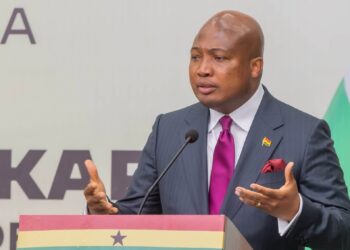
The passage of the bill has drawn both praise and criticism from lawmakers. Speaking on the floor of Parliament, Mahama Ayariga described the reform as a fulfillment of the government’s commitment to improving access and fairness in legal education.
“As has been typical of the NDC, promises made are delivered. We promised law students that if they vote for us, we will carry out reforms that will ensure equity, fairness and access to legal education”.
Hon. Mahama Ayariga, MP for Bawku and Majority Leader

However, Alexander Afenyo-Markin offered a more critical perspective, arguing that while the reform is important, the government must also deliver on other promises made to citizens.
“All of us have participated. This is not a bill that is identified with a particular party. I concede that indeed they made it a campaign promise. Mr. Speaker, however, they equally promised that they were going to set up a bank for women. We are done with year one, year two, we have not seen the Women Bank”.
Hon. Alexander Afenyo-Markin, MP for Effutu and Minority Leader
Despite the political exchanges, there appears to be broad consensus on the importance of reforming legal education.
A New Era for Legal Education in Ghana
The Legal Education Bill, 2025 signals a transition toward a more inclusive and structured system. By decentralizing training, introducing a national examination, and emphasizing practical learning, the reform seeks to balance access with quality.
Stakeholders will be watching closely as the new framework is implemented, particularly to ensure that standards are maintained across all institutions. The success of the reform will depend on effective coordination between regulators, universities, and professional bodies.
As Ghana prepares to roll out the new system, the changes are expected to reshape the legal education landscape and expand opportunities for aspiring lawyers across the country.
READ ALSO: Finance Minister Signals Strong Economic Recovery Path