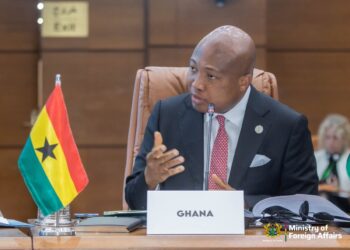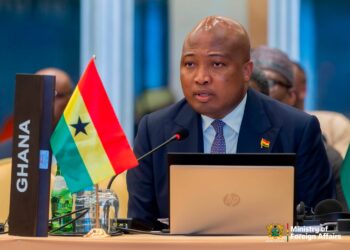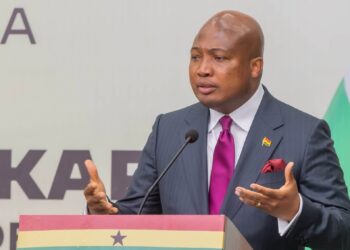
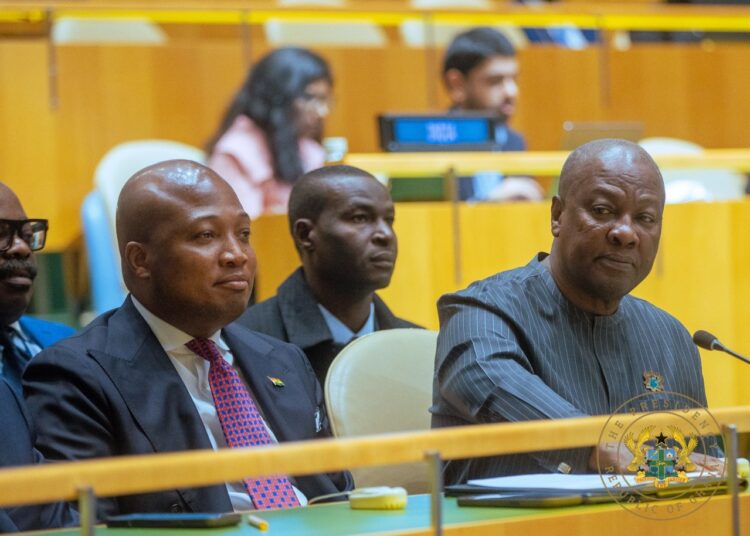
President of the Republic of Ghana, HE John Dramani Mahama, has described the latest United Nations vote supporting Ghana’s motion on slavery reparations as a defining milestone, while cautioning that it represents only the beginning of a longer global pursuit for justice.
His remarks follow the approval of a resolution at the United Nations General Assembly recognising the Trans Atlantic Slave Trade as the gravest crime against humanity and calling for reparatory justice.
The vote, which has drawn widespread attention across Africa and the diaspora, is being interpreted as a significant step in reframing global historical accountability.
Speaking after the General Assembly session, President Mahama stressed that the achievement must not be seen as an endpoint. He emphasised that the resolution provides a foundation for sustained engagement rather than a conclusion to the issue.
“This is not the end. This is the beginning. What we’ve achieved today creates a platform for the struggle for reparative justice,” he stated, underscoring the need for continued international commitment.

Call for Sustained Global Action
President Mahama urged stakeholders across governments, civil society, and international institutions to maintain momentum following the diplomatic breakthrough. He noted that meaningful progress would depend on translating the resolution into concrete outcomes that address historical injustices.
According to him, the next phase must focus on securing reparations, formal acknowledgements of wrongdoing, and broader justice mechanisms that recognise the long term impact of slavery. He stressed that symbolic recognition alone would not be sufficient without actionable steps.
“We must take this success and begin to work so that those who denied our ancestors their humanity, those who denied our ancestors their dignity, can accept the truth that this is what happened”.
President of the Republic of Ghana, HE John Dramani Mahama
His remarks highlight a shift from advocacy for recognition toward a structured demand for accountability, positioning the resolution as a catalyst for policy and diplomatic engagement on reparatory justice.
Affirming Historical Truth and Accountability
A central theme in the President’s address was the importance of preserving historical truth. He pushed back against narratives that attempt to minimise or reinterpret the scale and impact of the slave trade, arguing that the United Nations decision reinforces its gravity.
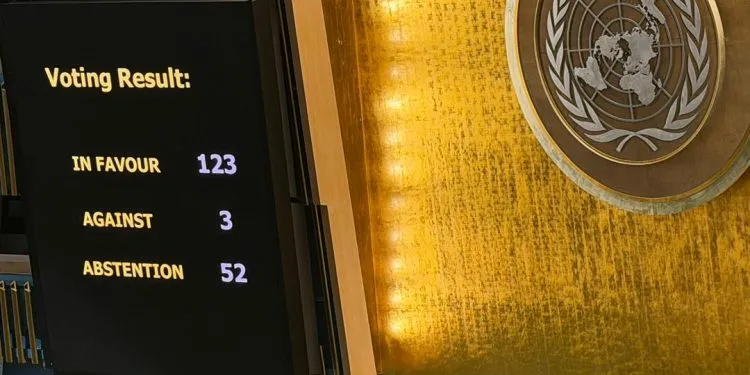
“Today we’ve accepted that this was a grave crime against humanity, the gravest indeed,” he stated, framing the resolution as a formal acknowledgment by the international community.
This affirmation, he suggested, is critical not only for historical accuracy but also for shaping future discourse on race, justice, and equality. By recognising the severity of the transatlantic slave trade, the global community takes a step toward addressing its enduring consequences.
The President’s comments reflect a broader effort to ensure that the legacy of slavery is neither forgotten nor diluted, but instead integrated into ongoing conversations about global justice and human rights.
Unity Across Africa and the Diaspora
President Mahama also highlighted the importance of unity in advancing the reparations agenda. He described the resolution as a collective achievement that extends beyond Ghana to encompass Africa and the global African diaspora.
“This victory is not for Ghana. We did it for the whole of Africa and all people of African descent. If we keep this coalition, we will take the next steps together”.
President of the Republic of Ghana, HE John Dramani Mahama
The emphasis on coalition building underscores the need for coordinated advocacy among African nations, diaspora communities, and international partners. Such unity, he argued, will be essential in sustaining pressure for meaningful reforms and ensuring that the issue remains a priority on the global agenda.

The President expressed confidence that continued collaboration would strengthen the movement and increase the likelihood of achieving tangible outcomes in the pursuit of justice.
Regional and Global Reactions
The adoption of the resolution has been widely welcomed across Ghana and the African continent. African Union officials have described the development as a historic milestone in the long-standing quest for reparative justice.
Public response has similarly reflected a sense of validation, with many viewing the vote as a recognition of historical suffering and a step toward restoring dignity. The resolution has also sparked renewed discussion about the practical pathways toward reparations and the responsibilities of nations historically linked to the slave trade.
For many, the outcome represents a turning point in how the international community addresses the legacy of slavery, moving from remembrance toward accountability and action.
A Continuing Path Toward Justice
President Mahama concluded his remarks by reiterating that the resolution serves as a safeguard against historical erasure and a commitment to future generations. He stressed that the memory of those affected by slavery must remain central to global consciousness.

“Today’s victory is to ensure that we do not forget, and will never forget. As long as this resolution has been passed, our ancestors will never, ever be forgotten”.
President of the Republic of Ghana, HE John Dramani Mahama
The statement encapsulates the broader significance of the resolution as both a symbolic and strategic milestone. While the vote marks a major achievement in international diplomacy, it also sets the stage for continued efforts aimed at achieving justice, healing, and restitution.
As Ghana and its partners move forward, the focus will shift to translating this global recognition into policies and actions that address the enduring impact of one of history’s most profound injustices.
READ ALSO: Joshua Narh: Ignoring Africa’s Oil Wealth Is Strategic Negligence