
The conversation around Africa’s hydrocarbon development has taken a sharper turn following renewed volatility in global oil markets triggered by geopolitical tensions in the Middle East.
Executive Chairman of the Energy Chamber of Ghana and Director at Wingfield Group, Joshua Batsa Narh, has warned that Africa risks undermining its own development if it continues to sideline its hydrocarbon resources.
According to him, recent events have exposed the fragility of global energy systems and reinforced the strategic importance of oil and gas.
“There are moments when geopolitics exposes uncomfortable truths. The recent escalation in the Gulf did exactly that.”
Joshua Batsa Narh, Executive Chairman of the Energy Chamber of Ghana and Director at Wingfield Group
Mr Narh pointed to the strategic importance of the Strait of Hormuz, through which nearly 20 percent of the world’s traded crude oil passes.
He explained that disruptions in the region quickly ripple across global markets, affecting everything from transport and electricity to food systems.
Such disruptions, he argued, demonstrate how tightly interconnected global energy supply chains remain and how vulnerable they are to geopolitical shocks.
Call for Pragmatic Energy Strategy in Africa
Against this backdrop, Mr Narh cautioned against calls for Africa to leave its hydrocarbon resources untapped in the name of climate action.
“If one disruption can move oil toward $100 per barrel, then asking Africa to leave hydrocarbons underground is no longer climate leadership. It is strategic negligence.”
Joshua Batsa Narh, Executive Chairman of the Energy Chamber of Ghana and Director at Wingfield Group
He emphasised that Africa’s energy realities differ significantly from those of developed regions, making a one-size-fits-all approach to energy transition impractical.
With Africa accounting for about 18 percent of the global population but only around 6 percent of energy consumption and less than 3 percent of emissions, he argued that the continent’s development needs must take priority.
Mr Narh highlighted the scale of energy poverty across the continent, noting that hundreds of millions of Africans still lack access to reliable electricity and clean cooking solutions.
Around 600 million people remain without electricity, while approximately 900 million depend on biomass for cooking, a situation with serious health and environmental consequences.
He also pointed to Africa’s limited refining capacity, which accounts for less than 4 percent of global capacity, as a major constraint on energy security.
“No serious development pathway closes this gap without hydrocarbons,” he said, stressing the role of oil and gas in powering industrialisation and economic growth.
Emerging Energy Projects Gain Strategic Importance
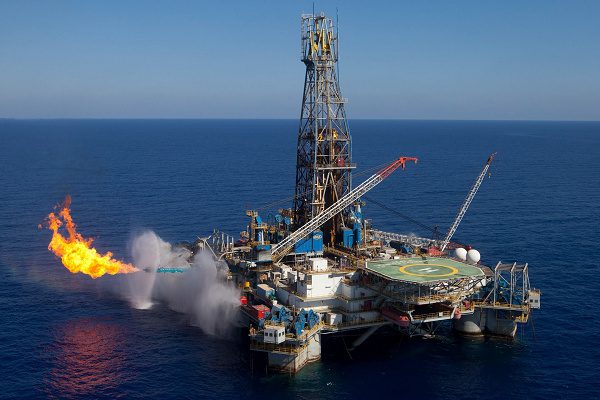
The evolving global energy landscape is also reshaping perceptions of Africa’s hydrocarbon projects, which are increasingly being viewed as strategic assets rather than marginal investments.
Mr Narh cited developments such as Namibia’s Orange Basin, Mozambique’s liquefied natural gas corridor, and offshore gas projects in Senegal and Mauritania as examples of the continent’s growing importance in global energy supply.
He noted that investors and governments are diversifying their energy portfolios in response to geopolitical risks, creating new opportunities for African producers.
These projects, he said, are no longer seen as frontier ventures but as integral components of a multipolar energy system.
Mr Narh also pointed to shifts in energy policy across advanced economies, particularly during the Russian invasion of Ukraine, as evidence of a more pragmatic approach to energy security.
During that period, Europe increased coal usage, the United States expanded oil production, and Asian economies accelerated liquefied natural gas imports to meet energy demand.
“Energy realism returned fast. But Africa is still expected to transition faster than regions that industrialised on hydrocarbons.”
Joshua Batsa Narh, Executive Chairman of the Energy Chamber of Ghana and Director at Wingfield Group
He argued that Africa’s transition pathway should reflect its unique development context, combining hydrocarbons with renewable energy and infrastructure investments.
Balancing Development and Energy Transition
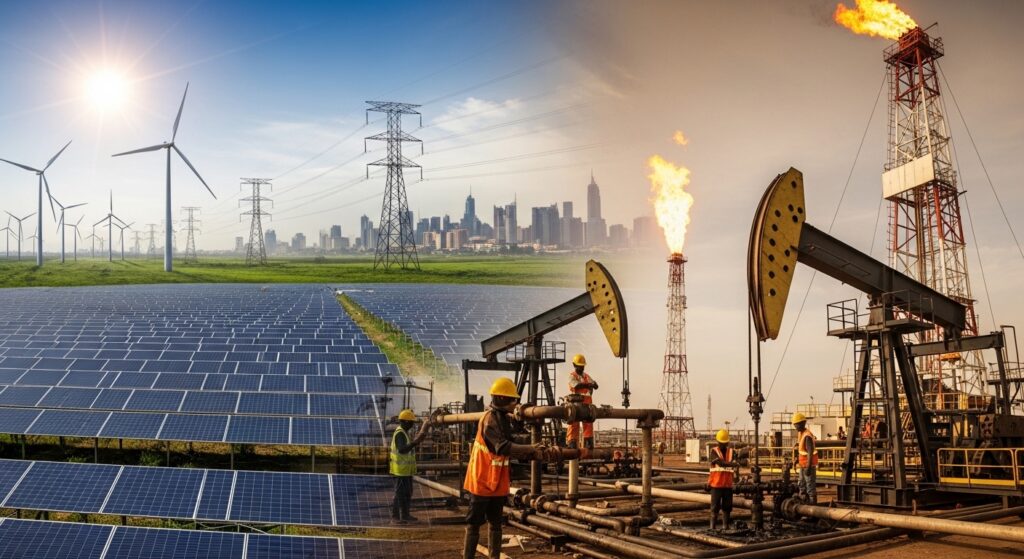
Mr Narh emphasised that Africa’s energy future should not be framed as a choice between fossil fuels and renewables.
Instead, he advocated for a balanced approach that integrates oil, gas, renewable energy, refining capacity, and regional power systems.
“This is not a contradiction. It is development sequencing,” he explained, adding that energy transitions must be financed through the very resources they seek to replace.
He maintained that hydrocarbons will play a crucial role in funding Africa’s transition to cleaner energy systems while supporting industrial growth and job creation.
As global energy markets remain volatile, Mr Narh called for strong leadership to unlock Africa’s hydrocarbon potential in a responsible and sustainable manner.
He stressed that developing these resources responsibly will enable African countries to build resilient energy systems while preparing for a cleaner energy future.
For policymakers, the message is clear: Africa must chart its own path, balancing immediate development needs with long-term sustainability goals in an increasingly uncertain global energy landscape.
READ ALSO: UN Adopts Ghana’s Resolution Declaring Slavery Gravest Crime