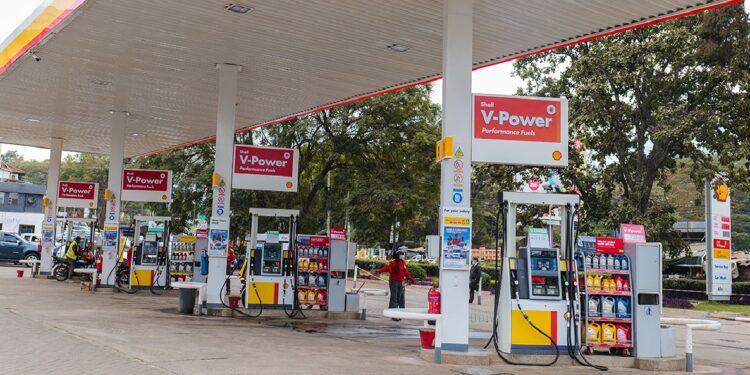
Kenya’s fuel crisis has worsened as the Middle East disrupts global energy flows, triggering early signs of shortages nationwide and raising the risk of a broader national crisis.
According to Martin Chomba, Chairman of the Petroleum Outlets Association of Kenya (POAK), there is “constrained supply.” He noted that “so far, about 20 percent of some 3,100 retailers are affected,” adding, “In two weeks, it will be a total crisis with no fuel in most outlets if the tension in the Middle East continues.”
Stakeholders explained that the situation is being driven by constrained imports linked to instability along key global shipping routes, particularly the Strait of Hormuz, through which a significant share of global oil and liquefied natural gas passes.
Heightened security risks in the region have increased shipping insurance costs and slowed tanker movements, tightening supply for import-dependent economies such as Kenya, which relies entirely on fuel sourced through government-to-government arrangements with Gulf suppliers.
Despite rising global oil prices, the Energy and Petroleum Regulatory Authority (EPRA) maintained domestic pump prices unchanged, a move aimed at protecting consumers but one that has intensified pressure within the supply chain.
The early signs of disruption are already visible across Kenya’s retail network, with approximately one-fifth of fuel stations reportedly affected by supply shortages. Independent retailers are increasingly struggling to maintain steady inventories as deliveries become less predictable and more costly.
At the same time, market behavior is beginning to shift in anticipation of future price adjustments, and dealers are likely to start hoarding petroleum products, Chomba stated.
Chomba believes that the “real shock is on the way” and emphasized that POAK had been pressing authorities in Nairobi to end the government-to-government deals and allow fuel marketers to purchase products from private suppliers as a contingency measure.
Fuel Dealers Threaten to Suspend Sales Amid Ongoing Challenges

Meanwhile, the United Energy and Petroleum Association has warned of a potential nationwide fuel shortage unless the Energy and Petroleum Regulatory Authority (EPRA) adjusts current fuel prices.
According to Irene Kimathi, the Chairperson of United Energy and Petroleum, fuel prices don’t reflect the actual market cost; as such, the current rate is unsustainable.
“The prices set by EPRA are no longer viable for fuel suppliers. If urgent adjustments are not made, dealers may have no choice but to suspend sales.”
Irene Kimathi
The association said that fuel dealers have faced mounting financial losses in recent weeks. Shrinking working capital now limits their ability to keep operating. Shortages have intensified countrywide. Many independent suppliers are struggling to get enough fuel.
UNEPA further stressed the need for a full government review of the nation’s fuel infrastructure, recommending a detailed assessment of current capacity and vulnerabilities.
It urged explicit efforts to strengthen strategic reserves, including increasing storage and diversifying supply sources, to cushion against future disruptions. Although shipments should continue to arrive at ports, the association warned that volumes will likely remain low, further straining the regulated pricing system.
EPRA recently set new maximum petroleum retail prices from March 15, 2025, to April 14, 2026.
“In the period under review, the maximum allowed petroleum pump prices for Super Petrol, Diesel, and Kerosene remain unchanged. In Nairobi, Super Petrol, Diesel, and Kerosene now retail at KShs.178.28, Kshs. 166.54, and Kshs. 152.78 effective midnight for the next 30 days.”
Energy and Petroleum Regulatory Authority (EPRA)
According to ruling party lawmaker, Nelson Koech, “speculation, panic buying, and hoarding particularly hoarding by oil marketers in anticipation of a price jump” had driven a surge in demand over the past two weeks, disrupting access to fuel supplies and exposing deeper risks of market instability and supply distortion.
What looks like a sudden rise in consumption is often not actual end-user demand, but rather advance purchasing and stockpiling. This creates an artificial demand spike that quickly drains available inventory, especially at retail.
This behavior destabilizes Kenya, which imports fuel on a tight schedule with limited reserves resulting in a disruption or shortages of fuel.
Petroleum products are vital inputs across key sectors. These include transportation, agriculture, manufacturing, and power generation; as such, any lasting shortage or sudden price hike can ripple through the economy. It drives up the cost of goods and services and also adds pressure to households and businesses.
If global oil prices remain elevated and domestic controls are lifted, the adverse effects will trickle down even to ordinary citizens and contribute to broader inflationary pressures and risks that trigger social and political tensions.
READ ALSO : UK to Roll Out Plug-In Solar Panels