Government of Ghana, through the Ministry of Lands and Natural Resources, has intervened to stabilize the future of the Damang Mine as its current operational tenure approaches expiration
With the existing lease held by Abosso Goldfields Limited a subsidiary of the South African giant Goldfields Limited set to terminate on April 18, 2026, the state has moved to prevent any potential economic fallout.
This strategic maneuver is designed specifically to insulate the workforce from unemployment and ensure that the extensive web of service contracts supporting the mine remains intact, preventing a sudden cessation of commercial activity in the Western Region.
“To ensure continuity after the lease expires, Government has initiated measures to safeguard jobs, maintain service contracts, and reassure stakeholders. These steps form part of efforts to secure a credible investor and operator through a competitive bidding process. The goal remains ensuring the mine’s continued contribution to national development and advancing long-term Ghanaian-centered ownership and investment.”
Ministry of Lands and Natural Resources
This decision follows a one-year extension previously granted to the current operators, signaling that the state is now looking toward a transition in management rather than a simple renewal.
Recognizing the Damang Mine as a cornerstone of national gold production and a vital source of foreign exchange, the Ministry has initiated a competitive bidding process to identify a new, “credible” investor.
This transition framework is not merely about ownership change; it is a calculated effort to deepen Ghanaian participation in the extractive sector while upholding the rigorous standards required for large-scale gold mining operations.
Strategic Continuity and Investor Confidence
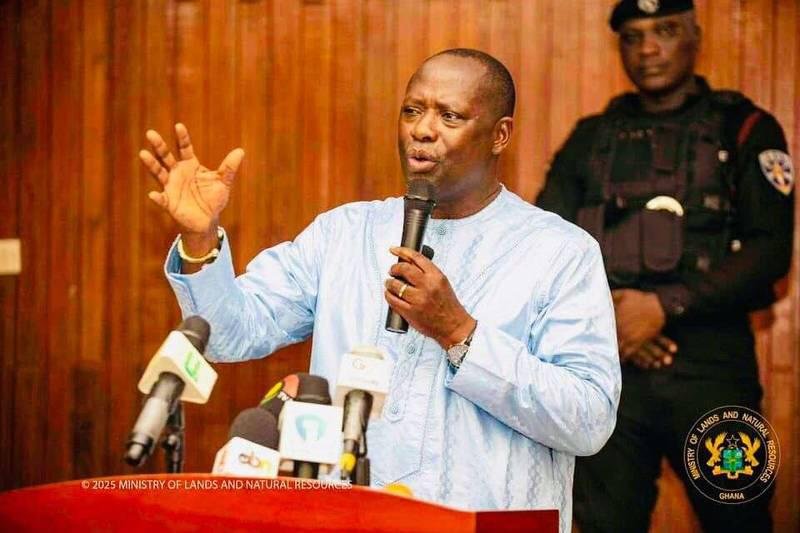
The proactive stance taken by the Ministry, led by Minister Emmanuel Armah-Kofi Buah, MP, serves as a vital signal to the global investment community that Ghana remains a stable and predictable environment for the extractive industries.
By announcing the transition plan well before the April 18 deadline, the government avoids the “cliff-edge” scenario that often characterizes lease expirations in the mining sector.
This transparency is crucial for maintaining “the country’s strong reputation as a leading destination for responsible foreign investment,” as noted in the official press release.
By prioritizing “responsible stewardship” and a “Ghanaian-driven growth” model, the state is attempting to balance the need for foreign capital with the growing demand for local content and indigenous ownership.
The emphasis on a competitive bidding process suggests that the next phase of the Damang Mine will be defined by efficiency and high-level technical expertise.
This approach ensures that the “key national asset” does not enter a period of care and maintenance which often leads to equipment degradation and site insecurity but rather moves seamlessly into a new chapter of productivity.
Host Community Stability and Socio-Economic Impact
For the host communities surrounding Damang, the government’s vow is a lifeline that addresses the visceral fear of local economic collapse.
Large-scale mines are more than just extraction sites; they are the primary engines of local commerce, supporting schools, clinics, and thousands of indirect jobs through local procurement.
The Ministry’s commitment to “deliver lasting value for the host communities” suggests that the new lease agreements will likely include strengthened social responsibility clauses, ensuring that the wealth generated beneath the soil translates into tangible infrastructure and social services for those living above it.
This move instills a sense of hope among the youth and local contractors who have built their livelihoods around the mine’s operations.
When a lease nears expiry, credit lines for local businesses often dry up and anxiety rises regarding the future of social intervention programs.
By explicitly stating that service contracts will be maintained, the government has provided the necessary “reassurance to stakeholders” to keep the local economy buoyant. This stability prevents the migration of skilled labor away from the region and maintains the social fabric of the mining district.
A New Vision for the Ghanaian Mining Sector

The transition at Damang is being framed as a template for a broader “vision for a sustainable Ghanaian-driven growth” within the mining sector.
By facilitating a transition that favors “long-term Ghanaian-centered ownership,” the Ministry is moving away from a legacy of purely extractive foreign models toward one where local equity and management play a more central role.
This shift is expected to bolster the national mining sector’s resilience, as locally-invested operators are often more aligned with long-term national development goals than short-term dividend-seeking entities.
The Ministry’s dedication to a process that “strengthens Ghana’s mining sector” also reflects an evolution in how the state manages its natural resources.
The emphasis is no longer just on collecting royalties, but on the “preservation of the mine’s contribution to national development.”
READ ALSO: Middle East War Hits Ghana Growth Forecast