Government of Ghana is currently evaluating competitive bids from three domestic investment entities seeking to acquire the Damang gold mine, an asset requiring a capital injection of up to $1 billion for full operational revival.
This strategic move comes nearly a year after the state broke with decades of “automatic extensions” by rejecting the lease-renewal application of the previous operator, Johannesburg-based Gold Fields.
As the nation intensifies its “tougher push to ensure gold assets deliver greater value to Ghanaians,” the transition of Damang into local hands represents a landmark shift in the management of Africa’s top gold-producing landscape.
“A decision is expected as soon as possible. The capital requirement to breathe new life into the asset would range between “$600 million to $1 billion.”
Isaac Tandoh, CEO, Minerals Commission.

Authorities seized control of the asset in April 2025 following the South African miner’s “failure to declare verifiable reserves,” subsequently issuing a restricted 12-month lease to establish a resource base and resume limited open-pit mining.
With this transitional permit set to expire on April 18, 2026, the Minerals Commission has confirmed that the lease will not be renewed for the foreign incumbent, who continues to operate the neighboring Tarkwa mine.
Instead, the regulator is scrutinizing proposals from indigenous powerhouses i.e Engineers & Planners (E&P), BCM International, and the Vortex Resources consortium to determine which bidder possesses the technical and financial “challenges” necessary to manage the $600 million to $1 billion revival cost.
Strengthening Indigenous Ownership and the GoldBod Mandate
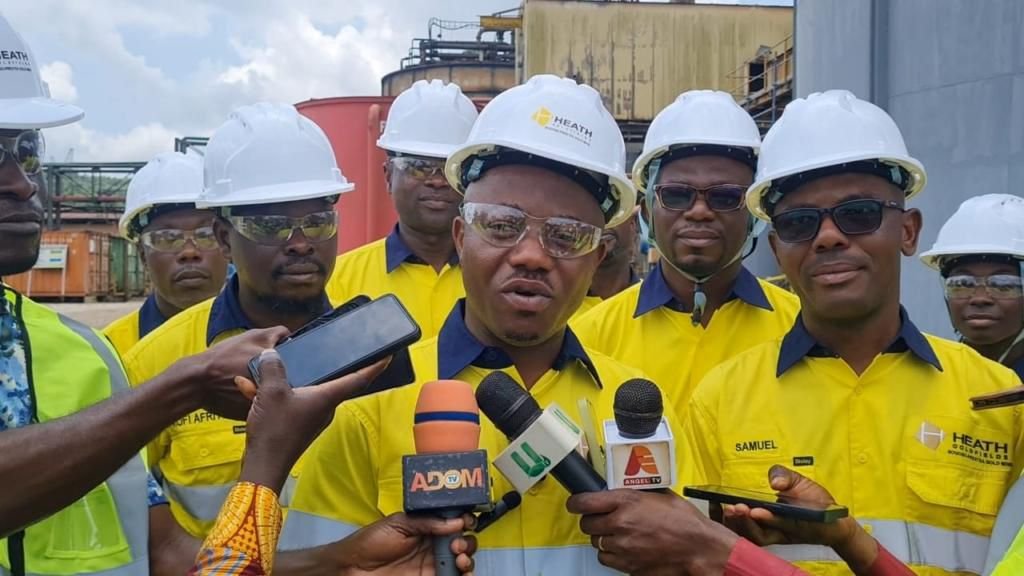
The pivot toward local ownership is more than a regulatory change; it is a foundational pillar of the newly established Ghana Gold Board (GoldBod) initiative.
By transitioning a high-tier asset like Damang to Ghanaian firms, the state aims to retain a larger share of the “surging commodity prices” within the domestic economy.
This strategy aligns with the recently introduced sliding-scale royalty regime, which adjusts government revenue based on market fluctuations.
Under the GoldBod framework, local participation is expected to reduce the “dollarization” of the economy by encouraging the retention of mineral wealth in-country, rather than seeing profits exported by multinational conglomerates.
For the mining industry, these local bids signal a departure from the “enclave economy” model toward a more integrated value chain as several CSOs and Analysts urged for local participation.
If E&P the “leading contender” with a 25-year history as a contractor at the site or its competitors succeed, it would demonstrate that Ghanaian firms have matured into “capital-backed and technology-driven” operators.
This shift is anticipated to catalyze significant “transfer of technology, knowledge, and capital,” ensuring that the $10.8 billion generated annually by the sector benefits local suppliers and service providers rather than specialized foreign firms.
Economic Transformation and Sectoral Resilience

A successful local takeover of the Damang mine is projected to deliver substantial macroeconomic stability through non-debt foreign exchange inflows.
Research indicates that formalizing and localizing such large-scale assets could help the country avoid the high interest costs associated with external borrowing, potentially saving the economy hundreds of millions of dollars annually.
Furthermore, the GoldBod initiative intends to use these locally-run operations to provide “fair pricing” and “transparent pricing methodology” that sets a benchmark for the entire industry, from artisanal miners to industrial giants.
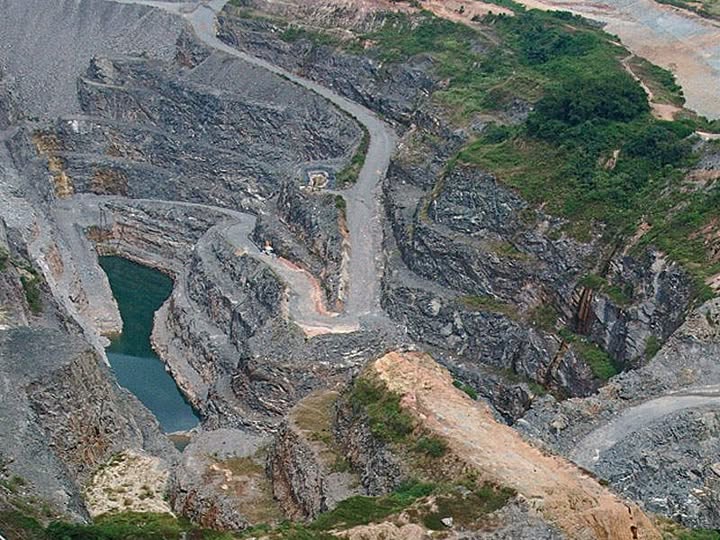
Beyond the balance sheets, the revival of Damang under local management focuses on “livelihoods and continuity.”
The mine currently supports between 1,500 and 2,000 jobs, including direct employees and contractors.
A seamless transition ensures these roles remain filled by Ghanaians, while also fostering “community-centric programmes” that reinvest a portion of the $1 billion investment into local infrastructure, education, and health.
This “win-win partnership” seeks to prove that local content policies do not deter investment but rather create a “sustainable competitiveness” that secures Ghana’s status as a global mining powerhouse.
READ ALSO: 60% of Ghanaians Trust Mahama’s Administration’s Corruption Fight