
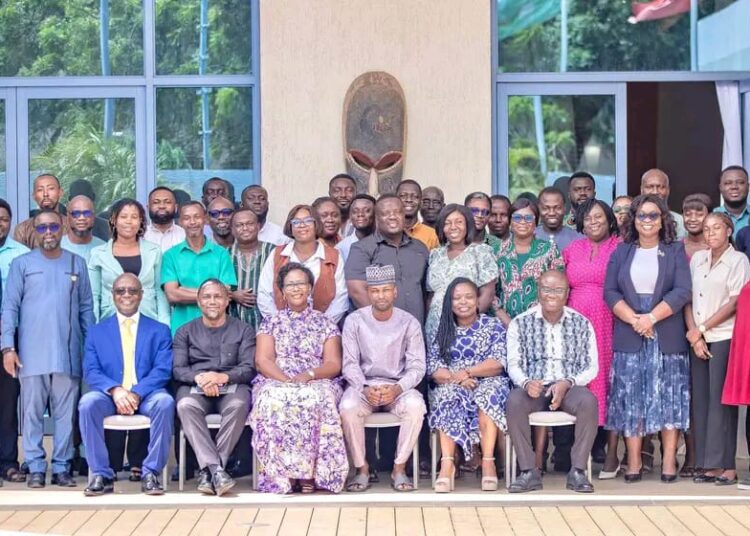
The Government of Ghana has launched a nationwide Artificial Intelligence (AI) literacy training programme for civil servants, aimed at strengthening public sector capacity to support the country’s digital transformation agenda.
The initiative, led by the Ministry of Communication, Digital Technology and Innovations in partnership with UNESCO, commenced its first cohort in Accra from March 24 to 26, 2026.
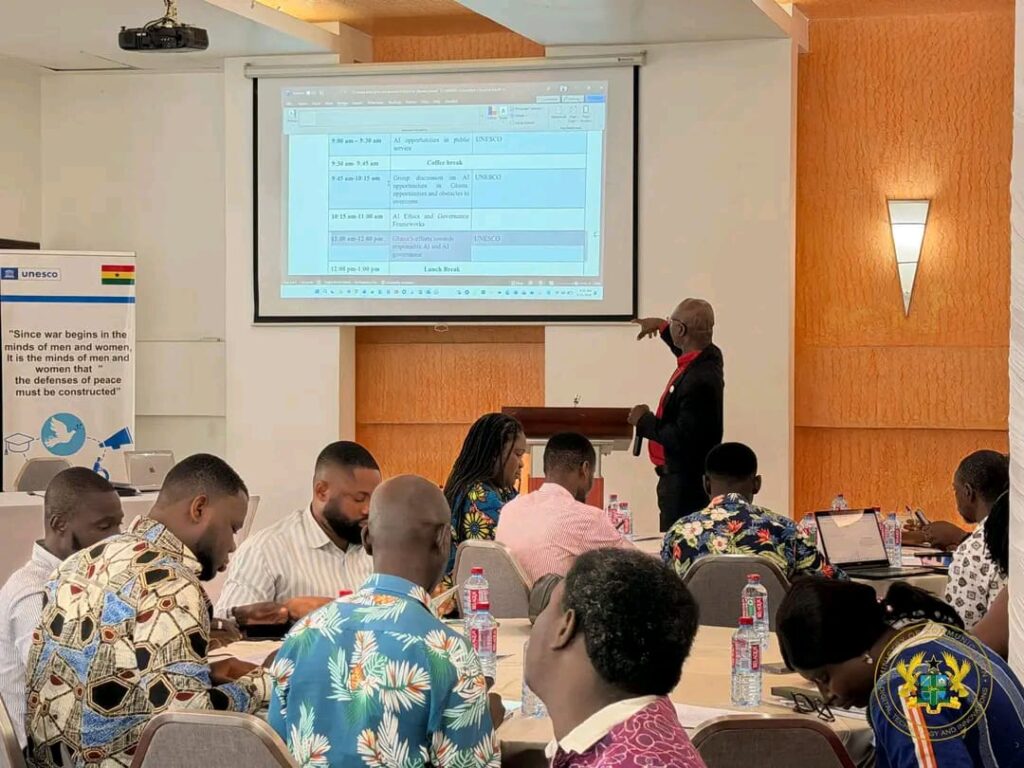
The training, held at the Best Western Premier Hotel, marks a major step toward equipping public sector workers with the knowledge and skills required to integrate AI into governance and service delivery.
The three-day training is designed to provide participants with foundational knowledge and practical skills in artificial intelligence. Officials say the programme aligns with Ghana’s National Artificial Intelligence Strategy (2023–2033), which seeks to position the country as a leader in responsible and innovative AI adoption.
Globally, initiatives like this have become increasingly important, as governments recognise the need to equip civil servants with digital competencies to manage emerging technologies effectively.
The training adopts a Training-of-Trainers model, allowing participants to transfer knowledge to colleagues across Ministries, Departments, and Agencies.
Government Highlights Role of AI in Service Delivery
Director of General Administration at the Ministry, Alfred Nortey, emphasised the importance of the training within the government’s broader digitalisation agenda. He explained that AI offers significant opportunities to improve efficiency, strengthen policy formulation, and enhance public service delivery.

He added that while AI can transform governance, its use must be guided by strong ethical frameworks and responsible oversight to ensure accountability. Experts note that AI is increasingly being used globally to design smarter public services and improve citizen engagement.
The programme introduces participants to key AI concepts, including machine learning, neural networks, and the AI development process. Participants are also being trained to distinguish between predictive AI, which forecasts outcomes based on data, and generative AI, which creates new content.
The training emphasises the importance of human oversight in AI systems to ensure accuracy, transparency, and fairness in decision-making processes. According to organisers, the programme will run in four cohorts between March and May 2026 to reach a wider group of civil servants.
Programme Addresses Ethical and Risk Concerns
A major component of the training focuses on ethical and risk considerations associated with AI. Participants are being guided on issues such as algorithmic bias, misinformation, data privacy, and cybersecurity.
These concerns have become central to global discussions on AI governance, with international bodies emphasising the need for responsible and human-centred approaches to technology adoption. Officials say building awareness around these risks is essential for ensuring that AI systems are used in ways that promote trust and inclusivity.

In a statement delivered on behalf of the Office of the Head of the Civil Service, Dr Elizabeth Obeng-Yeboah urged participants to take an active role in implementing Ghana’s AI strategy.
She stressed that civil servants must move beyond theory and translate policy into measurable outcomes that improve governance and service delivery. She also noted that participants have been selected as resource persons who will help cascade knowledge across the public sector.
According to her, this approach will strengthen institutional capacity and ensure that AI is integrated responsibly across government operations.
Facilitators Provide Expert Guidance
The training is being delivered by a team of experienced facilitators, including UNESCO consultants Dr Adekemi Omotubora and Dr Ibrahim Goni, as well as AI governance expert Dr Kuami Ahiabenu.
Their expertise supports the programme’s goal of combining technical knowledge with practical insights into policy, governance, and ethical considerations. The initiative is expected to strengthen collaboration across government institutions and improve the efficiency of public service delivery.
By equipping civil servants with AI skills, Ghana aims to build a more innovative, responsive, and citizen-centred public sector. The programme also reflects a broader shift across Africa, where governments are investing in digital capacity to remain competitive in an increasingly technology-driven world.
As the training progresses, stakeholders expect it to contribute significantly to Ghana’s efforts to harness AI for national development while ensuring that its deployment remains
READ ALSO: Vice President Launches Heritage Village to Promote Gold Value Addition