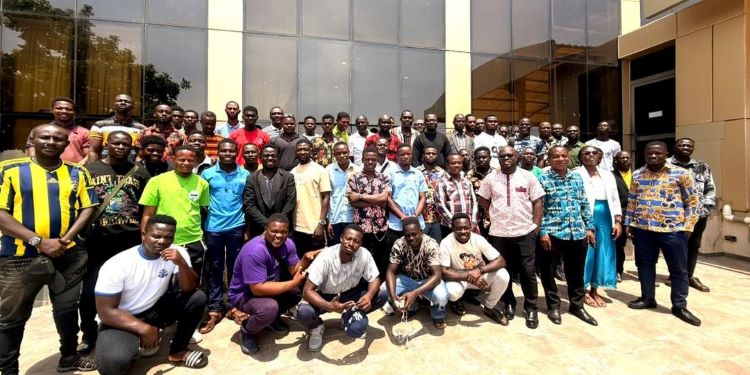
The regulatory oversight of Ghanaian territorial waters has received a technical boost following the completion of a specialized training cycle for fisheries observers. Organized by the Fisheries Commission, the recently concluded four-day intensive workshop was designed to strengthen the Monitoring, Control, and Surveillance Division (MCSD).
Held at the NAFAG Hall and Crismon Hotel in Tema, the program equipped a new cohort of personnel with the high-level skills necessary to maintain data integrity and legal compliance on industrial vessels. This move is a functional deployment of the Fisheries and Aquaculture Act, 2025 (Act 1146), which mandates stricter oversight of the marine sector to curb economic and environmental loss.
“Delivering the opening address on behalf of the Monitoring, Control, and Surveillance Division, Mr. Richard Klutse highlighted the critical role observers play in combating Illegal, Unreported, and Unregulated (IUU) fishing. He encouraged participants to take the training seriously and maximize the opportunity to enhance their capacity and performance”
Fisheries Commission
As Ghana faces rising pressure from IUU fishing, the Commission is prioritizing the “human element” of maritime surveillance, by placing trained observers directly on trawl and tuna vessels – establishing a real-time reporting loop that bridges the gap between shore-based regulations and at-sea operations.
For Mr. Klutse, the effectiveness of Ghana’s maritime defense against IUU fishing depends heavily on the capacity of these observers to identify and document infractions with precision.

According to the Commission, a major component of the training involved the biological and mechanical aspects of industrial fishing, noting that in order to prevent “by-catch,” and the harvesting of juvenile fish, observers must be able to distinguish between legal and illegal fishing gear.
The workshop provided practical insights into the requirements of different gear types, allowing the new cohort to detect irregularities in net mesh sizes or the use of prohibited equipment on board vessels. This technical knowledge is essential for protecting the sustainability of Ghana’s fish stocks, which have historically been depleted by non-compliant industrial trawlers.
The hands-on sessions in fish sampling and species identification served as a critical link to the Fisheries Scientific Survey Division (FSSD), as accurate data collection at sea is the foundation of Ghana’s fisheries management strategy.
The cohort were specifically trained for both trawl and tuna operations to ensure that the evidence gathered at sea is scientifically sound and capable of supporting national policy decisions, noting that if observers cannot correctly identify the species being harvested, the scientific models used to set quotas and manage seasons become unreliable.
Observer Reporting
Beyond the scientific data, the training focused heavily on the “chain of evidence,” required for legal enforcement. The inclusion of the Legal and Compliance Unit in the workshop underscored a move toward a more litigious approach to fisheries management.
It was stated that in the past, many at-sea infractions failed to result in successful prosecutions due to procedural errors or poor documentation. The new cohort was trained in Standard Operating Procedures (SOPs) and the formal reporting of infractions to ensure that their observations carry the necessary legal weight during administrative hearings or court proceedings.
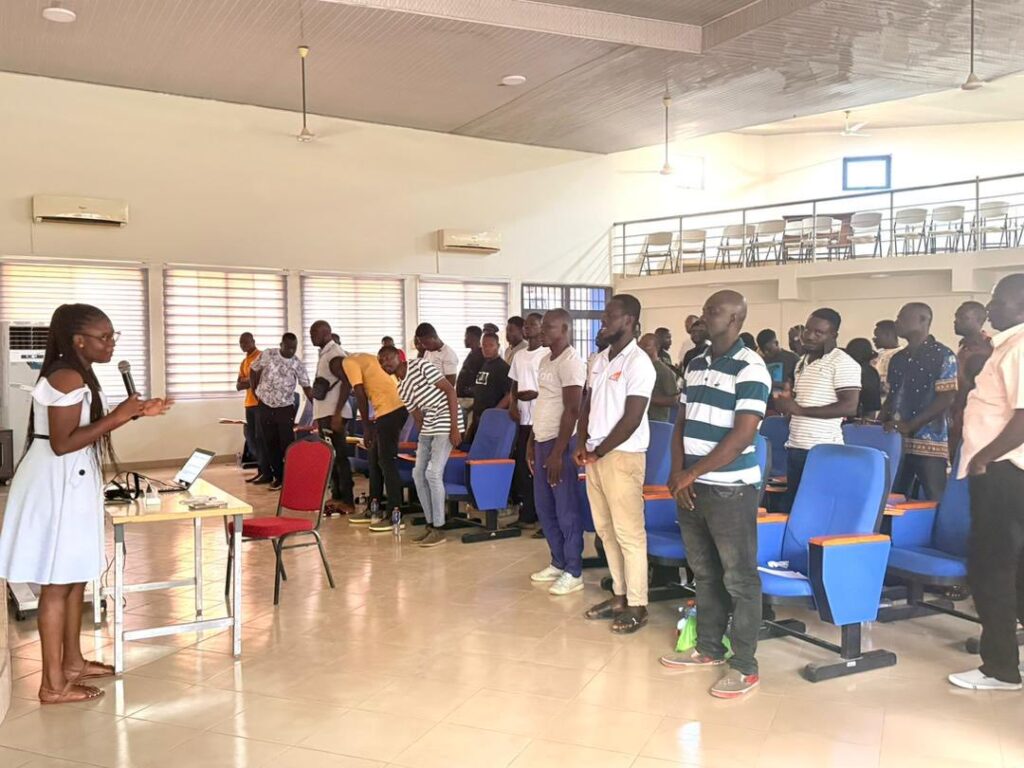
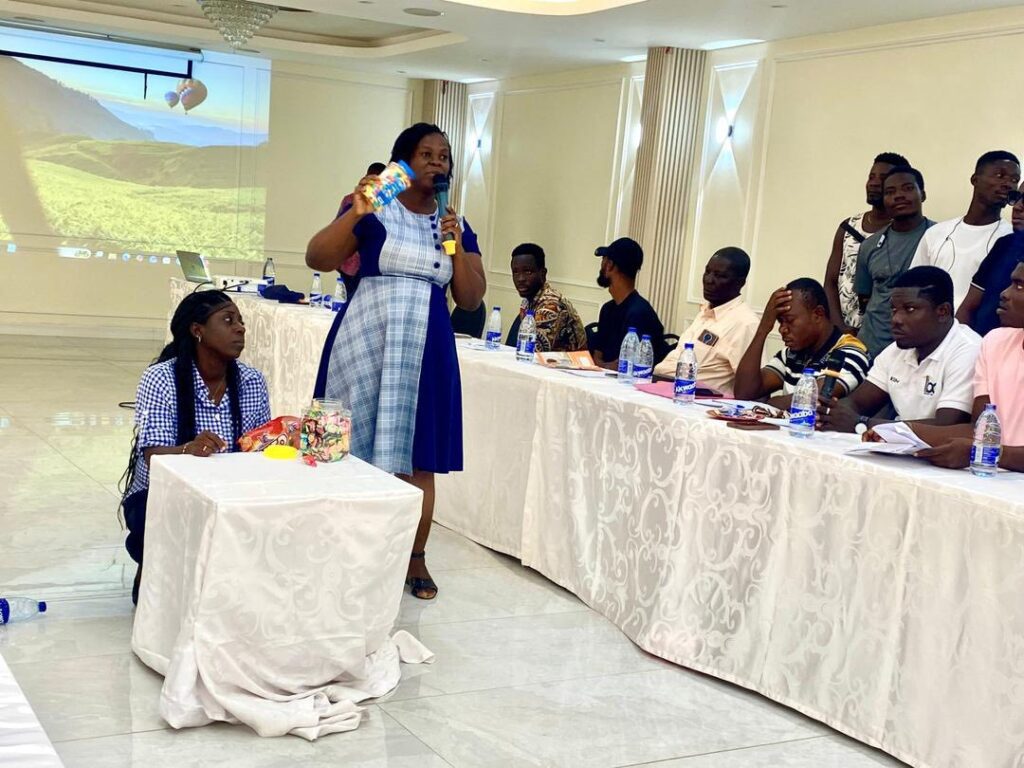
“These practical exercises strengthened participants’ ability to collect accurate data and gather credible evidence to support fisheries management and enforcement. Officers from the Fisheries Scientific Survey Division, MCSD, and the Legal and Compliance Unit brought valuable expertise, enriching the learning experience”
Fisheries Commission
The training also covered the legal rights of the observers themselves, as well as the proper procedures for briefing and debriefing, to ensure that every report submitted to the Commission is verified and cross-referenced with satellite monitoring data.
For the Commission, the objective is to create a culture of professionalism where the observer is seen as an extension of the state’s regulatory power; standardizing the way infractions are identified and reported, and making it increasingly difficult for vessel operators to bypass the law through informal means.
The closing remarks from Mr. Kwaku Fosuhene-Apenteng of the Legal and Compliance Unit framed the work of the new observers within a broader context of accountability, where adherence to fisheries laws was presented not merely as a set of rules for vessel owners to follow, but as a shared responsibility for the protection of Ghana’s marine resources.
The deployment of these observers is intended to bring a higher degree of transparency to the industrial sector, which has often operated under a shroud of secrecy once a vessel leaves the port.
As Ghana seeks to attract sustainable investment into its fisheries, the ability to demonstrate a well-regulated and monitored sector is a key selling point, since investors are more likely to commit capital to a country that can prove its fish stocks are being managed according to international standards.
The new observers are therefore not just enforcers; they are the guardians of the sector’s reputation, ensuring that the Ghanaian brand of seafood is associated with legality and sustainability.
As the new cohort prepares to board their assigned vessels, the Fisheries Commission has set clear expectations for performance and integrity. Though the four-day training at Tema has provided the foundational skills, the real test will occur in the isolated and often challenging environment at sea.
READ ALSO: FNB Ghana Cuts Bad Loans as Profits Surge Sixfold