• About
  • Advertise
  • Privacy Policy
  • Contact
Saturday, May 16, 2026
  • Login
The Vaultz News
  • Top Stories
  • News
    • General News
    • Education
    • Health
    • Opinions
  • Economics
    • Economy
    • Finance
      • Banking
      • Insurance
      • Pension
    • Securities/Markets
  • Business
    • Agribusiness
    • Vaultz Business
    • Extractives/Energy
    • Real Estate
  • World
    • Africa
    • America
    • Europe
    • UK
    • USA
    • Asia
    • Around the Globe
  • Innovation
    • Technology
    • Wheels
  • Entertainment
  • 20MOBPL2DNew
  • Jobs & Scholarships
    • Job Vacancies
    • Scholarships
No Result
View All Result
The Vaultz News
  • Top Stories
  • News
    • General News
    • Education
    • Health
    • Opinions
  • Economics
    • Economy
    • Finance
      • Banking
      • Insurance
      • Pension
    • Securities/Markets
  • Business
    • Agribusiness
    • Vaultz Business
    • Extractives/Energy
    • Real Estate
  • World
    • Africa
    • America
    • Europe
    • UK
    • USA
    • Asia
    • Around the Globe
  • Innovation
    • Technology
    • Wheels
  • Entertainment
  • 20MOBPL2DNew
  • Jobs & Scholarships
    • Job Vacancies
    • Scholarships
No Result
View All Result
The Vaultz News
No Result
View All Result
in Banking

FNB Ghana Cuts Bad Loans as Profits Surge Sixfold

M.Cby M.C
March 31, 2026
Reading Time: 4 mins read
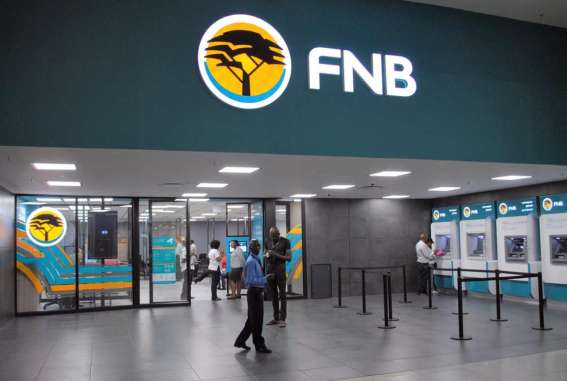
FNB Ghana Cuts Bad Loans as Profits Surge Sixfold

First National Bank

First National Bank Ghana has delivered a remarkable financial turnaround in 2025, posting a sharp rise in profitability alongside notable improvements in asset quality. 

The bank’s latest results reveal a strong recovery driven by enhanced income streams, disciplined risk management, and a strengthened balance sheet.

The performance signals more than just a rebound. It reflects a bank entering a more resilient phase, supported by improved fundamentals and growing market confidence.

Profit Growth Reflects Strong Operating Momentum

FNB Ghana recorded a profit after tax of GH¢106.8 million for the year ended December 2025, a substantial increase from GH¢18.2 million in 2024. Profit before tax also rose significantly to GH¢110.4 million, up from GH¢30.9 million the previous year.

ADVERTISEMENT

This impressive growth was largely underpinned by a surge in operating income, which climbed to GH¢605.6 million from GH¢431.3 million. The figures point to a broad-based improvement across the bank’s income lines, highlighting a more efficient and diversified business model.

The strong earnings performance suggests that the bank is successfully capitalising on opportunities within Ghana’s banking sector while maintaining a disciplined approach to cost and risk.

Core Income Streams Drive Expansion

A closer look at the bank’s revenue composition shows that its core income engine played a central role in the improved performance. Net interest income rose to GH¢353.8 million from GH¢248.1 million, reflecting stronger lending activity and higher returns on interest-bearing assets.

In addition, net fees and commission income increased to GH¢77.2 million from GH¢67.4 million, indicating growth in transaction-based services and customer activity. Net trading income also saw a significant jump, reaching GH¢180.9 million compared to GH¢123.5 million in 2024.

Together, these gains demonstrate the benefits of a diversified revenue structure. By strengthening multiple income streams, the bank has reduced its dependence on any single source of revenue, thereby enhancing stability and long-term sustainability.

Asset Growth and Deposit Expansion Signal Confidence

FNB Ghana’s balance sheet expanded steadily during the year, with total assets rising to GH¢6.48 billion from GH¢6.18 billion. This growth reflects continued expansion in the bank’s operations and customer base.

Customer deposits increased to GH¢4.1 billion from GH¢3.86 billion, reinforcing the bank’s funding position. Deposit growth is widely seen as a key indicator of customer trust, and the increase suggests that more individuals and businesses are choosing to bank with FNB Ghana.

Liquidity levels also improved, with cash and cash equivalents rising to GH¢1.99 billion from GH¢1.80 billion. Investment securities grew to GH¢1.84 billion from GH¢1.35 billion, further strengthening the bank’s asset base.

These developments point to a more stable funding structure, providing the bank with greater flexibility to support lending and other business activities.

ADVERTISEMENT

Reduced Borrowings Enhance Financial Flexibility

One of the standout features of the 2025 results is the sharp decline in borrowings. The bank reduced its borrowings to GH¢271.8 million from GH¢636.4 million in 2024.

This reduction indicates a lower reliance on external funding sources, which can often be costly and volatile. By strengthening its deposit base and internal funding capacity, FNB Ghana has improved its financial flexibility and reduced potential risks associated with debt.

The shift positions the bank more favorably to navigate future market uncertainties while pursuing growth opportunities.

Capital Strength Reaches New Heights

FNB Ghana also recorded significant improvements in its capital position. Total equity rose to GH¢1.00 billion from GH¢537.7 million, supported by retained earnings and a GH¢358.6 million issue of ordinary shares.

As a result, the bank’s capital adequacy ratio increased sharply to 34.08 percent from 24.68 percent. This level of capitalisation provides a strong buffer against potential economic shocks and enhances the bank’s ability to expand its lending activities.

A robust capital base is critical in the banking sector, and FNB Ghana’s strengthened position underscores its readiness to support business growth while maintaining regulatory compliance.

Asset Quality Improves as Bad Loans Decline

Perhaps the most significant development in the bank’s 2025 performance is the improvement in asset quality. Gross loans declined slightly to GH¢1.38 billion from GH¢1.48 billion, reflecting a more cautious lending approach.

More importantly, non-performing loans dropped to GH¢168.8 million from GH¢199.7 million. This led to an improvement in the NPL ratio, which fell to 12.21 percent from 13.54 percent.

The reduction in bad loans indicates stronger credit risk management and improved loan recovery efforts. It also reflects a healthier loan book, which is essential for sustaining long-term profitability.

Impairment performance further reinforced this trend. Net impairment loss on financial assets declined significantly to GH¢7.3 million from GH¢24.8 million. This improvement contributed to a rise in operating income after impairment to GH¢598.3 million from GH¢406.4 million.

FNB Ghana’s 2025 results present a compelling story of transformation. The bank has achieved strong profit growth while simultaneously improving its balance sheet, capital position, and asset quality.

The combination of rising earnings, growing deposits, reduced borrowings, and declining bad loans paints the picture of a financial institution that is becoming stronger on multiple fronts.

READ ALSO: UNAIDS Unveils HIV Prevention Framework

Sign Up to Our Newsletter

Fresh updates, Straight to your inbox

Tags: bank asset quality Ghanacapital adequacy ratio Ghana banksFNB Ghana 2025 resultsFNB Ghana deposits growthFNB Ghana financial performanceFNB Ghana profit growthGhana banking sectorGhana banks earnings 2025non-performing loans Ghana
Share2Tweet1ShareSendSend
Please login to join discussion
Previous Post

Senegal’s President Assents to Bill Doubling Same-Sex Penalties

Next Post

China, Pakistan Unveil Five-point Peace Initiative For Middle East

Related Posts

Ghana Defies Odds With Record Financial Growth
Banking

Ghana Defies Odds With Record Financial Growth

May 16, 2026
Fidelity Demands Africa Own Its Digital Future At a time when Africa’s digital economy is accelerating at an unprecedented pace, Fidelity Bank Ghana has delivered one of the strongest messages yet on the continent’s technological future. The bank made a bold and urgent case for Africa to stop depending on foreign controlled digital systems and begin building its own infrastructure capable of retaining value, strengthening currencies, and driving long term economic sovereignty. As one of the key sponsors of the 3i Africa summit, Fidelity Bank did not just show up to participate. It arrived with a message that resonated deeply across conference halls and policy discussions. Fidelity Bank emerged as one of the loudest voices championing a future where African nations control the very digital rails that power their economies. Digital Infrastructure Is The New Economic Power One of the defining moments of the summit came during a high level panel discussion on digital public infrastructure, where Adeline Aryee delivered a statement that immediately captured the attention of participants. She declared that if Africa builds its own digital rails, it naturally retains the value created by those systems. Her message was clear and uncompromising. In previous decades, national infrastructure was measured by roads, bridges, ports, and airports. Today, the true engines of economic power are payment platforms, identity systems, financial technology ecosystems, and digital marketplaces. According to Aryee, digital public infrastructure is no longer a luxury. It is now a strategic national asset. Her remarks struck at the heart of one of Africa’s most pressing economic concerns. Despite growing digital adoption, many transactions across the continent still pass through foreign payment systems, resulting in value leakage and continued pressure on local currencies. Ghana’s Success Story Becomes A Continental Blueprint Aryee highlighted Ghana’s progress in financial inclusion, mobile payments, and digital banking, describing the country as an emerging model for other African economies. Over the years, Ghana has invested heavily in domestic payment systems such as GhIPSS and its flagship platform, Gh-link. These systems have significantly expanded access to financial services while promoting digital transactions across urban and rural communities. Yet Aryee argued that inclusion alone is no longer enough. The next chapter for Africa, she insisted, must focus on ownership. She questioned why local transactions continue to depend on foreign rails when domestic infrastructure already exists. According to her, such dependence creates unnecessary external exposure and limits the continent’s ability to fully capture the economic benefits of its growing digital market. Her comments triggered intense debate among summit participants, many of whom acknowledged the urgent need for policy reforms and infrastructure investments. Market Driven Innovation Takes Center Stage Beyond infrastructure, Fidelity Bank also made a strong case for innovation that begins with real market needs. During the Ecosystem Roundtable on platforms, talent, and digital markets, Prince Osei Hyeaman-Addai shared insights from the bank’s years of digital financial innovation. He stressed that successful digital products are not built in boardrooms or based on assumptions. Instead, they are created by listening carefully to the market and understanding customer pain points. According to him, the market itself reveals the problems that need solving, the type of platform required, and the path toward scalable growth. His comments reflected a growing shift in African fintech circles, where customer centered design is becoming essential for product adoption and long term relevance. Trust And Credibility Remain The Real Currency Prince also emphasized that technology alone does not guarantee success. In his view, trust, credibility, and strong operational structures remain the real foundations of successful innovation. He noted that while investor interest in African fintech continues to rise, startups must prove they can deliver sustainable solutions, maintain transparency, and build products that respond to local realities. This perspective reflects Fidelity Bank’s own journey in digital transformation. Over the years, the bank has built strategic collaborations with leading fintech players, including IT Consortium, helping pioneer wallet to bank integrations and mobile financial solutions in Ghana. These partnerships have helped position Fidelity as one of Ghana’s most innovation driven financial institutions. A Defining Moment For Africa’s Digital Future Fidelity Bank’s participation at the 3i Africa Summit 2026 was more than a corporate appearance. It was a strategic declaration. At a time when Africa is racing to build competitive digital economies, the bank’s message was impossible to ignore. Africa cannot simply consume technology created elsewhere. It must own the infrastructure, shape the platforms, and capture the value generated by its digital future. As conversations from the summit continue to ripple across financial and policy circles, one thing is becoming increasingly clear. Africa’s next economic revolution may not be built on oil, gold, or minerals. It may be built on digital rails designed, owned, and powered by Africans. READ ALSO: IMF Ghana Review Ends in Dramatic Cliffhanger Fidelity Demands Africa Own Its Digital Future At a time when Africa’s digital economy is accelerating at an unprecedented pace, Fidelity Bank Ghana has delivered one of the strongest messages yet on the continent’s technological future. The bank made a bold and urgent case for Africa to stop depending on foreign controlled digital systems and begin building its own infrastructure capable of retaining value, strengthening currencies, and driving long term economic sovereignty. As one of the key sponsors of the 3i Africa summit, Fidelity Bank did not just show up to participate. It arrived with a message that resonated deeply across conference halls and policy discussions. Fidelity Bank emerged as one of the loudest voices championing a future where African nations control the very digital rails that power their economies. Digital Infrastructure Is The New Economic Power One of the defining moments of the summit came during a high level panel discussion on digital public infrastructure, where Adeline Aryee delivered a statement that immediately captured the attention of participants. She declared that if Africa builds its own digital rails, it naturally retains the value created by those systems. Her message was clear and uncompromising. In previous decades, national infrastructure was measured by roads, bridges, ports, and airports. Today, the true engines of economic power are payment platforms, identity systems, financial technology ecosystems, and digital marketplaces. According to Aryee, digital public infrastructure is no longer a luxury. It is now a strategic national asset. Her remarks struck at the heart of one of Africa’s most pressing economic concerns. Despite growing digital adoption, many transactions across the continent still pass through foreign payment systems, resulting in value leakage and continued pressure on local currencies. Ghana’s Success Story Becomes A Continental Blueprint Aryee highlighted Ghana’s progress in financial inclusion, mobile payments, and digital banking, describing the country as an emerging model for other African economies. Over the years, Ghana has invested heavily in domestic payment systems such as GhIPSS and its flagship platform, Gh-link. These systems have significantly expanded access to financial services while promoting digital transactions across urban and rural communities. Yet Aryee argued that inclusion alone is no longer enough. The next chapter for Africa, she insisted, must focus on ownership. She questioned why local transactions continue to depend on foreign rails when domestic infrastructure already exists. According to her, such dependence creates unnecessary external exposure and limits the continent’s ability to fully capture the economic benefits of its growing digital market. Her comments triggered intense debate among summit participants, many of whom acknowledged the urgent need for policy reforms and infrastructure investments. Market Driven Innovation Takes Center Stage Beyond infrastructure, Fidelity Bank also made a strong case for innovation that begins with real market needs. During the Ecosystem Roundtable on platforms, talent, and digital markets, Prince Osei Hyeaman-Addai shared insights from the bank’s years of digital financial innovation. He stressed that successful digital products are not built in boardrooms or based on assumptions. Instead, they are created by listening carefully to the market and understanding customer pain points. According to him, the market itself reveals the problems that need solving, the type of platform required, and the path toward scalable growth. His comments reflected a growing shift in African fintech circles, where customer centered design is becoming essential for product adoption and long term relevance. Trust And Credibility Remain The Real Currency Prince also emphasized that technology alone does not guarantee success. In his view, trust, credibility, and strong operational structures remain the real foundations of successful innovation. He noted that while investor interest in African fintech continues to rise, startups must prove they can deliver sustainable solutions, maintain transparency, and build products that respond to local realities. This perspective reflects Fidelity Bank’s own journey in digital transformation. Over the years, the bank has built strategic collaborations with leading fintech players, including IT Consortium, helping pioneer wallet to bank integrations and mobile financial solutions in Ghana. These partnerships have helped position Fidelity as one of Ghana’s most innovation driven financial institutions. A Defining Moment For Africa’s Digital Future Fidelity Bank’s participation at the 3i Africa Summit 2026 was more than a corporate appearance. It was a strategic declaration. At a time when Africa is racing to build competitive digital economies, the bank’s message was impossible to ignore. Africa cannot simply consume technology created elsewhere. It must own the infrastructure, shape the platforms, and capture the value generated by its digital future. As conversations from the summit continue to ripple across financial and policy circles, one thing is becoming increasingly clear. Africa’s next economic revolution may not be built on oil, gold, or minerals. It may be built on digital rails designed, owned, and powered by Africans. READ ALSO: IMF Ghana Review Ends in Dramatic Cliffhanger Fidelity Demands Africa Own Its Digital Future
Banking

Fidelity Demands Africa Own Its Digital Future

May 15, 2026
Absa Bank Ghana Empowers Academic City University College With Money Skills
Banking

Absa Bank Ghana Empowers Academic City University With Money Skills

May 14, 2026
Access Bank Strengthens Ashanti With Strategic Investment
Banking

Access Bank Strengthens Ashanti With Strategic Investment

May 14, 2026

Sign Up to Our Newsletter

Fresh updates, Straight to your inbox

Recent News

SUN SWAGGA Flyer

Black Sherif Brings ‘Sun Swagga’ to New York

May 16, 2026
Trump Rebuffs Putin’s Offer To Aid Israel-Iran Conflict Mediation

Putin To Visit China After Trump’s Trip

May 16, 2026
Gary Nimako, Director of Legal Affairs for NPP and Lawyer

Gary Nimako Warns Against Criminalising Free Speech in Ghana

May 16, 2026
Honourable Rockson-Nelson Etse Kwami Dafeamekpor, MP for South Dayi Constituency And Majority Chief Whip

Legal Education Act to Anchor Ghana School Of Law – Majority Whip

May 16, 2026
President John Dramani Mahama (L) Franklin Cudjoe, Founding President IMANI Centre for Policy and Education (R)

Franklin Cudjoe: Mahama Government Delivers Ghana’s Fastest Economic Recovery

May 16, 2026
Next Post
Xi In Kazakhstan Ahead Of Second China-Central Asia Summit

China, Pakistan Unveil Five-point Peace Initiative For Middle East

The Vaultz News

Copyright © 2025 The Vaultz News. All rights reserved.

Navigate Site

  • About
  • Advertise
  • Privacy Policy
  • Contact

Follow Us

Welcome Back!

Login to your account below

Forgotten Password?

Retrieve your password

Please enter your username or email address to reset your password.

Log In
No Result
View All Result
  • Top Stories
  • News
    • General News
    • Education
    • Health
    • Opinions
  • Economics
    • Economy
    • Finance
      • Banking
      • Insurance
      • Pension
    • Securities/Markets
  • Business
    • Agribusiness
    • Vaultz Business
    • Extractives/Energy
    • Real Estate
  • World
    • Africa
    • America
    • Europe
    • UK
    • USA
    • Asia
    • Around the Globe
  • Innovation
    • Technology
    • Wheels
  • Entertainment
  • 20MOBPL2D
  • Jobs & Scholarships
    • Job Vacancies
    • Scholarships

Copyright © 2025 The Vaultz News. All rights reserved.

This website uses cookies. By continuing to use this website you are giving consent to cookies being used. Visit our Privacy and Cookie Policy.

Discover the Details behind the story

Get an in-depth analysis of the news from our top editors

Enter your email address