China and Pakistan have jointly unveiled a five-point initiative aimed at restoring peace and stability in the Gulf and Middle East region.
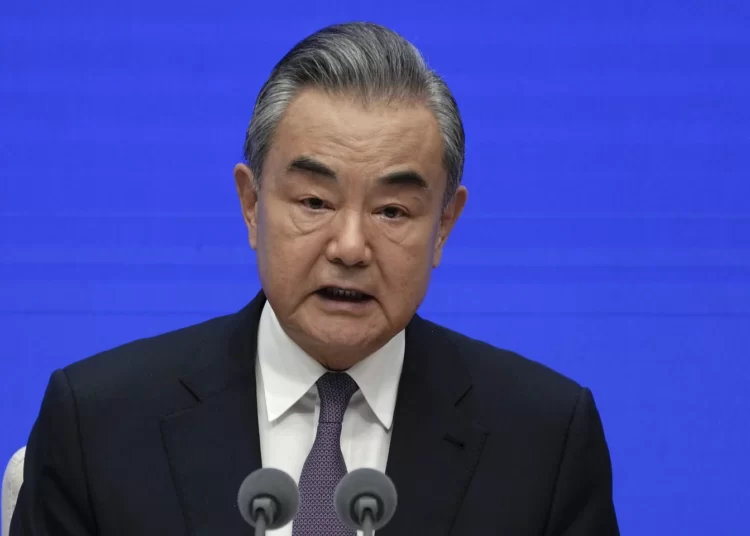
The proposal was announced following a meeting in Beijing between Chinese Foreign Minister Wang Yi and Pakistan’s Deputy Prime Minister and Foreign Minister Ishaq Dar.
The two officials reviewed the deteriorating security situation in the Gulf and the wider Middle East and outlined a framework they say could help de-escalate tensions and encourage a peaceful resolution to ongoing conflicts.
According to the joint statement, the initiative is intended to prevent the escalation of hostilities while promoting dialogue and international cooperation under the principles of the United Nations.
The first point of the initiative calls for an immediate cessation of hostilities across the conflict-affected region. China and Pakistan urged all parties involved to take urgent steps to halt fighting and prevent the crisis from spreading further. The two countries also stressed the importance of ensuring that humanitarian assistance reaches populations affected by the conflict.
The second point emphasizes the need to begin peace talks as soon as possible. The two governments stressed that dialogue and diplomacy remain the only viable path toward resolving conflicts in the region.
They also highlighted the importance of respecting the sovereignty, territorial integrity, national independence, and security of regional states, including Iran and the Gulf countries.“Dialogue and diplomacy is the only viable option to resolve conflicts,” the statement said, noting that China and Pakistan support the relevant parties in initiating negotiations.
It further called on all sides to commit to a peaceful resolution of disputes and to refrain from the use or threat of force during the negotiation process.
Another key element of the initiative focuses on the protection of civilians and nonmilitary targets. The joint statement emphasized that international humanitarian principles must be respected during armed conflict. China and Pakistan called on parties involved in the conflict to stop attacks on civilians and civilian infrastructure immediately.
The statement also highlighted concerns about attacks on critical infrastructure, including energy facilities, desalination plants, and power stations. It warned that strikes on such facilities could worsen humanitarian conditions and destabilize the broader region.
China and Pakistan further urged all sides to protect peaceful nuclear infrastructure, including nuclear power plants, underscoring the potential risks such attacks could pose to both regional and global security.
China, Pakistan Call For Security Of Shipping Lanes

The fourth component of the initiative addresses the security of global shipping lanes, particularly in the strategic Strait of Hormuz. The waterway is one of the world’s most critical maritime routes for oil and commercial trade, carrying a significant portion of global energy shipments.
China and Pakistan warned that instability in the area threatens international trade and energy supplies. The two countries called on all parties to protect the safety of ships and crew members currently operating in the waterway. “The Strait of Hormuz, together with its adjacent waters, is an important global shipping route for goods and energy,” the statement said.
China and Pakistan urged parties involved in the conflict to ensure the early and safe passage of civilian and commercial vessels and to restore normal maritime traffic through the strait as soon as possible.
The final point of the initiative underscores the primacy of the United Nations Charter and the importance of multilateral cooperation in resolving international disputes. China and Pakistan called for renewed efforts to strengthen the role of the UN in promoting peace and stability in the region.
The statement said both countries support the establishment of a comprehensive peace framework based on the purposes and principles of the UN Charter and international law. It also emphasized the importance of what the two countries described as “true multilateralism” in addressing global crises.
China and Pakistan concluded their statement by urging the international community to work together to support diplomatic solutions and prevent further escalation of conflict in the Gulf and the broader Middle East region.
The joint initiative reflects growing diplomatic engagement by both countries in regional security issues and signals their call for renewed dialogue at a time of heightened geopolitical tensions.
While the proposal does not outline specific enforcement mechanisms, it emphasizes diplomacy, humanitarian access, and respect for international law as key pillars for restoring stability.
The five-point initiative is intended to encourage immediate de-escalation while laying the groundwork for longer-term peace negotiations in a region that remains critical to global security and energy markets.
READ ALSO: Chamber of Mines Commends Government on Ewoyaa Mining Lease Ratification