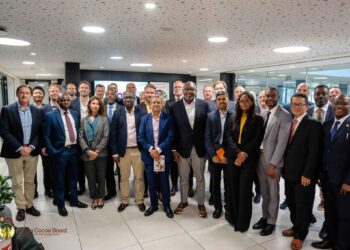
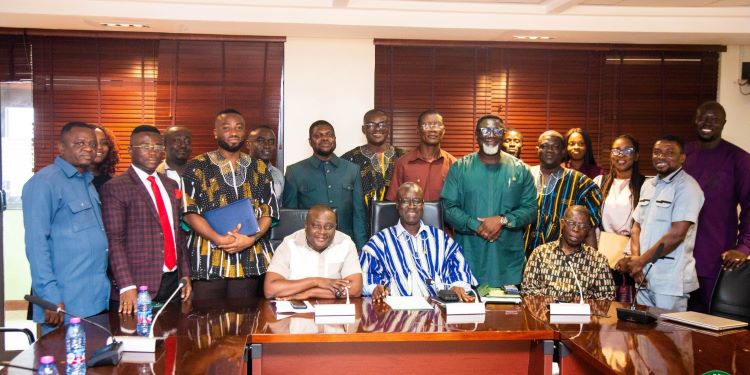
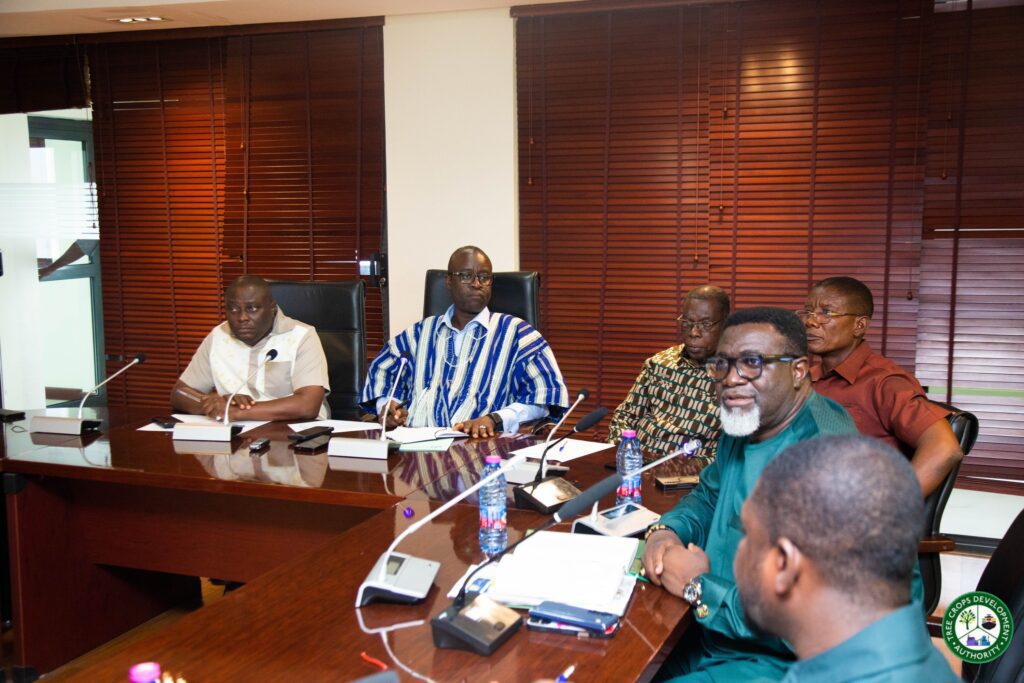
In a recent legislative briefing that signaled growth of Ghana’s non-traditional export strategy, a delegation from the Tree Crops Development Authority (TCDA) appeared before the Parliamentary Select Committee on Food, Agriculture and Cocoa Affairs, led by CEO Dr. Andy Osei Okrah.
The TCDA’s engagement with the committee – chaired by Hon. Godfred Seidu Jasaw, Member of Parliament (MP) for Wa East and Ranking Member Hon. Isaac Yaw Opoku, MP for Offinso South – was a routine administrative update as well as a strategic defense of the Authority’s mandate to regulate and revolutionize the six designated value chains.
“The TCDA briefed Committee Members on the Authority’s activities across the six selected tree crops: Cashew, Shea, Mango, Coconut, Rubber, and Oil Palm. The engagement focused on key operational priorities, programme implementation and challenges confronting the sector in the execution of its mandate”
Tree Crops Development Authority
As the Mahama administration pushes for a diversified export base, the TCDA has emerged as the technical architect of a multi-billion dollar sector that rivals cocoa in its potential for foreign exchange generation, and the briefing focused on the transition of these six crops from raw commodities into high-value industrial exports.
As part of the dialogue was the “strengthening of compliance,” across the sector. Unlike the cocoa sector, which is governed by a centralized marketing board, the tree crops sector operates in a more fragmented, private-sector-led environment.
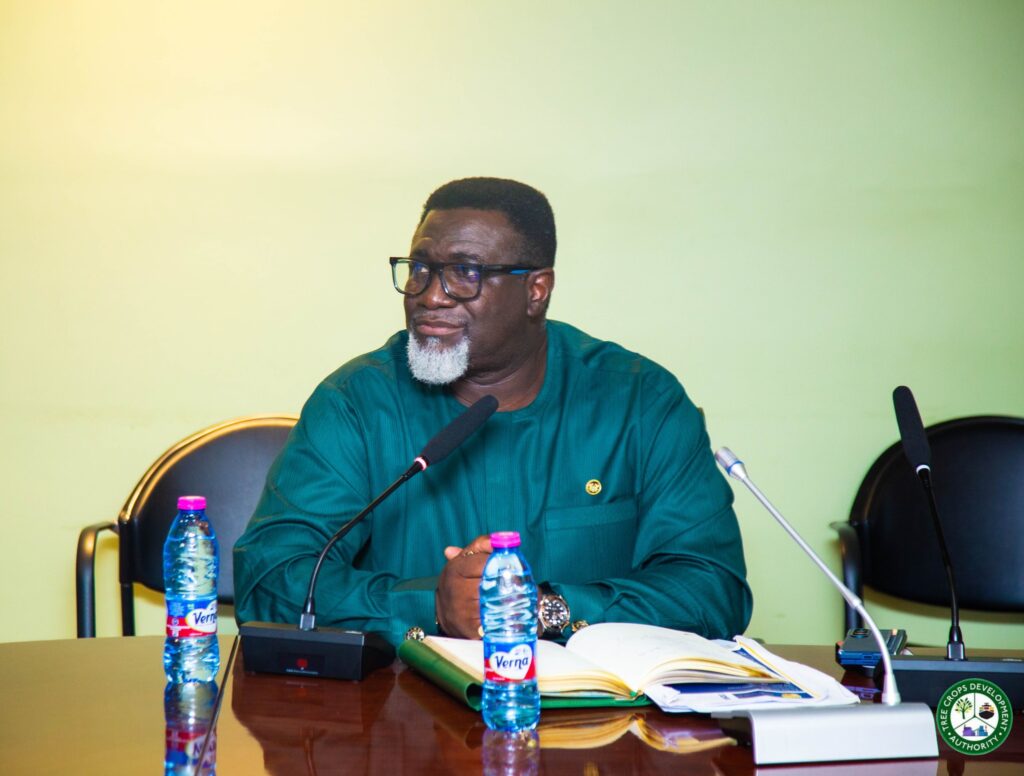
Dr. Okrah’s briefing underscored the necessity of a rigorous regulatory framework to ensure that Ghanaian exports meet the increasingly stringent quality and traceability standards of the European and North American markets. The Authority sought backing to enforce these standards, even when they disrupt traditional, informal trading routes.
With challenges like persistent issues of land tenure, seedling quality, and the illegal “leakage,” of raw cashew nuts across land borders confronting the sector, the Authority’s leadership stressed that it requires the legislative weight of Parliament to back its enforcement units to succeed.
The committee’s focus on “improving coordination,” underscores a move toward a more integrated approach, where the TCDA’s technical directives are supported by the Ministry of Trade’s industrial incentives and the Ministry of Agriculture’s irrigation infrastructure.
A Metric of Success
The Committee Chairman, Hon. Godfred Seidu Jasaw, notably commended the TCDA for its recently held maiden Tree Crops Investment Summit, Exhibition and Awards, where President John Dramani Mahama urged a rethink of how the country manages its cocoa industry. This recognition was a significant validation of the Authority’s role as an investment facilitator.
The Summit helped the TDCA significantly de-risk the sector for foreign direct investment by attracting “global attention,” the TCDA has effectively de-risked the sector for foreign direct investment.
Its success was the “proof of concept” that the committee was looking for, demonstrating that there is a global appetite for Ghanaian tree crops, provided they are backed by a transparent and stable regulatory authority.
Parliament’s involvement now ensures that this strategy remains consistent regardless of political cycles – a prerequisite for investors who are looking at the 15-to-20-year lifecycle of tree crop plantations. The TCDA is essentially building a new crop economy, but one that is decentralized and driven by high-tech processing rather than raw exports.
As the TCDA moves into the next phase of its mandate, value chain support will be the primary driver of growth. This involves the establishment of processing hubs near production zones – a strategy that aligns perfectly with Ghana’s focus on rural industrialization.
Dr. Okrah explained that by processing mangoes into pulp, coconuts into oil, and rubber into semi-finished components on Ghanaian soil, the TCDA is attempting to capture the “middle-market” value that currently escapes to Asian and European processors.
He also noted that this industrialization requires a sophisticated technical workforce, and highlighted its training of farmers in Good Agricultural Practices (GAP) and assisting processors in obtaining international certifications.
The Authority’s engagement with Parliament marks a critical step for what comes next. With the TCDA at the helm and Parliament in support, the tree crop revolution is no longer a policy proposal – it is a functional industrial reality for Ghana’s non-traditional export sector.
Under Dr. Andy Osei Okrah’s leadership, the organization has successfully mapped the value chains and secured international investor interest, making it the entity to watch as the Mahama administration moves toward the mid-point of its 2026 fiscal year.

The parliamentary briefing confirms that the technical foundations are in place, and for the Ghanaian exporter, the road to global competitiveness now runs directly through the TCDA’s specialized value chain frameworks.
However, the Authority’s ability to enforce compliance while facilitating investment will determine whether Ghana can truly diversify its economy.
READ ALSO: TOR MD Laments Global Tension’s Impact on Operations