In a decisive move that balances industrial rehabilitation with stringent legal oversight, the Ministry of Fisheries and Aquaculture Development (MoFAD) has officially lifted the one-year suspension on four high-profile industrial fishing vessels.
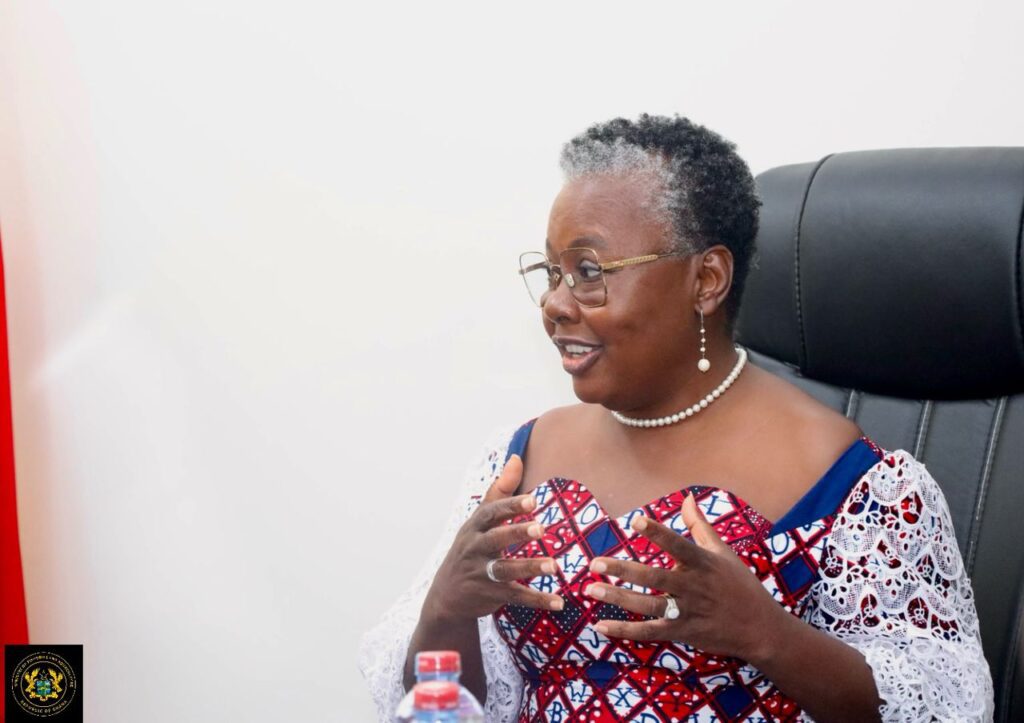
The announcement, issued by the Sector Minister Hon. Emelia Arthur, marks the conclusion of a punitive cycle for the WV Long Xiang 607, WV Long Xiang 608, WV Meng Xin 10, and WV Florence 2. However, this is far from a simple return to “business as usual.” It is the first major stress test of the Fisheries and Aquaculture Act, 2025 (Act 1146), in how Ghana polices its Blue Economy.
“The suspension, which took effect from 1st April 2025 to 31st March 2026, was imposed due to the four vessels’ involvement in repeated illegal fishing activities, in violation of the defunct Fisheries Act, 2002 (Act 625) and Regulations 32(1) and 32(2) of the Fisheries Regulations, 2010 (L.I. 1968)”
Ministry of Fisheries and Aquaculture Development
According to the Ministry, allowing the full 12-month suspension to run its course sent a clear message to the industrial fleet that the era of negotiated compliance is over. The lifting of the suspension on April 1, 2026, serves as a pivot point, transitioning these operators from a legacy of regulatory friction into a high-stakes environment governed by the 2025 legislative framework.
MoFAD noted that the “re-entry” process for these vessels is not a mere formality. Under the new administration’s focus on sustainable fisheries management, the operators are now required to navigate the rigorous licensing procedures outlined in Sections 56–66 of Act 1146.
This is a critical distinction. While the original sins were committed under the 2002 laws, the resurrection of these licenses must comply with 2025 standards. This includes more stringent technical audits, transparency in beneficial ownership, and a verified track record of operational integrity.

Under Act 1146, the Ministry has broader powers to monitor, track, and permanently decommission vessels that fail to adhere to sustainability quotas.
The Fisheries Commission, led by Ag. Executive Director Prof. Benjamin Campion, is expected to deploy advanced Vessel Monitoring Systems (VMS) and Electronic Monitoring (EM) to ensure that the “corrective measure,” cited by the Minister holds weight.
Any deviation from the new law will likely result in the “full rigors,” of a framework designed to protect Ghana’s dwindling fish stocks from industrial over-exploitation.
The Blue Supply Chain
It was noted that for Ghana to achieve its goals of food sovereignty and industrial fish processing, the industrial fleet must be operational – but they must be legal. The return of these four vessels adds significant capacity to the domestic supply chain, potentially feeding the cold stores and processing plants that are now expected to run round-the-clock.
However, the Ministry is making it clear that volume will not be prioritized over vulnerability. Proper regulation is the only way to ensure that fish processing plants have raw material years from now.
Hon. Emelia Arthur has prioritized the long-term health of the Marine Protected Areas (MPAs) and the livelihoods of artisanal fishers over short-term industrial catch metrics by enforcing the one-year ban – protecting the biological capital of the ocean so it can continue to fuel the industrial economy.
The naming of the WV Long Xiang and WV Meng Xin vessels also touches upon the delicate diplomatic balance of Ghana’s maritime relations. Many of these industrial trawlers operate under complex joint-venture agreements involving foreign capital and enforcing Ghanaian law against them asserts sovereign control over its Exclusive Economic Zone (EEZ).
This aligns with the broader regional push for “blue transparency,” where West African nations are increasingly cooperating to prevent Illegal, Unreported, and Unregulated (IUU) fishing.
At a time when Ghana is engaging with global partners on trade standards, the enforcement of Act 1146 serves as a quality certificate for Ghanaian fish exports, especially since international markets are increasingly demanding catch certificates that prove fish was harvested legally and sustainably.
For MoFAD, cleaning up the industrial fleet and enforcing deterrent sanctions sets up Ghanaian fish exports, ensuring they remain eligible for premium European and Asian markets.
For the owners of the WV Florence 2 and its counterparts, the cost of re-entry includes the cost of upgrading their vessels to meet the standards of the new Fisheries Act. This effectively acts as a regulatory sieve, ensuring that only the most technically compliant and financially stable operators are allowed back into the water.
The Ministry’s open invitation for “further clarification” from Prof. Benjamin Campion is geared towards a more consultative yet firm regulatory relationship, where the Fisheries Commission is both a licensing bureau and a technical auditor.
“The Ministry reiterates its commitment to sustainable fisheries management and warns that it will continue to work closely with all relevant regulatory bodies to monitor fishing activities and ensure strict compliance with the law. Any future violations will attract the full rigors of the law”
Ministry of Fisheries and Aquaculture Development
The lifting of the suspensions for the WV Long Xiang 607, 608, WV Meng Xin 10, and WV Florence 2 is a calculated risk by the government. It is a test of whether a year in dry-dock has truly corrected the behavior of industrial giants.
As Ghana moves into the second quarter of 2026, the focus will be on whether or not the returning vessels will remain compliant, with Act 1146 providing the legal machinery to ensure they never return should they falter.
READ ALSO: Stability Alone Won’t Save Ghana’s Economy- Theo Acheampong