United Kingdom has committed a record £90 million to species recovery efforts across England, marking the largest investment ever made to protect threatened wildlife and reverse the long-term decline of biodiversity.
The funding package, unveiled by the Department for Environment Food & Rural Affairs alongside Environment Secretary, Emma Reynolds, includes £60 million for the Species Recovery Programme over the next three years, more than double previous allocations and an additional £30 million dedicated to recovery efforts across the national forest estate.
According to the Environment Secretary, “Government is bringing threatened wildlife back from the brink,” adding that, “this long-term commitment is a decisive step towards reversing the decline of nature and protecting it for generations to come.”
Since 1970, wildlife populations have declined by approximately one-third, with one in six species now facing the risk of extinction. The expanded funding is positioned as a cornerstone of the government’s broader environmental agenda, aligning with legally binding targets set out in the Environmental Improvement Plan to halt species decline by 2030 and reduce extinction risk by 2042.
Central to this effort is the newly launched “Wild Again: Restoring England’s Wildlife” campaign, which consolidates existing and future conservation initiatives under a unified national strategy.
Moreover, the Species Recovery Programme, administered by Natural England, has long served as a critical mechanism for biodiversity conservation. It funds a diverse array of interventions, including “habitat restoration, captive breeding programmes, and species reintroductions.”
These initiatives are designed to address the primary drivers of species loss, such as habitat degradation, while safeguarding ecosystems like ancient woodlands and chalk streams and promoting the recovery of nature-rich landscapes. Funding allocations for the 2026–2029 cycle are expected to be confirmed in May, with early indications suggesting support will span a wide taxonomic range from birds and mammals to insects, molluscs, and marine species.
Over the past three decades, the programme has delivered measurable conservation outcomes, helping to protect more than 1,000 species and preventing the national extinction of at least 35. Between 2022 and 2024 alone, over 600 species benefited from targeted interventions, including well-known conservation priorities such as water voles, hazel dormice, and oystercatchers.

The initiative has also enabled notable ecological recoveries, including the return of red-billed choughs to Kent after more than two centuries, the successful reintroduction of black grouse to the North York Moors, and the reappearance of the large marsh grasshopper in the Norfolk Broads following an 85-year absence.
Alongside the species recovery funding, the government have pledged £11.8 billion toward nature-friendly farming practices during the current parliamentary term, approved the creation of three new National Forests, and authorised the first wild beaver releases in England in approximately 400 years.
Natural England Chair, Tony Juniper, said “there is one positive thing about species decline, it is the fact that it is usually reversible.”

He pointed to species such as the red kite, lady’s slipper orchid, pool frog, beaver, and large blue butterfly as evidence that targeted, science-based interventions can yield substantial ecological recovery.
“Through the proven winning mix of good science and effective partnerships, we know that many species can be restored to favourable status. This new government funding is most welcome, and will enable us to support even more of the many initiatives underway across England to halt and reverse the decline of our wonderful wildlife.”
Tony Juniper
Targeted Conservation Projects Demonstrate Early Success Across England
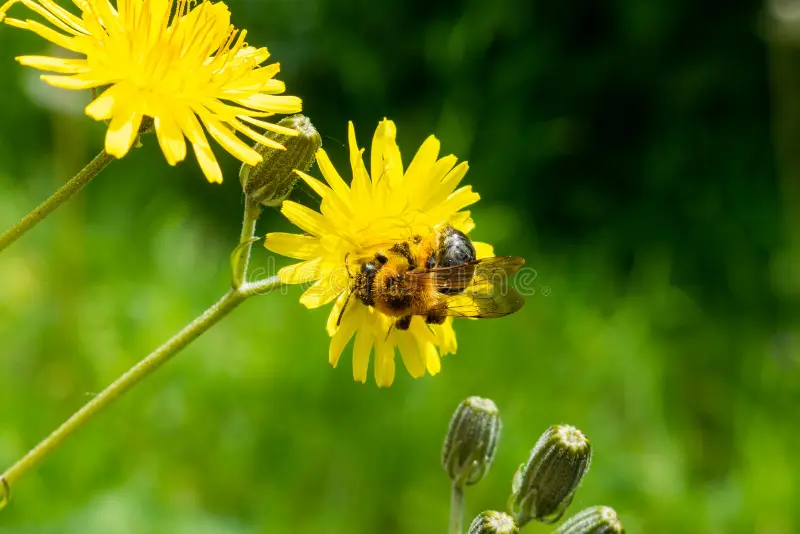
The impact of the Species Recovery Programme is already evident through a wide range of targeted conservation projects delivering tangible results across England’s diverse habitats.
One notable success has been the rediscovery of the rare Hawksbeard bee in Hastings, a species not recorded in the area for over a century. Conservation efforts led by Groundwork South, including the creation of wildflower-rich habitats, have provided critical foraging resources not only for this species but also for a broader pollinator community.
Similarly, the reintroduction of red-billed choughs in Kent delivered through collaboration between Wildwood Trust, Kent Wildlife Trust, and Paradise Parkhas marked a milestone achievement, with the first wild-hatched chick recorded in 2024 and continued breeding activity observed in 2025.
Habitat enhancement projects have equally delivered measurable benefits for bat populations in Sussex, where disused buildings have been converted into suitable breeding and hibernation sites for greater horseshoe bats. These efforts have successfully supported reproduction, with evidence of breeding colonies establishing in newly created environments.
In coastal and wetland ecosystems, collaborative projects between conservation groups have improved conditions for wading birds, with upgraded habitats in the Blackwater and Colne Estuary supporting breeding activity among species such as lapwings and redshanks.
Also, river restoration efforts in Cumbria have improved conditions for Atlantic salmon by removing migration barriers, indirectly benefiting freshwater pearl mussels, whose life cycle depends on salmonid hosts.
These efforts has shown that, it is possible to reverse biodiversity loss across multiple species groups and habitats.
READ ALSO : France, South Korea Agree To Collaborate On Reopening Strait of Hormuz