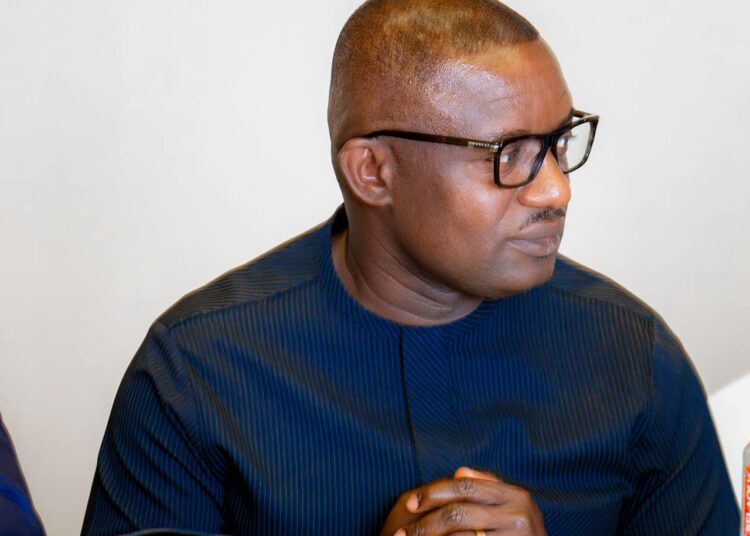
Hon. Felix Ofosu Kwakye, the Minister of State in charge of Government Communication, has announced a series of decisive interventions following an emergency Cabinet session aimed at mitigating the impact of global oil price volatility on the Ghanaian public.
The executive branch has formally directed the Ministers of Finance and Energy to facilitate a noticeable reduction in fuel prices at the pump by the commencement of the next pricing window.
This directive hinges on the strategic suspension of specific petroleum taxes and margins, which are currently being finalized for official disclosure.
“Ministers of Finance and Energy directed by Cabinet to ensure a reduction in fuel price in the next pricing window through the SUSPENSION of some taxes and margins( said taxes and margins to be announced at next pricing window).”
Hon. Felix Ofosu Kwakye,

This fiscal intervention is designed as a temporary relief measure lasting for an initial period of four weeks, though it remains subject to rigorous review based on the fluid geopolitical situation in the Middle East and the subsequent movements in international crude oil prices.
Beyond the adjustment of levies, the Cabinet has also mandated the Minister for Transport to fast-track the deployment of 100 newly acquired Metro Mass Transit buses to bolster existing fleets on high-traffic corridors.
These state-operated buses are required to maintain transport fares significantly lower than those charged by private commercial operators, providing a low-cost alternative for the commuting public during this period of economic pressure.
Fiscal Discipline and Executive Accountability

In a move to ensure the government shares the burden of the current economic climate, the President has reinforced a strict ban on fuel allocations for the executive arm.
Hon. Felix Ofosu Kwakye emphasized that “all Ministers and senior government appointees” must adhere strictly to the President’s directive regarding the cancellation of fuel allowances and coupons.
This internal austerity measure is intended to demonstrate leadership by example, ensuring that the fiscal space created by these cuts can be redirected toward sustaining the broader consumer subsidies.
The enforcement of this ban signals a shift toward enhanced fiscal discipline within the administration. By removing the “safety net” of state-funded fuel for top officials, the government aims to align its internal operations with the realities faced by ordinary citizens at the pumps.
This directive is non-negotiable and forms a core part of the administration’s strategy to maintain public confidence while navigating the external shocks currently destabilizing the global energy market.
Strategic Relief through Levy Suspension

The suspension of petroleum taxes and margins serves as a critical lever for price stabilization in a deregulated market.
Currently, the price of fuel in Ghana is heavily influenced by various statutory levies, including the Energy Debt Recovery Levy, the Road Fund Levy, and the Price Stabilisation and RecoveryLevy (PSRL).
By temporarily abolishing or suspending these components, the government directly lowers the price floor set by the National Petroleum Authority (NPA), allowing Oil Marketing Companies (OMCs) to pass the savings directly to the consumer.
The removal of these margins as advocated by many, prevents a “price spiral” where high fuel costs lead to increased production costs across all sectors of the economy.
For the average consumer, this translates to a reduction in the costs of daily life lowering the price of food transport and general services.
This “cushioning effect” is essential for maintaining the record-low inflation rates the country has achieved, preventing external Middle Eastern tensions from eroding the domestic purchasing power of the Cedi.
Enhancing Public Mobility and Transport Affordability
The expedited deployment of the 100 Metro Mass Transit buses represents a structural approach to urban mobility and social protection.
By increasing the frequency and availability of these buses on high-traffic routes, the government is effectively “crowding in” more affordable transport options. This serves as a competitive check on private transport fares, which often rise “in tandem with fuel price hikes” at the pumps.
Maintaining lower fares on these buses acts as a direct subsidy to the working class and students, ensuring that the cost of movement does not become a barrier to economic activity.
The Minister for Transport’s mandate to ensure the maintenance of these lower fares is a pivotal component of the Cabinet’s broader strategy.
As the global energy landscape remains unpredictable, these combined measures tax suspensions, executive fuel cuts, and enhanced public transport form a comprehensive shield for the Ghanaian consumer against the “evolving situation” in the international oil market.
READ ALSO: Akufo-Addo Leads ECOWAS Election Observer Mission to Benin