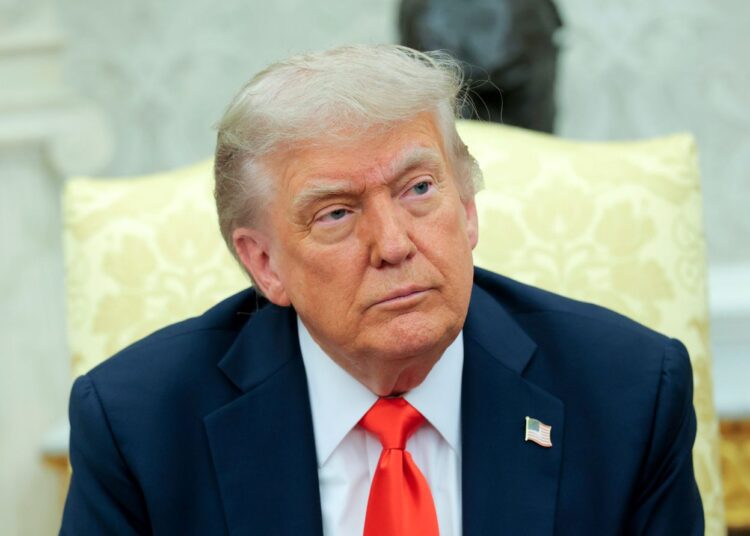
President Donald Trump has said that US military forces will remain deployed in and around Iran despite the announcement of a two-week truce between the two countries, warning that the United States is prepared to resume military action if the terms of a broader agreement are not honored.
In a social media post, Trump outlined the US position following the temporary halt in hostilities. The US President said that military personnel would stay in place during the truce period while negotiations continue toward what he described as a “real agreement.”
“All US Ships, Aircraft, and Military Personnel, with additional Ammunition, Weaponry, and anything else that is appropriate and necessary for the lethal prosecution and destruction of an already substantially degraded Enemy, will remain in place in, and around, Iran, until such time as the REAL AGREEMENT reached is fully complied with.”
Donald Trump
Trump indicated that while the truce offers an opportunity for diplomacy, Washington is maintaining a strong military posture in the region to ensure compliance with any agreement that may be reached. “If for any reason it is not, which is highly unlikely, then the ‘Shootin’ Starts,’ bigger, and better, and stronger than anyone has ever seen before,” he wrote.
The US President also reiterated long-standing US demands related to Iran’s nuclear ambitions. “It was agreed, a long time ago, and despite all of the fake rhetoric to the contrary – NO NUCLEAR WEAPONS and, the Strait of Hormuz WILL BE OPEN & SAFE,” he noted.
Domestic uranium enrichment has been a major sticking point in previous talks between Tehran and Washington. While Iran says it is not seeking nuclear weapons, it insists on enriching its own uranium as a national right. The Trump administration, however, has been pushing for dismantling the Iranian nuclear programme altogether.
Yesterday, White House Press Secretary, Karoline Leavitt iterated the US’ stance, stating, “The President’s red lines, namely the end of Iranian enrichment in Iran, have not changed.”
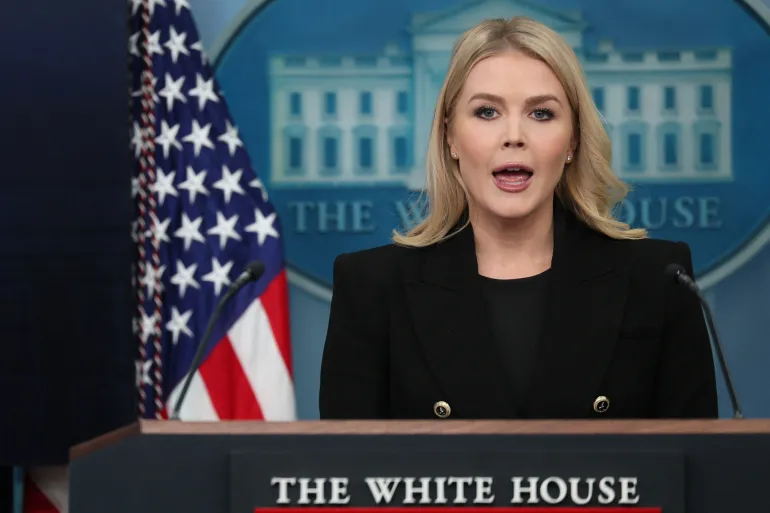
Leavitt said that Iran’s initial 10-point proposal was “literally thrown in the garbage” by Trump’s team, but Tehran later put forward a revised plan. “The idea that President Trump would ever accept an Iranian wish list as a deal is completely absurd,” she said.
The Strait of Hormuz is one of the world’s most strategically significant maritime routes, linking the Persian Gulf to the Gulf of Oman and the Arabian Sea. A large portion of global oil shipments passes through the narrow waterway, making its security a central concern for international energy markets and global trade.
Disruptions to shipping in the strait during the conflict have raised concerns about energy supply and the stability of maritime commerce in the region. Trump’s emphasis on keeping the waterway open reflects the importance Washington places on maintaining freedom of navigation through the passage.
US Military On High Alert For Potential Operations
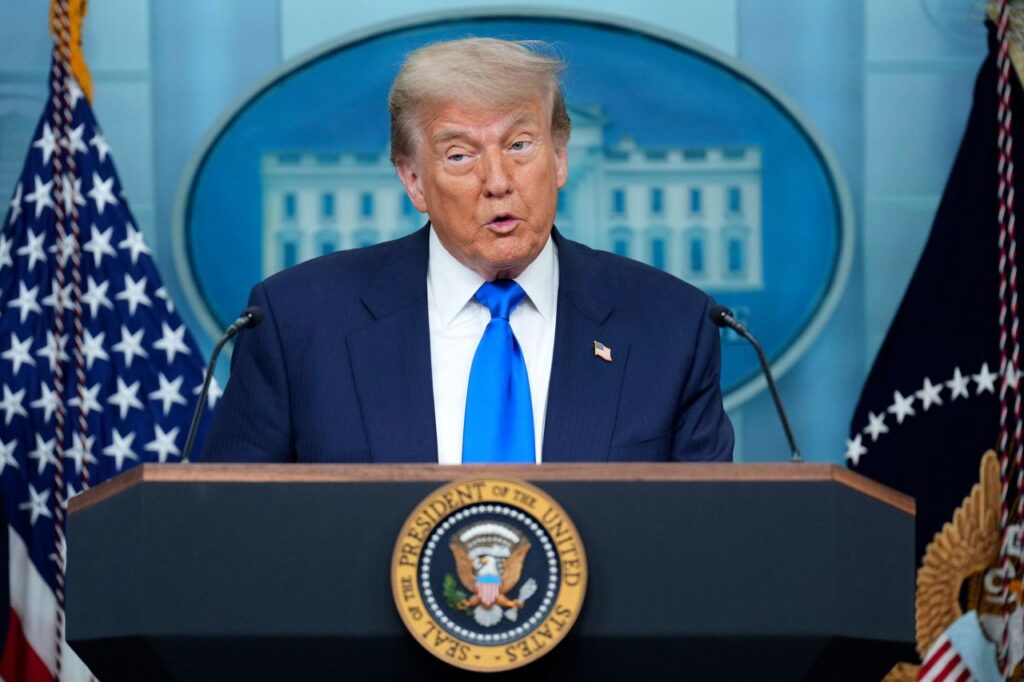
Trump’s statement suggested that the US military remains on high alert and continues to prepare for potential future operations. “In the meantime our great Military is Loading Up and Resting, looking forward, actually, to its next Conquest,” he said.
The remarks expose the fragile nature of the truce and the continued uncertainty surrounding negotiations between Washington and Tehran. While the pause in hostilities offers an opportunity to reduce tensions and pursue diplomatic engagement, both sides remain wary of potential violations or setbacks.
Trump concluded the post with a broader message about the US military and the country’s global posture, writing, “AMERICA IS BACK!”
The statement highlights the administration’s effort to project strength while pursuing negotiations aimed at preventing further escalation. Whether the ceasefire will lead to a longer-term settlement remains uncertain. Much will depend on the progress of talks between the United States and Iran.
Leavitt confirmed that the first round of negotiations will take place in the Pakistani capital, Islamabad, and the US team will be led by Vice President JD Vance, Special Envoy Steve Witkoff and Trump’s son-in-law, Jared Kushner.

However, Iran’s Parliament Speaker Mohammad Bagher Ghalibaf cast doubt over the fate of the talks. He said that the US and Israel have already violated the ceasefire by continuing the war in Lebanon, failing to stop their drones from entering Iranian airspace and denying Tehran’s right to uranium enrichment. “Now, the very ‘workable basis on which to negotiate’ has been openly and clearly violated, even before the negotiations began,” Ghalibaf noted on X, adding, “In such [a] situation, a bilateral ceasefire or negotiations is unreasonable.”
READ ALSO: Starmer Says More Work Needed To Bolster US-Iran Ceasefire