
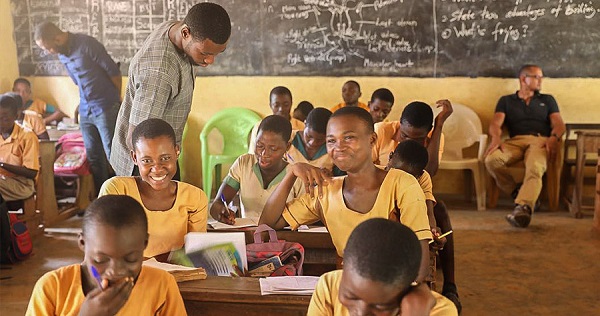
Ghana’s basic school furniture deficit remains alarmingly high at nearly one million, despite a significant allocation of GHS 1.2 billion for education infrastructure, according to findings from a recent monitoring report by Africa Education Watch.
The 2026 first quarter education policy monitoring report reveals that although half of the allocated funds were earmarked specifically for furniture, there has been little to no visible progress in addressing the shortage as of early 2026.
By 2024, the deficit had already reached critical levels, with many pupils forced to sit on classroom floors during lessons. The situation has persisted into 2026, raising concerns about implementation gaps and delays in procurement.
Eduwatch notes that, as of February 2026, the government had yet to procure desks under the District Assemblies Common Fund allocation for 2025, despite the pressing need.
Delayed Procurement and Local Challenges
While some districts such as Tatale and Zabzugu have attempted to address the issue through limited local procurement, these efforts have not significantly reduced the overall deficit.

The report highlights delays in the central procurement process as a major obstacle, calling for urgent action to fast track the acquisition and distribution of desks, particularly in deprived areas.
Eduwatch also raised concerns about the type of furniture being considered for procurement. The introduction of metal desks, while potentially durable, presents maintenance challenges in rural communities.
“Our monitoring indicates that in many districts, it is difficult to find welders to travel to remote communities and maintain metal furniture”.
Africa Education Watch
As a result, several broken metal desks have already been observed in districts like Zabzugu, underscoring the importance of factoring local maintenance capacity into procurement decisions.
Infrastructure Gains Amid Ongoing Deficits
Despite the challenges with furniture, the report acknowledges some progress in broader school infrastructure development. Government efforts to address issues such as schools under trees and dilapidated structures have led to the construction of new facilities in several districts.
Monitoring across ten districts identified 17 new basic school projects, including kindergartens, primary schools, junior high schools, and teacher accommodation units at various stages of completion.
Fully completed projects were recorded in Woribogu in Zabzugu and Tingonboko in Bongo, while several inherited projects are nearing completion in areas such as Ga East and Adentan.
Eduwatch commended the government for continuing existing projects and increasing funding for infrastructure, describing these efforts as a step in the right direction.
Concerns Over Design and Implementation Pace
However, the report identifies several policy level issues that require urgent attention. One of the key concerns is the lack of uniformity in school building designs.
Variations in construction standards have raised questions about the quality of ventilation and lighting in some newly built facilities. Eduwatch is urging the Ministry of Education to work closely with local authorities to ensure that only approved designs are used.
Another major issue is the slow pace of implementation in certain districts. In some urban areas, including Adentan and La Nkwantanang Madina, no new projects had commenced despite the availability of funds.
This has led to calls for a more needs based approach to resource allocation, ensuring that funds are directed to areas with the greatest infrastructure deficits.
Inequity in Resource Distribution
Perhaps the most striking finding of the report is the uneven distribution of funds across districts. Data from the monitoring exercise shows that districts with lower infrastructure needs received significantly higher allocations than more deprived areas.
For instance, Tatale Sanguli, a district with severe infrastructure challenges, received only GHS 2 million, while Adentan, which has relatively fewer deficits, received GHS 5 million.

On average, deprived districts received about GHS 2 million for education projects, compared to GHS 4.1 million allocated to more endowed municipalities.
Eduwatch warns that this imbalance risks widening the gap between rural and urban education systems, potentially undermining efforts to achieve equitable access to quality education.
Call for Policy Reforms and Accountability
In response to these findings, Eduwatch is calling for a review of the allocation formula for education funding under the District Assemblies Common Fund.
The organisation is urging the Ministry of Education to collaborate with the Ministry of Local Government to develop a more equitable distribution framework that prioritizes districts with the greatest needs.
Additionally, Eduwatch is advocating for the introduction of a one year warranty for all school furniture procured, to ensure quality and durability.
The report also emphasizes the need for improved monitoring and accountability mechanisms to ensure that allocated funds are used effectively and that projects are completed on time.
The persistent furniture deficit has significant implications for learning outcomes, particularly in deprived areas where students are already facing multiple challenges.
Learning on the floor not only affects student comfort but also impacts concentration and overall academic performance. Addressing the deficit is therefore critical to improving the quality of education.
As Ghana continues to invest in education infrastructure, stakeholders are urging a more coordinated and transparent approach to ensure that resources translate into tangible improvements in classrooms.
READ ALSO: Xi Touts Value Of China-Russia Ties