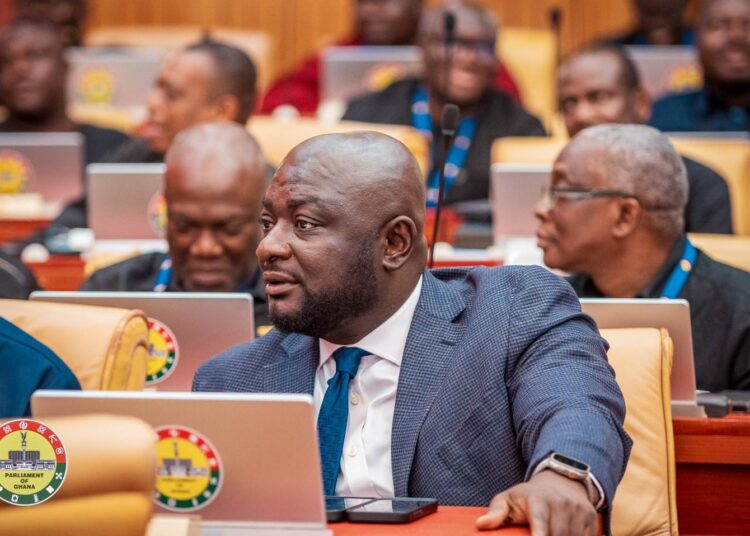
The Member of Parliament for Mpraeso Hon Davis Ansah Opoku, has asserted that Article 88(4) of Ghana’s 1992 Constitution clearly empowers the Office of the Special Prosecutor beyond the Attorney General to undertake prosecutions, stressing that the provision was deliberately designed to strengthen the country’s justice system.
According to the lawmaker, the constitutional clause allows prosecutions to be conducted either by the Attorney General or by any person authorised under the law, making room for institutional flexibility in the administration of justice.
He explained that the framers of the Constitution did not intend to concentrate prosecutorial authority solely in one office, as doing so could weaken efficiency and accountability.
Instead, the provision ensures that the fight against corruption and other offences can be carried out through legally established bodies with clearly defined mandates. The MP emphasized that this interpretation is neither novel nor controversial, describing it as a straightforward reading of the Constitution.
In his view, any suggestion that the Attorney General must personally approve every prosecution undertaken by another body misrepresents the intent of the law and risks slowing down justice delivery.

Legal Basis for the Office of the Special Prosecutor
The Mpraeso legislator pointed to the Office of the Special Prosecutor Act, 2017 (Act 959) as a direct expression of Article 88(4). He noted that Parliament enacted the law within its constitutional mandate to establish an independent institution responsible for investigating and prosecuting corruption and related offences.
According to him, Act 959 provides a standing and institutional authorization for the Office of the Special Prosecutor to carry out prosecutions without requiring repeated or case-specific approvals.
He argued that the law represents the type of statutory framework envisioned by the Constitution, allowing for a more efficient and focused approach to tackling corruption.
“So let us not pretend that the Constitution requires the Attorney-General to sit and sign off every single prosecution before the OSP can act. That is not law. That is obstruction dressed up as a constitutional argument”.
Member of Parliament for Mpraeso, Davis Ansah Opoku
Concerns Over Conflicting Court Decisions
The MP also raised concerns about recent developments in the courts, particularly in the case of Republic v. Issah Seidu and Others, where two High Courts have reportedly taken different positions on the authority of the Office of the Special Prosecutor.

He described the situation as troubling, noting that one court has chosen to pause proceedings to allow the Supreme Court to provide clarity, while another has proceeded in a way that effectively halts the Special Prosecutor’s actions and redirects cases to the Attorney General.
According to him, such divergence in judicial decisions creates uncertainty within the legal system and risks undermining public confidence. He warned that if not addressed, the situation could set a precedent where corruption cases are delayed through procedural disputes rather than resolved on their merits.
Implications for the Fight Against Corruption
The Mpraeso MP argued that the current developments pose a broader threat to Ghana’s anti corruption efforts. He cautioned that allowing procedural arguments to obstruct prosecutions could weaken accountability mechanisms and discourage efforts to tackle corruption effectively.
He noted that the Office of the Special Prosecutor was established precisely because the traditional prosecutorial system was not delivering the expected results in combating corruption.
The institution, he said, was designed to operate with a level of independence and efficiency that would enable it to handle complex cases without unnecessary delays.
Requiring case by case authorization from the Attorney General, he added, would reverse these gains and send the wrong message to the public about the country’s commitment to fighting corruption. The MP concluded by urging stakeholders to adhere to the clear intent of the Constitution and the laws enacted under it.
He maintained that authorization under Article 88(4) can be general and institutional, rather than personal and repetitive, and that Act 959 already provides the necessary legal backing for the Office of the Special Prosecutor.
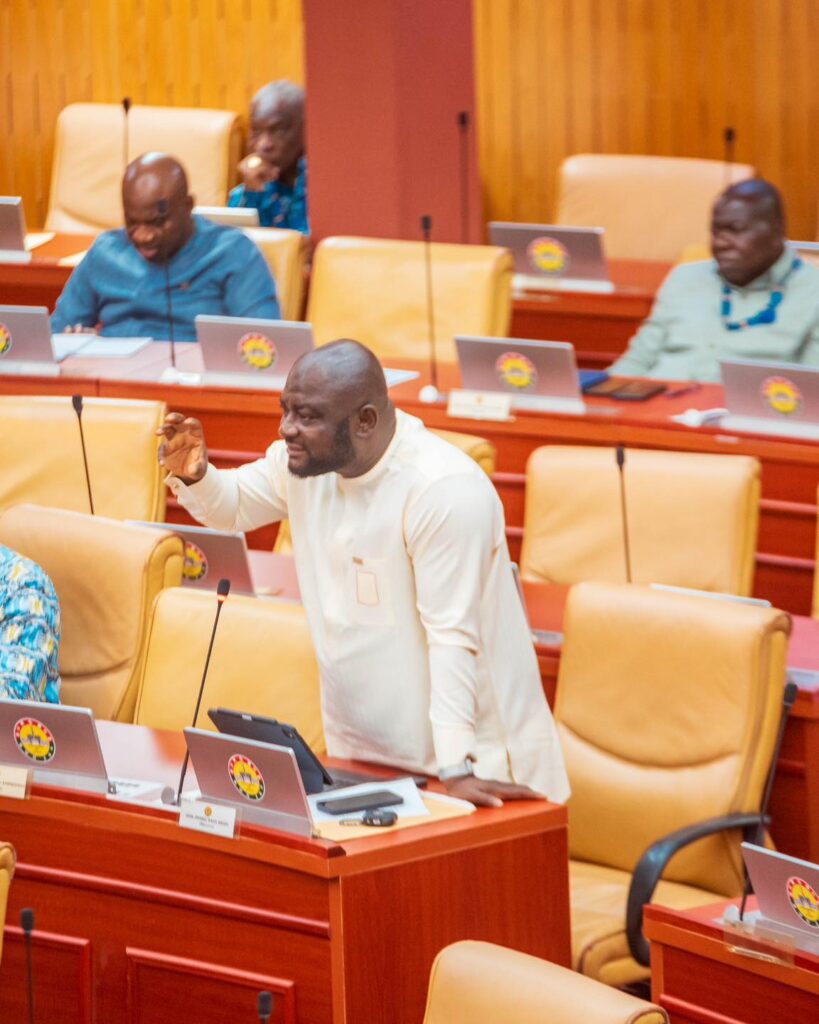
He also stressed that until the Supreme Court rules otherwise, the Special Prosecutor remains lawfully empowered to carry out prosecutions within its mandate. In his view, no lower court should interpret the law in a way that effectively disables a statutory body created by Parliament.
Describing the matter as one of principle rather than personality, the MP called for a focus on strengthening accountability systems rather than allowing legal technicalities to hinder justice.
He warned that the law must not be used in ways that shield wrongdoing, insisting that Ghana’s progress depends on a firm and consistent approach to combating corruption.
READ ALSO: GSE Rallies Despite Falling Trade Volumes