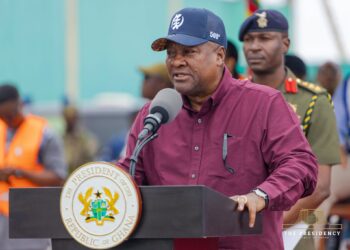
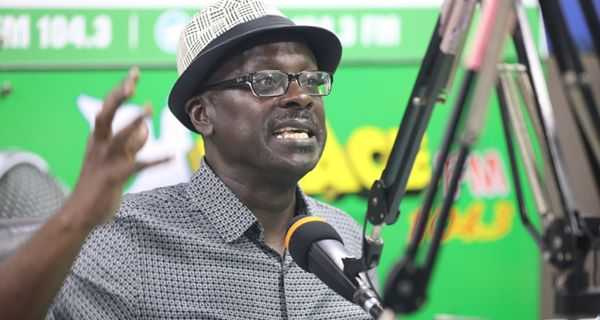
A legal scholar and fellow at the Ghana Center for Democratic Development, Professor Stephen Kwaku Asare, has strongly criticized the decision by the Attorney General’s office to take over prosecutions initiated by the Office of the Special Prosecutor, describing the move as legally inconsistent and institutionally troubling.
Reacting to comments by Deputy Attorney General Justice Srem Sai, Professor Asare questioned the rationale behind complying with a High Court directive that requires the Attorney General to assume control of all ongoing cases prosecuted by the Special Prosecutor.
The directive follows a legal challenge in which an accused person argued that the Office of the Special Prosecutor lacked the required authorization to prosecute.
While acknowledging the need to respect court orders, the legal scholar argued that the response being pursued by the Attorney General’s office raises significant legal and constitutional concerns.
He suggested that even under the assumption that the High Court’s interpretation is correct, the approach being taken is difficult to justify. “If authorisation is all that is lacking, then the most faithful response to the statutory scheme is straightforward. Issue the authorisation,” he stated.
He argued that the law cannot reasonably be interpreted in a way that allows the work of an anti corruption institution to be stalled indefinitely due to administrative inaction.
According to him, such a situation calls for a corrective measure rather than a complete takeover of prosecutions. He warned that replacing the Special Prosecutor’s role with that of the Attorney General risks undermining the purpose for which the institution was established.

Concerns Over Legal Consistency
The scholar also raised concerns about what he described as a contradiction in the Attorney General’s position. He questioned how the Attorney General could characterize the Special Prosecutor’s actions as unauthorized while at the same time seeking to continue the same prosecutions.
“If the prosecutions were indeed unlawful for want of authorisation, then on what basis does the Attorney General now seek to inherit and continue those same prosecutions?”.
Professor Stephen Kwaku Asare, CDD-Ghana Fellow
He argued that this position creates a legal inconsistency, noting that one cannot simultaneously reject a process as invalid and then adopt its outcomes. He described this as raising concerns similar to the legal principle that evidence derived from an invalid process may itself be questionable.
Professor Asare further pointed to the broader institutional framework that established the Office of the Special Prosecutor, arguing that the Attorney General played a central role in its creation and operational design.
He noted that the Attorney General sponsored the legislation that established the Special Prosecutor, developed the regulatory framework, and contributed to the appointment process.

He referenced Legislative Instrument 2374, which outlines the operational procedures of the Office, including provisions that allow the Special Prosecutor to make prosecutorial decisions based on available evidence.
According to him, this framework does not suggest the need for repeated or case specific authorization from the Attorney General. Instead, it places prosecutorial discretion within the Office of the Special Prosecutor itself.
“It is difficult to sustain a reading under which the Attorney General constitutes the Office, equips it to investigate and prosecute, and yet retains a latent veto over its core function”.
Professor Stephen Kwaku Asare, CDD-Ghana Fellow
Jurisdictional and Constitutional Implications
The legal scholar also questioned the scope of the High Court’s directive, suggesting that it goes beyond a case specific ruling and ventures into broader institutional territory.
He argued that while a High Court has the authority to interpret laws and determine the legality of proceedings before it, directing the Attorney General to take over all prosecutions by the Special Prosecutor raises jurisdictional concerns.
He asked whether a court, in resolving a single case, has the authority to effectively alter the operational control of a statutory anti corruption body across all cases.
According to him, such a move resembles a structural reallocation of prosecutorial power, which is typically the domain of Parliament or higher constitutional interpretation.
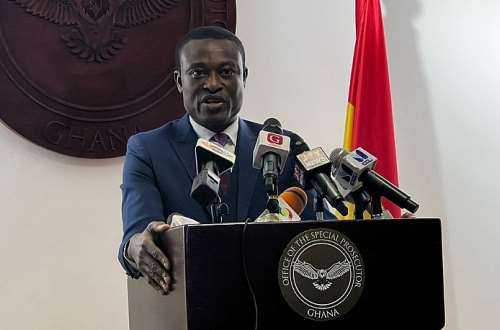
“This is not merely adjudication. It approaches institutional redesign,” he said, warning that such decisions could have far reaching implications for the balance of power within the justice system.
Broader Concerns About Anti Corruption Efforts
Professor Asare further drew attention to ongoing legal proceedings at the Supreme Court, where the Attorney General is reportedly aligned with a plaintiff challenging the constitutionality of the Office of the Special Prosecutor.
While noting that the two matters are distinct, he argued that the combination of actions raises broader concerns about the consistency of the Attorney General’s approach.
He suggested that supporting efforts to limit the powers of the Special Prosecutor in one forum while taking over its functions in another could create the impression of a coordinated weakening of the institution.
According to him, these developments risk being interpreted as more than legal interpretation, potentially signaling a gradual erosion of the structures designed to combat corruption.
Call to Preserve Anti Corruption Institutions
In his concluding remarks, Professor Asare emphasized that the issue at hand extends beyond technical legal arguments and touches on the integrity of Ghana’s anti corruption framework.
He outlined what he considers the appropriate response, stressing that any identified defect in authorization should be corrected rather than used as a basis to undermine the institution.
He maintained that the Attorney General cannot logically reject the validity of the Special Prosecutor’s actions while also adopting them. He also reiterated concerns about the breadth of the High Court’s directive and its implications for constitutional governance.
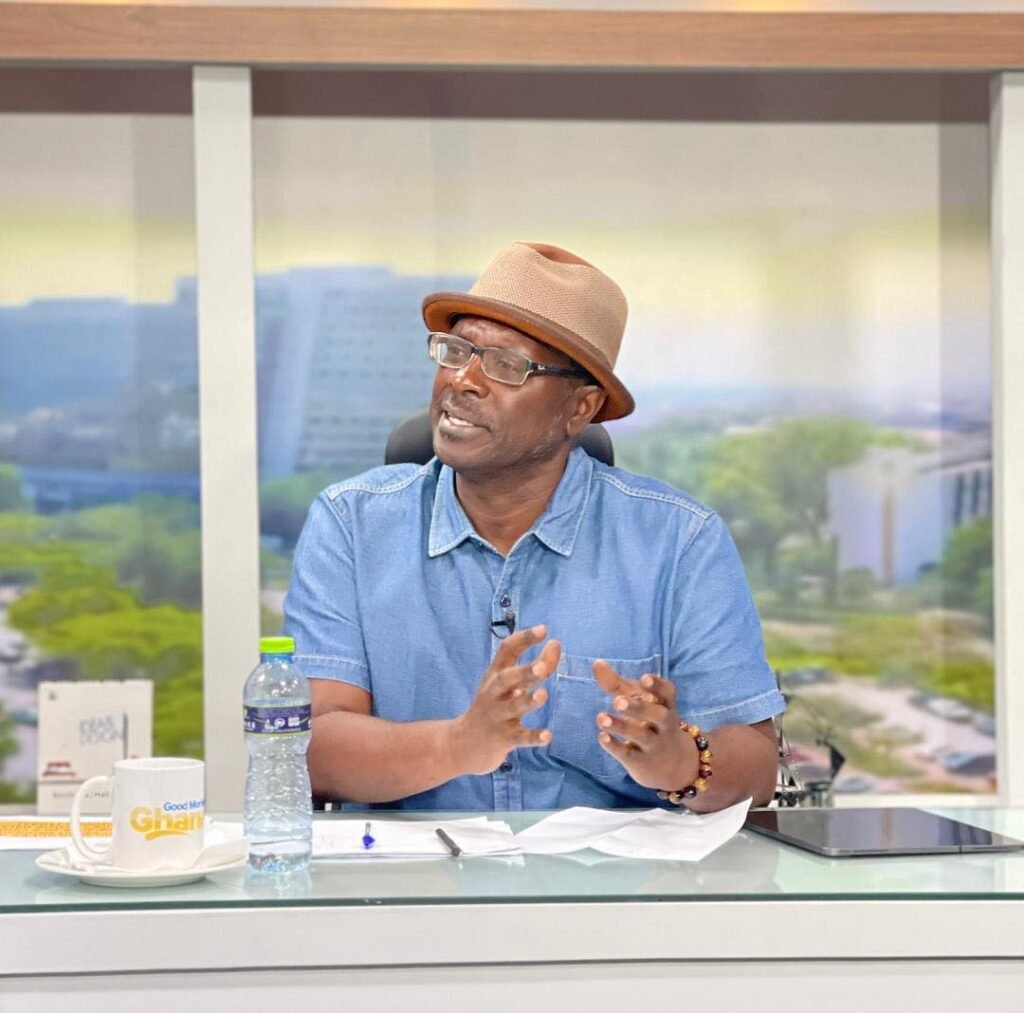
“What is at stake is not a technical defect. It is whether a statutory mechanism designed to fight corruption will be enabled or quietly neutralized through procedure”.
Professor Stephen Kwaku Asare, CDD-Ghana Fellow
He warned that Ghana’s progress in building anti corruption institutions should not be reversed through procedural actions that weaken their effectiveness. According to him, the country must remain committed to strengthening accountability mechanisms rather than allowing them to be diminished.
As the debate continues, the issues raised by Professor Asare are likely to fuel further discussion about the role of the Attorney General, the authority of the Office of the Special Prosecutor, and the broader direction of Ghana’s anti corruption efforts.
READ ALSO: GSE Surges 136 Points in Trading