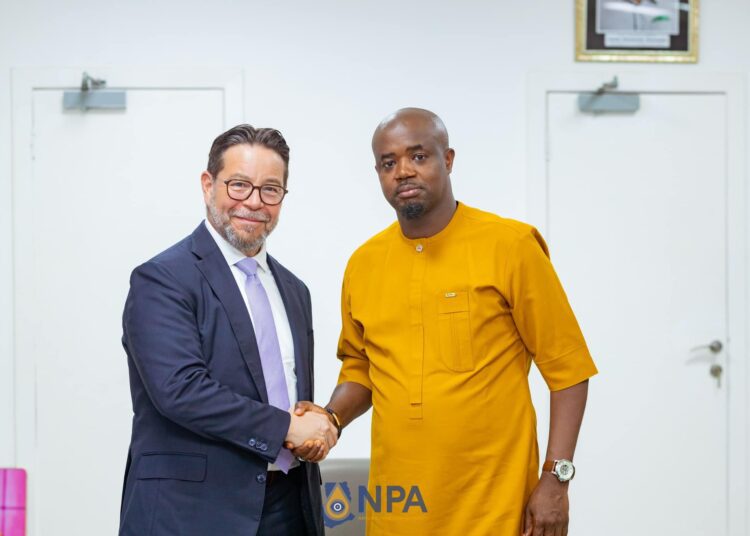
National Petroleum Authority (NPA) has solidified its position as a regional leader in downstream regulation by hosting the World Liquid Gas Association (WLGA) for a high-level courtesy call aimed at fostering global collaboration in the gas sector.
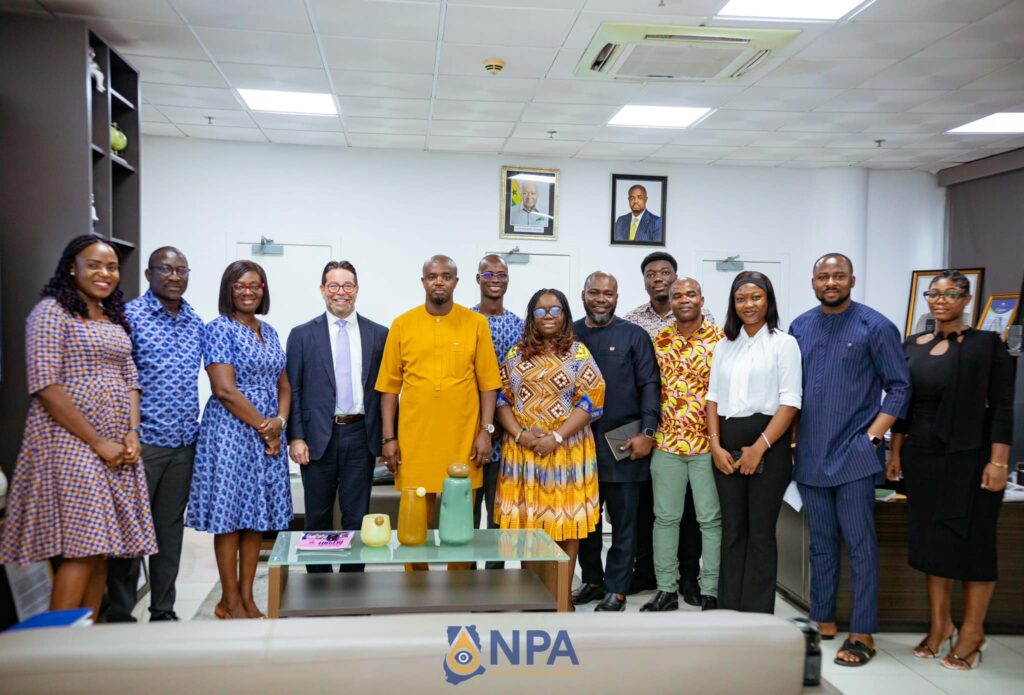
This engagement, involving the NPA Chief Executive, Mr. Godwin Kudzo Tameklo Esq., and the WLGA’s Chief Advocacy Officer and Deputy Managing Director, Michael Kelly, underscores a shared vision for advancing clean energy standards and operational excellence across the continent.
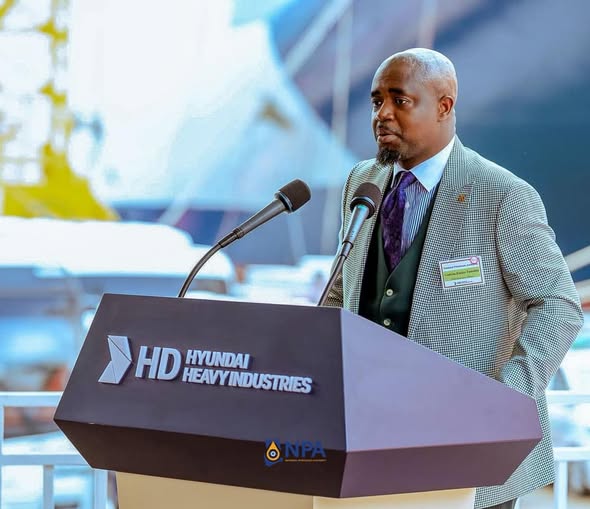
“The National Petroleum Authority remains steadfast in its mandate to drive deeper gas penetration, ensure the highest safety and regulatory standards, and significantly expand nationwide access to LPG.”
Mr. Edudzi Tameklo, NPA Boss.
This strategic meeting highlights the growing synergy between Ghana’s domestic regulatory framework and international best practices, as the country continues to refine its energy policies to ensure safe, reliable, and accessible liquefied petroleum gas (LPG) for all citizens.
By aligning with global bodies like the WLGA, the National Petroleum Authority (NPA) is not only bolstering its regulatory capacity but is also actively positioning Ghana as a prime destination for energy investment and sustainable technology transfer.
The discussion served as a vital platform for showcasing the country’s proactive legislative measures, including the landmark Cylinder Recirculation Model (CRM), which aims to revolutionize how LPG is distributed and managed, thereby mitigating risks associated with traditional refilling practices.
“By leveraging strategic international partnerships, we are ensuring that Ghana continues to serve as a definitive benchmark for effective and sustainable gas industry management in Sub-Saharan Africa,” National Petroleum Authority (NPA) reaffirmed
Scaling Excellence through the Cylinder Recirculation Model
The implementation of the Cylinder Recirculation Model stands as a testament to Ghana’s innovative approach to safety.
Mr. Kelly, representing the WLGA, lauded the Authority for this transformation, describing the nation as a “leading model in Sub-Saharan Africa” regarding regulatory progress.
The shift toward a centralized bottling plant system where cylinders are filled, inspected, and maintained by licensed operators is designed to eliminate the hazards inherent in the old model of on-site refilling at retail stations.
This transition is expected to drastically reduce the potential for fire outbreaks and accidents in residential areas. Furthermore, by professionalizing the supply chain, the NPA is creating a more reliable environment for consumers.
As the authority prepares for the full nationwide rollout of the CRM in 2026, this international validation from the WLGA provides the necessary momentum to instill public confidence and encourage the widespread adoption of cleaner, modern cooking fuels.
Global Collaboration for Local Energy Security

The invitation extended to the NPA to participate in the upcoming “Clean Cooking for Life Forum” in Accra marks a significant milestone in Ghana’s green transition journey.
This forum is a critical component of the WLGA’s global campaign, which seeks to transition one billion people away from dangerous traditional fuels like charcoal and wood, which are major drivers of deforestation and household air pollution.
By hosting and participating in such international dialogues, the NPA is positioning itself to influence global energy conversations while simultaneously gaining access to international intelligence, best practices, and innovative technologies.
This collaboration is set to boost the gas sector by integrating Ghana into a global network of industry leaders.
The exchange of technical expertise during these events will help the NPA fine-tune its oversight of LPG infrastructure, streamline market strategies, and attract the necessary investment to expand the reach of LPG to even the most remote corners of the country.
Driving the Green Transition and Economic Growth

This partnership is poised to act as a catalyst for broader economic growth by addressing the energy poverty gap.
The move toward universal LPG access, as championed by the NPA, is intrinsically linked to better health outcomes, as it reduces respiratory illnesses caused by smoke inhalation from traditional biomass fuels.
Moreover, the systematic expansion of the gas market supports the country’s green transition by lowering the carbon footprint of the domestic cooking sector.
As the NPA continues to forge these strategic alliances, the focus remains on building an energy landscape that is both resilient and inclusive.
The integration of WLGA’s global standards into Ghana’s regulatory framework will likely lead to more standardized, competitive, and efficient market operations.
Ultimately, this collaboration reinforces the Authority’s commitment to transforming the national energy mix, ensuring that growth in the gas sector serves as a sustainable engine for Ghana’s long-term economic development.
READ ALSO: CalBank’s Strong NPL Recovery Overshadowed By Sharp Loan Book Decline