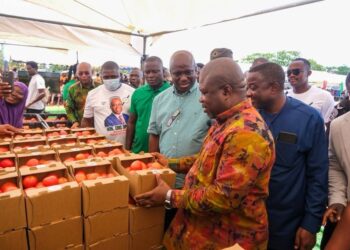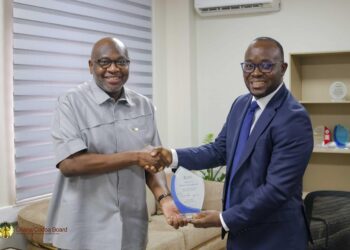

The regional capital of the Oti Region, Dambai, recently became the strategic theater for a fundamental reckoning within Ghana’s agricultural architecture, as the Conference of Regional Directors of Agriculture Ghana (CORDAG) administratively convened to confront the structural paralysis threatening the nation’s decentralized governance model.
Under the theme “Sustainable Funding for Regional Agricultural Departments and District Agricultural Departments in a Decentralised System of Government,” the assembly targeted the most volatile friction point in the sector: the widening chasm between high-level policy design and the hollowed-out logistics of field execution.
The weight of the conference was articulated by Mr. O’Brien Nyarko, the Oti Regional Director of Agriculture, in a candid indictment of the current funding status quo. He noted that while the national discourse often celebrates the introduction of improved seeds and advanced pest management, these innovations do not possess legs; they require extension officers.
“It is agricultural extension officers who go to farmers in their respective areas and update them on new farming methods; if regional and district agricultural directors do not have money to support their extension officers, it does not matter which policy government would introduce”
Mr. O’Brien Nyarko, Oti Regional Director of Agriculture
According to Mr. Nyarko, the decentralization of government was intended to move power closer to the people, but without the accompanying “financial oxygen” to fund the movement of personnel, decentralization becomes a hollowed-out mandate.
The industrial merit of agriculture is found in the adoption of technology. However, the CORDAG deliberations revealed a staggering level of logistical atrophy. Extension officers, the frontline soldiers of the Planting for Food and Jobs (PFJ 2.0) initiative, are increasingly operating in a state of professional abandonment.
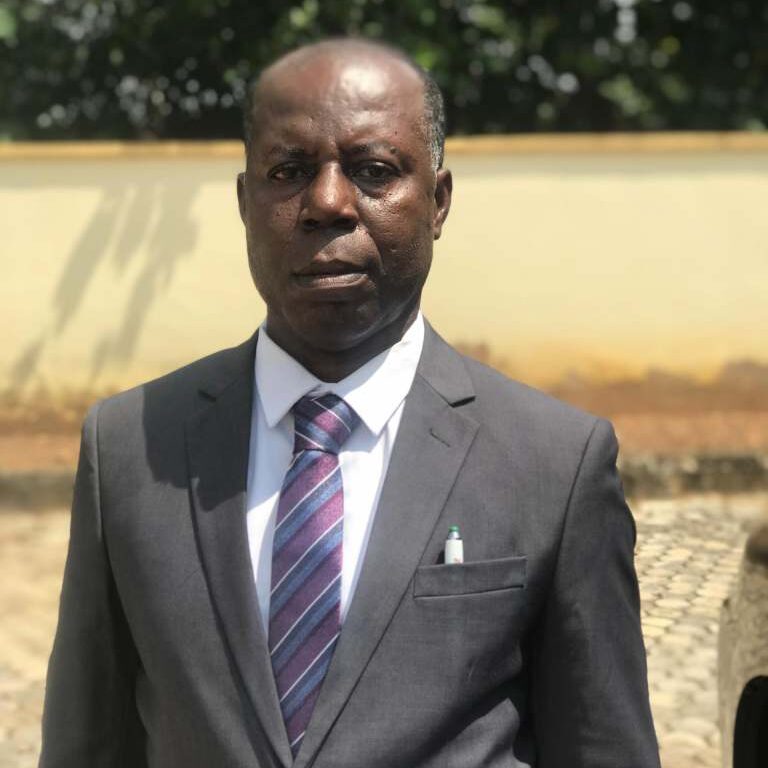
Mr. Nyarko’s description of field realities highlights a systemic failure: officers assigned to cover more than 20 communities are frequently forced to choose between personal financial ruin – paying for transport out of their meager salaries – or professional invisibility.
This is not merely a labor issue; it is a profound threat to national productivity. When an extension officer is unable to visit a remote community, the adoption of certified seeds, row planting, and integrated pest management (IPM) practices plummets. This creates a technological blackout in the most vulnerable farming clusters.
Without a consistent presence, demonstration plots – the visual proof required to convert traditional farmers to modern methods – are never established. The result is a stagnant yield profile that persists despite the millions of dollars invested in the procurement of high-tech inputs at the center.
The Oti Advantage
The selection of the Oti Region as the host for this deliberation was a tactical decision. Hon. John Kwadwo Gyapong, the Oti Regional Minister, provided the industrial context that makes the funding of these departments a matter of national urgency.
Oti is uniquely positioned as a microcosm of Ghana’s agricultural potential, boasting three distinct ecological zones: the forest, transition, and savannah. This diversity allows for a year-round production cycle across a staggering variety of crops, from cocoa and oil palm to ginger and cashew.
However, a region with such a high comparative advantage requires a commensurate level of supervisory capacity. The Minister noted that agriculture engages nearly 80 percent of the population in the region, making it the bedrock of the local economy.

Yet, the potential of Oti’s reliable rainfall and fertile zones remains partially locked behind the logistical barriers mentioned by CORDAG. If the Regional Minister’s vision of Oti as a leading cocoa-producing and grain-surplus hub is to be realized, the administrative machinery of agriculture must be greased with sustainable, predictable funding.
Beyond the farm gate, the funding crisis creates a dangerous accountability vacuum at the management level, where District Directors are tasked with the verification of farmer data and the reporting of program implementation.
In the modern industrial economy, data is the most valuable commodity; it determines the allocation of resources and the assessment of policy efficacy. Yet, as Mr. Nyarko indicated, the lack of official vehicles and fuel allocations makes regular supervision impossible.
When a District Director cannot verify the data coming from the field, the entire national reporting system becomes suspect – creating data gaps that can lead to catastrophic errors in national planning. If the government is making decisions based on unverified field reports, the risk of resource misallocation increases exponentially.
CORDAG’s call for sustainable funding is, therefore, a call for the integrity of the national agricultural database. Without the ability to monitor and supervise, the decentralization of agriculture is not a transfer of power, but a transfer of dysfunction.
The solution proposed in Dambai was a pivot toward practical strategies for fund mobilization and operational efficiency. The training workshop sought to equip directors with the tools to navigate the decentralized system without being entirely dependent on the slow-moving common fund or central releases.
This implies a move toward more entrepreneurial regional management, with innovative partnership models at the local level to sustain their operations. However, the core responsibility remains with the central government to ensure that the decentralized system is not a starvation model.

For CORDAG, the industrialization of Ghana’s agriculture – the transition from subsistence to surplus – cannot happen if the messengers of progress are walking 20 miles to reach a farm.
READ ALSO: Focuz Afriq Media Brings Back April Fool Comedy & Poetry Night 2026