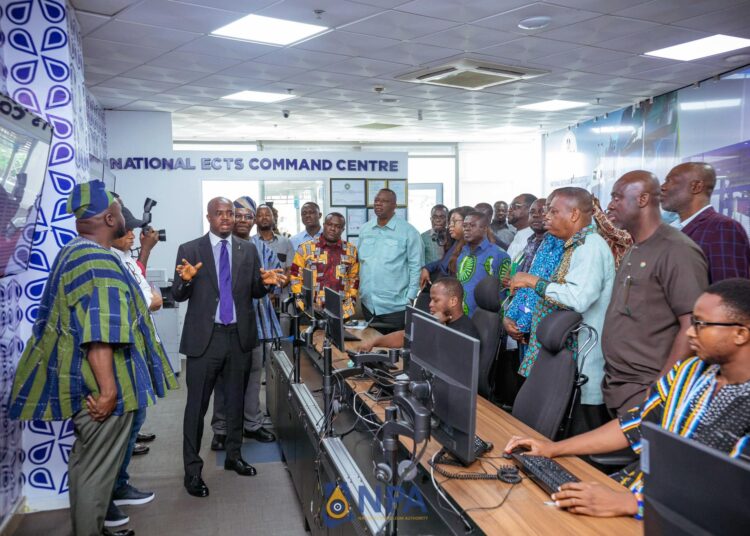
Chairman of Parliament’s Energy Committee, Hon. Emmanuel Kwasi Bedzrah, has commended the National Petroleum Authority (NPA) for its demonstrated commitment to openness and proactive engagement during a recent monitoring visit conducted in Accra.
This recognition underscores a pivotal moment in the legislative oversight of the downstream petroleum sector, signaling a strengthening of the partnership between the regulatory body and the nation’s primary legislative body.
By fostering an environment of candid communication, the Authority has reinforced its institutional reliability, ensuring that its operational strategies remain closely aligned with the broader national interest and the evolving needs of the Ghanaian populace.
“The visit forms part of Parliament’s constitutional oversight of the sector, with discussions also pointing to ongoing efforts to update the legal framework to keep pace with industry developments.”
National Petroleum Authority (NPA)

Expanding on this collaborative effort, the visit served as a vital component of Parliament’s constitutional mandate to oversee the activities of key state institutions, providing a platform for in-depth deliberations on the sector’s trajectory.
During these sessions, the NPA Chief Executive Officer, Godwin Kudzo Tameklo Esq., underscored the indispensable role that the downstream petroleum industry occupies in the daily lives of citizens, affirming the Authority’s steadfast dedication to effective regulation.
Mr. Tameklo further elaborated on the necessity of rigorous compliance and consumer protection frameworks, pointing to the efficacy of the Fuel Marking Scheme and regular, thorough inspections as primary instruments for maintaining high fuel quality standards.
Additionally, the discussions highlighted the Uniform Petroleum Pricing Policy, which continues to be a cornerstone in securing fair and equitable access to petroleum products for consumers across every region of the country, ensuring that energy remains accessible regardless of geographical location.
Advancing Sectoral Governance Through Regulatory Clarity

The embrace of transparency by the NPA serves as a critical catalyst for the advancement of Ghana’s petroleum industry, particularly as the sector maneuvers through the complexities of the global energy transition.
When a regulator adopts a posture of openness, it effectively demystifies industry operations, allowing stakeholders to engage with clear, reliable data regarding supply chain management and regulatory enforcement.
This clarity is instrumental in mitigating the risks of market volatility and potential malpractices, such as fuel adulteration or revenue leakages, which have historically posed challenges to sector stability.
By providing an accessible roadmap of policy decisions and operational metrics, the Authority empowers industry participants from local distributors to international investors to align their practices with national standards, thereby fostering a more predictable and investor-friendly climate.
Furthermore, this transparent approach bolsters the credibility of Ghana’s energy sector on the international stage, as commitment to best practices in governance is a key metric scrutinized by foreign partners and global financial institutions.
Impact on Consumer Protection and Sustainable Transition

Central to the NPA’s mandate is the protection of the consumer, an objective that is significantly amplified through transparent regulatory monitoring.
As the industry moves towards more sustainable energy solutions, the requirement for robust oversight becomes increasingly pronounced.
By maintaining the Fuel Marking Scheme and implementing consistent, transparent inspection regimes, the Authority ensures that consumers receive consistent value for their money while simultaneously preventing the circulation of substandard products that could negatively impact vehicle engines and the environment.
This level of oversight also plays a vital role in the national green transition agenda. As the country shifts towards cleaner fuels and modernized infrastructure such as the operational recovery of refineries and the expansion of liquefied petroleum gas distribution transparent communication regarding these developments is essential to garnering public support.
When the regulatory body openly shares progress on these green initiatives, it creates an informed citizenry capable of participating meaningfully in the discourse surrounding the nation’s path to net-zero transport and energy independence.
Legislative Alignment and Future Industry Modernization

The dialogue between Parliament’s Energy Committee and the NPA also highlighted a forward-looking commitment to legislative reform.
As the downstream sector undergoes rapid technological and market-driven changes, it is imperative that the existing legal frameworks are updated to effectively mirror these new industry developments.
This collaborative spirit between the regulator and the legislature ensures that any upcoming legislative amendments will be informed by practical, on-the-ground experiences, thereby bridging the gap between policy formulation and industry reality.
Such alignment is crucial for creating a responsive legal environment that can accommodate emerging trends, such as digitalized distribution systems and advanced safety protocols.
By working in concert, the Committee and the Authority are setting the stage for a resilient regulatory structure that not only addresses current operational challenges but also proactively positions the sector to capture future opportunities for growth and economic transformation.
This partnership ultimately serves as a benchmark for effective governance, proving that when regulatory and legislative bodies maintain a continuous, transparent dialogue, the entire energy sector stands to benefit from increased stability and long-term sustainable development.
READ ALSO: RFK Jr Clarifies Views On Vaccines