The Ghana National Fire Service (GNFS) has successfully contained a major fire outbreak at a substation operated by Ghana Grid Company within the Akosombo Hydroelectric Dam complex, averting what could have escalated into a far more devastating incident. The fire, which occurred on Thursday, April 23, 2026, caused significant damage to critical infrastructure but, notably, resulted in no casualties.
According to an official report, the distress call was received at approximately 1405 hours, indicating that the fire had begun around 1400 hours at the switchyard. The blaze reportedly originated from a direct current (DC) panel before escalating rapidly following an explosion in the switchover room. Initial attempts by facility supervisors to contain the fire using portable extinguishers provided only temporary relief, as thick smoke and the intensity of the flames made the situation increasingly difficult to manage.
The swift response by the fire service proved critical in preventing further destruction, particularly given the strategic importance of the Akosombo power installation to Ghana’s national electricity supply.
GNFS Deploy Firefighters Quickly
Firefighters from multiple stations, including Akosombo, Akuse, Somanya, Kpong, and Peki, were mobilised to the scene in a coordinated emergency response. A total of 64 personnel, led by DO II Isaac Gyamera Aboagye, were deployed along with three fire pumps to tackle the blaze.Upon arrival, the teams worked strategically to confine the fire and prevent it from spreading to other critical sections of the facility.
The fire was successfully confined by 1453 hours, less than an hour after the distress call was received, demonstrating the effectiveness of the rapid response system.Despite the early containment, the intensity of the fire required sustained efforts to fully bring it under control. Firefighters continued operations for several hours, eventually gaining control of the blaze at 1851 hours.
The fire was completely extinguished at 1900 hours, marking the end of a prolonged but well-coordinated firefighting effort.The operation highlighted the importance of inter-station collaboration within the GNFS, as well as the technical expertise required to handle fires involving high-voltage electrical infrastructure.
Fire Damages Critical Infrastructure
Although the firefighting effort successfully prevented casualties, the fire caused extensive damage to parts of the substation. The powerhouse and several key components, including power cables, control panels, and switches, were destroyed in the incident.
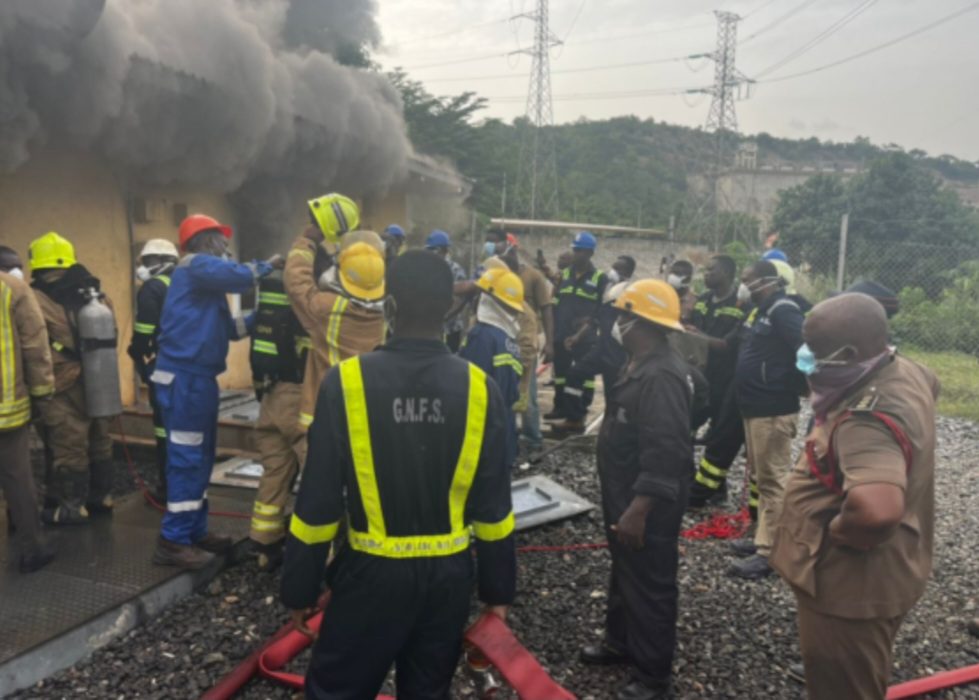
The destruction of such equipment underscores the vulnerability of critical energy infrastructure to fire-related risks, particularly in high-capacity installations like the Akosombo complex. These facilities play a vital role in electricity generation and transmission across the country, making their protection a national priority. However, firefighters were able to salvage important elements of the facility, including pylons with overhead transmission lines.
This intervention helped preserve part of the transmission network and likely prevented wider disruptions to the national grid. The incident also brings attention to the need for enhanced fire prevention systems within energy facilities, including advanced detection mechanisms, improved safety protocols, and regular maintenance of electrical components.
Authorities Begin Investigation Process
Following the incident, senior officials from the GNFS, including Chief Fire Officer Daniella Mawusi Ntow Sapong, visited the scene to assess the extent of the damage and determine the next steps. The Director of Operations also joined the inspection team, underscoring the seriousness of the incident.
Authorities have since launched investigations to determine the exact cause of the fire. While preliminary reports point to the DC panel as the origin, a detailed technical assessment will be required to establish the sequence of events leading to the explosion and subsequent blaze.The outcome of the investigation is expected to inform future safety measures, not only for the Akosombo facility but for similar installations across the country.

Lessons learned from the incident could lead to strengthened regulations and improved emergency preparedness within Ghana’s energy sector. In the meantime, the GNFS has reiterated its commitment to protecting lives and property, highlighting the importance of timely reporting and coordinated response in managing emergencies.
The successful containment of the fire without loss of life stands as a testament to the professionalism and preparedness of the firefighting teams. As Ghana continues to rely on key infrastructure such as the Akosombo Dam for power generation, incidents like this serve as a reminder of the critical need for ongoing investment in safety systems and rapid response capabilities to safeguard national assets.
READ ALSO: Justice Department Ends Probe Into Fed Chair