
Ghana’s Auditor-General has revealed the recovery of GH¢57.2 million in unearned salaries from public sector workers who remained on the government payroll despite being absent from duty or failing mandatory validation checks.
The recoveries, made between 2023 and April 2026, form part of a sustained effort to eliminate payroll fraud and restore integrity to the public financial management system.
According to official records, all recovered funds were initially lodged into a special recoveries account held with commercial banks before being transferred to the Consolidated Fund in line with statutory requirements.
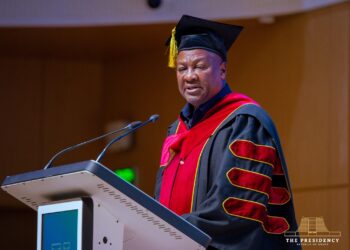
Auditor-General Johnson Akuamoah Asiedu described the development as a clear demonstration of the state’s commitment to tackling ghost names within the public sector payroll.
Determined Push to Eliminate Ghost Names
Speaking in a media interview, Mr Asiedu stressed that his office remains resolute in enforcing compliance with payroll validation systems and holding individuals accountable for any irregular payments.
“Auditors will comply fully with validation checks and surcharge every person who is paid unearned salaries. We are determined to completely do away with ghost names on the payroll.”
Auditor-General, Johnson Akuamoah Asiedu
He indicated that auditors would continue to apply validation checks rigorously and impose surcharges on any person found to have received salaries without proper justification.
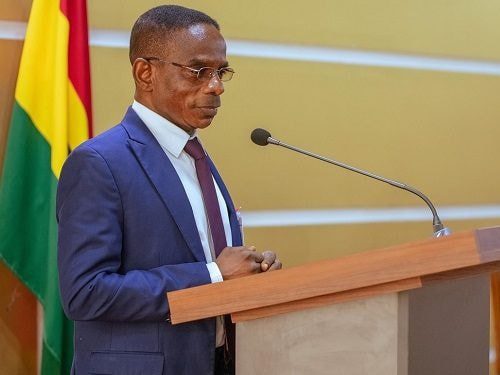
The objective, he explained, is to permanently eliminate ghost names from the system and ensure that only legitimately employed staff receive government salaries. The initiative reflects a broader national effort to strengthen financial discipline and prevent revenue leakages within the public sector.
Breakdown of Recoveries Over the Years
Data from the Auditor General’s Department shows a steady increase in recoveries over the past three years, driven by enhanced audit processes and stricter enforcement measures.
Between 2023 and 2024, a total of GH¢29.5 million was recovered from individuals who had either abandoned their posts or could not be validated during payroll checks. In 2025, intensified audit exercises led to an additional recovery of GH¢20.4 million.
The trend continued into 2026, with GH¢7.3 million recovered between January and April alone. This brings the cumulative total to GH¢57.2 million since the exercise began.
Officials confirmed that each tranche of recovered funds was transferred to the Consolidated Fund after reconciliation, in accordance with the Public Financial Management Act.
Supervisors to Face Personal Liability
Beyond targeting individuals who received unearned salaries, the Auditor-General has extended accountability measures to supervisors and managers within public institutions.
Mr Asiedu warned that any supervisor who approves payrolls without verifying the presence of listed staff would be held personally liable. He emphasised that certifying payments for individuals who are not at post constitutes a breach of duty and would attract surcharges.

This directive is expected to reinforce oversight responsibilities within ministries, departments, and agencies, where weak supervision has often contributed to payroll irregularities.
Strengthened Audit and Recovery Mechanisms
The Auditor-General outlined the processes used to identify and recover unearned salaries, noting that routine payroll audits now involve cross-checking multiple data sources.
These include validation records, attendance logs, and official posting documentation. Where discrepancies are identified, affected individuals are issued with surcharges and required to refund the amounts received.
Failure to comply with repayment directives can trigger further enforcement actions. The Auditor-General’s Department may issue a certificate of indebtedness, which enables recovery through deductions from future earnings or legal proceedings.
These measures are designed to ensure that all irregular payments are recovered and that offenders are held accountable under the law. The Public Accounts Committee of Parliament has welcomed the recovery efforts, describing them as a significant step in the fight against payroll fraud.
Mr Asiedu noted that the committee has expressed support for stronger sanctions against individuals and supervisors who facilitate such practices. He indicated that disciplinary actions, in addition to financial penalties, may be necessary to deter future violations.
The Auditor-General also revealed plans to publish the names of surcharged individuals and their supervisors. This move is intended to promote transparency and serve as a deterrent to others who may attempt to exploit the payroll system.
Continuous Validation to Sustain Gains
To sustain the progress made, the Auditor-General’s Department has introduced quarterly validation exercises across the public sector. These checks are aimed at ensuring that all employees on the payroll are verified and actively engaged in their assigned roles.
Mr Asiedu assured the public that no individual would be allowed to remain on the payroll without proof of being at post. He expressed confidence that ongoing reforms and enforcement measures would ultimately eliminate ghost names from the system.

He also acknowledged that some affected individuals have filed appeals against surcharges. However, he emphasised that the recovery process would continue while due process is followed in addressing such cases.
Restoring Confidence in Public Financial Management
The recovery of GH¢57.2 million represents a significant milestone in efforts to strengthen accountability within Ghana’s public financial management framework.
By addressing payroll fraud and enforcing strict compliance measures, authorities aim to reduce wasteful expenditure and ensure that public funds are used efficiently.
The Auditor-General’s actions are expected to enhance confidence in government financial systems while reinforcing the principle that all public officials are accountable for their actions.
As the crackdown continues, stakeholders anticipate that the combined impact of stricter audits, enhanced supervision, and greater transparency will lead to a more credible and efficient public sector payroll system.