A suspected Nigerian drug syndicate figure, Amadi Simon, has been arrested in Switzerland over allegations of orchestrating a vast international drug money laundering network. The arrest followed a coordinated multinational operation involving the National Drug Law Enforcement Agency, the United States Drug Enforcement Administration, and several European security agencies.
The arrest of Amadi Simon marks what Nigerian authorities described as one of the most significant breakthroughs in recent years against transnational drug trafficking and illicit financial operations linked to Nigerian criminal networks abroad.
According to the NDLEA, the operation was the culmination of months of intelligence gathering and cross-border investigations spanning multiple jurisdictions.
Authorities alleged that the suspect was connected to the laundering of hundreds of billions of naira generated from drug trafficking and related financial crimes through an elaborate network of shell companies, cryptocurrency channels, and international bank accounts.
In a statement issued by the National Drug Law Enforcement Agency (NDLEA) the Swiss arrest was carried out simultaneously with coordinated operations in Nigeria targeting suspected members of the network.
“The multi-country investigation into the drug money laundering operations culminated in the well-coordinated simultaneous arrest of a billionaire drug baron, Amadi Simon in Switzerland and his co-conspirators: 34-year-old Jecinta Amara Ikechi, in Anambra state, and 28-year-old Blessing Ngozi Amadi in Agbor, Delta state on Tuesday 28th April 2026.
“This followed months of intelligence and investigations across multiple jurisdictions linking Amadi to the laundering of hundreds of billions of Naira in proceeds of drug and financial crimes,”
National Drug Law Enforcement Agency
Investigators said the syndicate allegedly established a sophisticated financial structure designed to conceal and transfer illicit proceeds across several countries.
The network reportedly relied heavily on cryptocurrency wallets, layered banking transactions, and front companies to obscure the origins of the funds while moving money through international financial systems.
Authorities also traced several high-value properties in Nigeria allegedly connected to the suspect and his associates as investigations widened into the network’s assets and business operations.
Among the properties identified by investigators are Jovi Hotel in Asaba, Jovi Hotel and Suites in Agbor, Delta State, and Jovi Apartment located in Mabushi, Abuja. Officials believe the properties may have been used as part of the group’s alleged laundering activities or acquired using proceeds from drug-related crimes.
The NDLEA further disclosed that multiple bank accounts and cryptocurrency addresses linked to the operation had already been frozen as part of efforts to disrupt the movement of funds and preserve evidence for ongoing investigations.
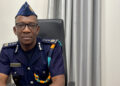
Chairman of the NDLEA, Brig. Gen. Mohamed Buba Marwa (retd.) has also described the arrests as a major step forward in Nigeria’s fight against organised drug trafficking and financial crimes with international dimensions.
Marwa said the agency remained committed to strengthening cooperation with foreign law enforcement institutions to ensure that Nigeria is not used as a base for criminal cartels or illicit financial networks.
He also commended the support provided by the US-DEA and other international agencies, noting that intelligence sharing, surveillance coordination, and joint operational planning were critical in dismantling the alleged syndicate.
Nigeria Cleared From Global Watchlist After Anti-Money Laundering Push
Recently, Nigeria was removed from the Financial Action Task Force’s global “grey list,” marking a significant improvement in its position within the international financial system as it continues to strengthen its anti-money laundering framework.
The Financial Action Task Force, a global body that monitors compliance with standards on money laundering and terrorist financing, announced the decision in Paris, noting that Nigeria and other countries had demonstrated significant progress in addressing previously identified weaknesses in their financial systems.
Nigeria had been placed on the grey list due to concerns over gaps in financial monitoring, limited transparency in certain banking operations, and challenges in enforcing anti-money laundering and counter-terrorist financing regulations. While grey-listing does not carry the same severity as blacklisting, it typically results in closer scrutiny from international financial institutions and can increase the cost of cross-border transactions.
The recent delisting follows a series of regulatory reforms introduced by Nigerian authorities in response to international pressure and domestic concerns over illicit financial flows. These measures included tighter oversight of digital financial services, improved coordination between financial intelligence agencies and law enforcement bodies, and enhanced monitoring of suspicious transactions across banking platforms.
The development comes at a time when Nigeria has also intensified enforcement actions against suspected transnational financial crime networks, including high-profile investigations linked to drug trafficking and money laundering operations.
However, the FATF cautioned that continued vigilance is required, stressing that reforms must be sustained to prevent a reversal of progress.
READ ALSO: Ghana Demands Continental Action Against Xenophobic Attacks