
US Defence Secretary, Pete Hegseth has defended Pentagon’s budget request, saying that the “admittedly a historic budget” the Pentagon is requesting from Congress is “a fiscally responsible budget, and it is a warfighting budget.”
Hegseth argued that the Trump administration inherited a defense industrial base that had been “hollowed out by years of America last policies, resulting in a diminished capability and capacity to project strength.”
He made the remarks at the House Appropriations’ defense subcommittee hearing. The hearing is part of a series of congressional budget deliberations. The Pentagon is asking for $1.5 trillion for fiscal 2027, a roughly 44% increase from the current U.S. defense budget.

Hegseth has had contentious exchanges with Democrats in recent appearances on the Hill but he’s been a staunch defender of the Iran war even as public opinion sours on the conflict.
In contrast with his Congressional testimony two weeks ago, Hegseth struck a much softer tone and did not personally criticize lawmakers in his initial remarks. Rep. Betty McCollum, a Democrat from Minnesota, specifically noted that “it was disappointing that you referred to members of both parties as defeatist” in previous testimony. “I will not question your patriotism, nor will you question mine,” she added.
The Defence Secretary said that the $1.5 trillion request also includes a large troop pay increase and “eliminates all poor or failing barracks” while investing heavily in projects championed by President Trump such as the Golden Dome and Golden Fleet.
The Pentagon’s top budget official told Congress that the cost of the war has climbed to nearly $29 billion, up 4 billion from the price he provided nearly two weeks ago.
Jules Hurst, the Pentagon Comptroller, told Congress in testimony today that the estimate has climbed from the $25 billion he provided lawmakers nearly two weeks ago “because of updated repair and replacement of equipment … and also just general operational costs.”
Subcommittee Chairman Ken Calvert, a California Republican, and Ranking Member Betty McCollum, a Democrat from Minnesota, opened the hearing expressing bipartisan worry over the Pentagon’s budget requests, especially to fund the Iran war.
They repeated their request that the Trump administration offer a more detailed breakout of what the war costs and how the Pentagon would spend any budget increase. “The subcommittee needs to understand how the resources requested in this budget translates into real, measurable improvements in warfighting capability,” Calvert said, adding that he has “serious concerns” about the request.
This comes as the powerful House and Senate Appropriations subcommittees that oversee defense spending are holding back-to-back hearings to review the Trump administration’s 2027 military budget proposal, which calls for a historic allocation of $1.5 trillion.
Handling Of Iran War Questioned
Today’s discussions in the House featured the handling of a war that appears locked in a stalemate as higher fuel prices pose political problems for Republicans in the midterm congressional elections.
Rep. Rosa DeLauro, the ranking Democrat on the House Appropriations Committee, told Hegseth that the “question must be answered at the end of this crisis: What have we accomplished and at what cost?”
“This administration has not presented Congress with any kind of clear or coherent strategy week to week, day to day, hour to hour. The rationale shifts, the objectives change. The end game is ill-defined when it is defined at all.”
Rosa DeLauro
California Republican Rep. Ken Calvert, the House subcommittee’s chair, also asked about the impact of the Iran war on military funding as well as the U.S. military’s weapons stockpiles. “Questions persist about whether we are building the depth and reliance required for a high-end conflict,” Calvert said.
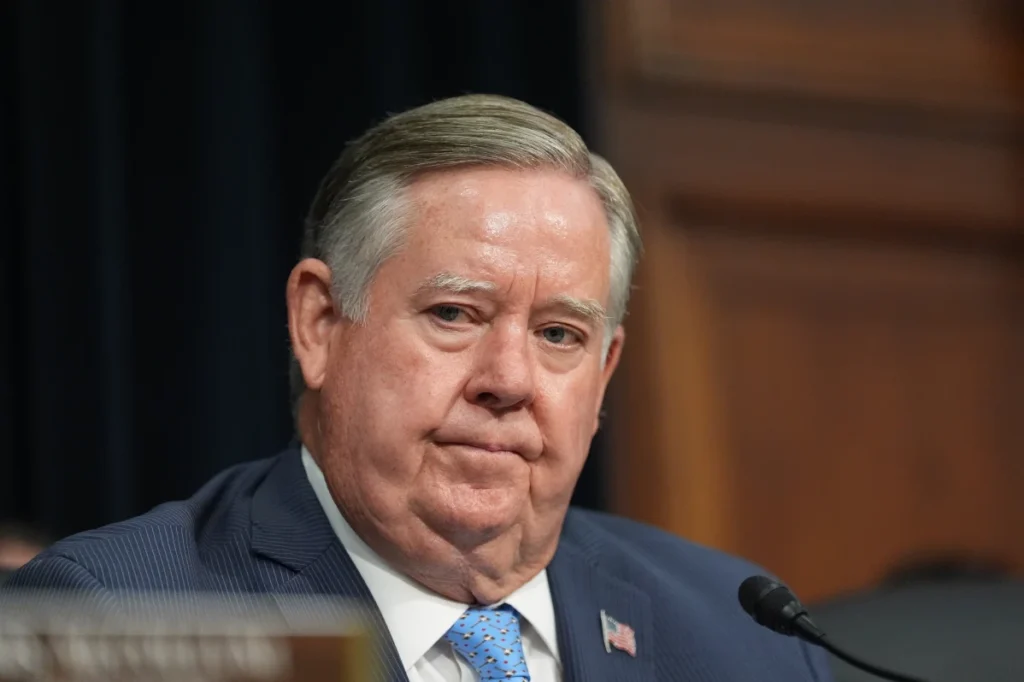
Minnesota Rep. Betty McCollum, the defense subcommittee’s ranking Democrat, pressed Hegseth on whether the military has a plan to draw down troops in the Middle East if Congress passes so-far-unsuccessful efforts to end the Iran war. To this, Hegseth replied that there are plans for different scenarios.
“We have a plan to escalate if necessary. We have a plan to retrograde if necessary. We have a plan to shift assets.”
Pete Hegseth
Hegseth said that he would not reveal any next steps publicly. Noting repeated questions from lawmakers over the military’s weapons stockpiles, drawn down from the Iran war, Hegseth said the concerns have been “unhelpfully overstated” and that “we have plenty of what we need.”
He said that the defense industry has been told to “build more and build faster,” blaming the military industrial base’s inadequate capacity on previous administrations and U.S. aid to Ukraine in its war with Russia.
READ ALSO: Spain Reports Hantavirus Case in Evacuated MV Hondius Passenger