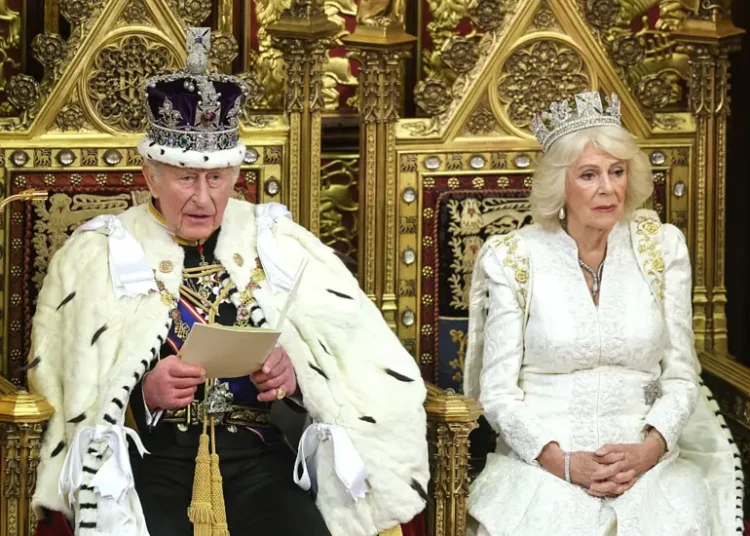
King Charles III has unveiled the British government’s legislative priorities for the year ahead, setting out an expansive programme focused on economic security, infrastructure development, public service reform and national resilience as Prime Minister, Keir Starmer seeks to steady his leadership amid mounting political pressure.
Delivering the King’s Speech during the State Opening of Parliament, the monarch described the world as increasingly unstable and emphasised the need for Britain to strengthen its economic, defence and energy security in the face of growing international uncertainty.
He referenced the conflict in the Middle East and broader geopolitical tensions, warning that the country must be prepared to withstand external shocks while protecting communities at home.
The Monarch mentioned that, the government would safeguard “the energy, defence and economic security” of the United Kingdom for the long-term and take “urgent action” to tackle antisemitism and “ensure all communities feel safe.”
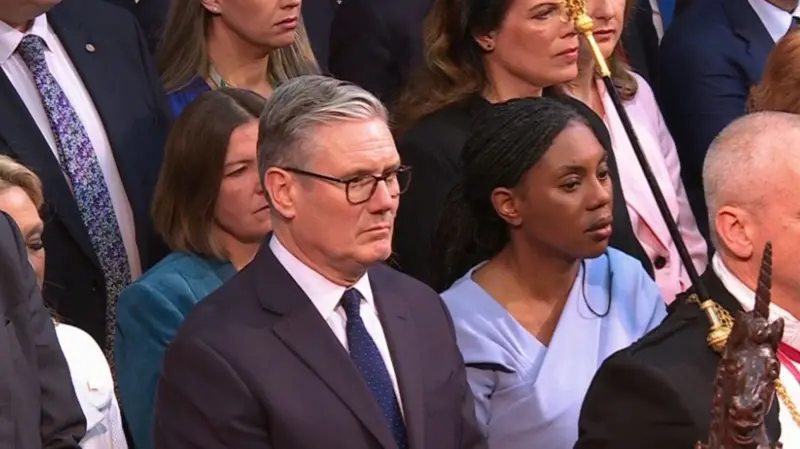
He added that ministers “will defend the British values of decency, tolerance and respect for difference under our common flag.“
“My government believes that the United Kingdom’s economic security depends on raising living standards at every part of the United Kingdom,” the Monarch stated as he laid out the rational of the government.
He noted that Ministers would pursue measures to ease the cost of living and use public investment to “shape markets and attract further private investment.”
Government Unveils Ambitious Reform Programme Across Key Sectors
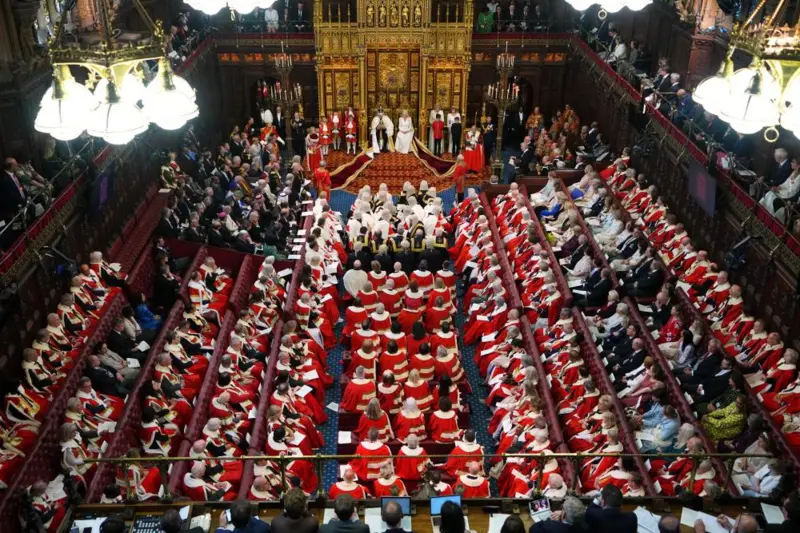
Moreover, the UK government plans to unlock airport expansion, accelerate major road projects including the Lower Thames Crossing, advance Northern Powerhouse Rail and “safeguard domestic production of steel”.
This commitment follows Keir Starmer’s announcement earlier this week that British Steel could be brought into public ownership if required to protect the national interest and preserve domestic manufacturing capacity.
The King’s speech also highlighted efforts to tackle child poverty and rising youth unemployment.
The Monarch noted that the government believes “every child deserves the chance to succeed to the best of his or her ability and not be held back due to poverty, special educational needs, or a lack of respect for vocational education.”
According to King Charles, Ministers will continue investing in apprenticeships and respond to the forthcoming Milburn Review, which is examining the causes of record youth unemployment. The government will also consider the recommendations of the Timms Review into Personal Independence Payments.
In a significant digital reform, the King confirmed that ministers will proceed with the introduction of digital ID to “modernise” the way citizens access public services.

Constitutional and governance reforms were also included in the legislative programme. New laws will establish a “duty of candour” for public servants, while legislation will allow peerages to be removed from members of the House of Lords under specific circumstances.
The government also plans measures to improve accountability, productivity and trust across the civil service.
Furthermore, housing and social policy were major components of the speech. Legislation will be introduced to speed up remediation for buildings with unsafe cladding, while a draft bill will seek to ban “abusive conversion practices”
On national security, the King announced new laws to counter the “growing threat from foreign state entities and their proxies.”
The King noted that the government will respond to the 2024 Southport attack with measures designed to protect the public from “extreme violence” and support victims and their families, stating that, additional legislation will strengthen cyber-security and improve Britain’s defences against emerging threats.
Support for service personnel will be expanded through a new Armed Forces Bill that will improve the military justice system and place the Armed Forces Covenant into law.

Energy security was presented as a strategic and economic priority. The Monarch highlighted that, clean energy expansion would ensure that “enemies” could not “attack” UK’s economic security. The proposed Energy Independence Bill will accelerate renewable energy deployment, while separate legislation will usher in a “new era of British nuclear energy generation”.
In his closing remarks, the Monarch reaffirmed the government’s commitment to tackling climate change, poverty and conflict, and to “champion the rights of women and girls” to live free from violence and participate fully in society.
He announced that Britain will use its upcoming G20 presidency to promote global growth and stability, culminating in the country hosting the 2027 summit.
Meanwhile, welfare reform was notably absent from the government’s legislative programme despite repeated insistence from ministers that changes to the benefits system remain a priority.
Work and Pensions Secretary Pat McFadden has argued that reform is essential, but no dedicated bill was included in the King’s Speech.
READ ALSO: Minerals Commission Reaffirms Commitment to Sustainable Mineral Resource Management