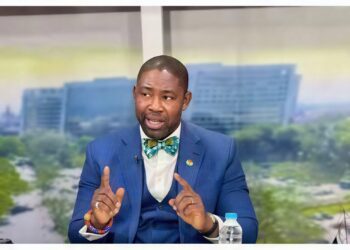
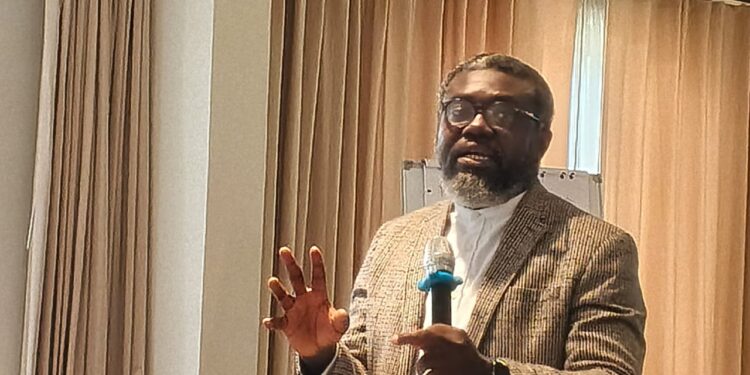
Legal practitioner and civil rights activist Osagyefo Oliver Barker-Vormawor has called on the National Democratic Congress government to take urgent action against what he describes as the growing criminalisation of speech by the Ghana Police Service, warning that continued arrests over public expression could weaken public trust and gradually undermine support for the administration.
In a strongly worded public statement, Barker-Vormawor cautioned the government against treating recent speech related arrests as routine law enforcement actions, arguing that such developments carry significant political and democratic consequences.
According to him, governments that fail to respond to excessive policing of speech often risk alienating supporters and creating perceptions of intolerance toward criticism and dissent.
“The NDC must not take these rampant speech-related arrests for granted oo. Yoo. They quickly undermine support for a government,” Barker-Vormawor stated.



His comments come at a time when public conversations around freedom of expression, online commentary, and the application of criminal statutes in speech related matters continue to attract national attention.
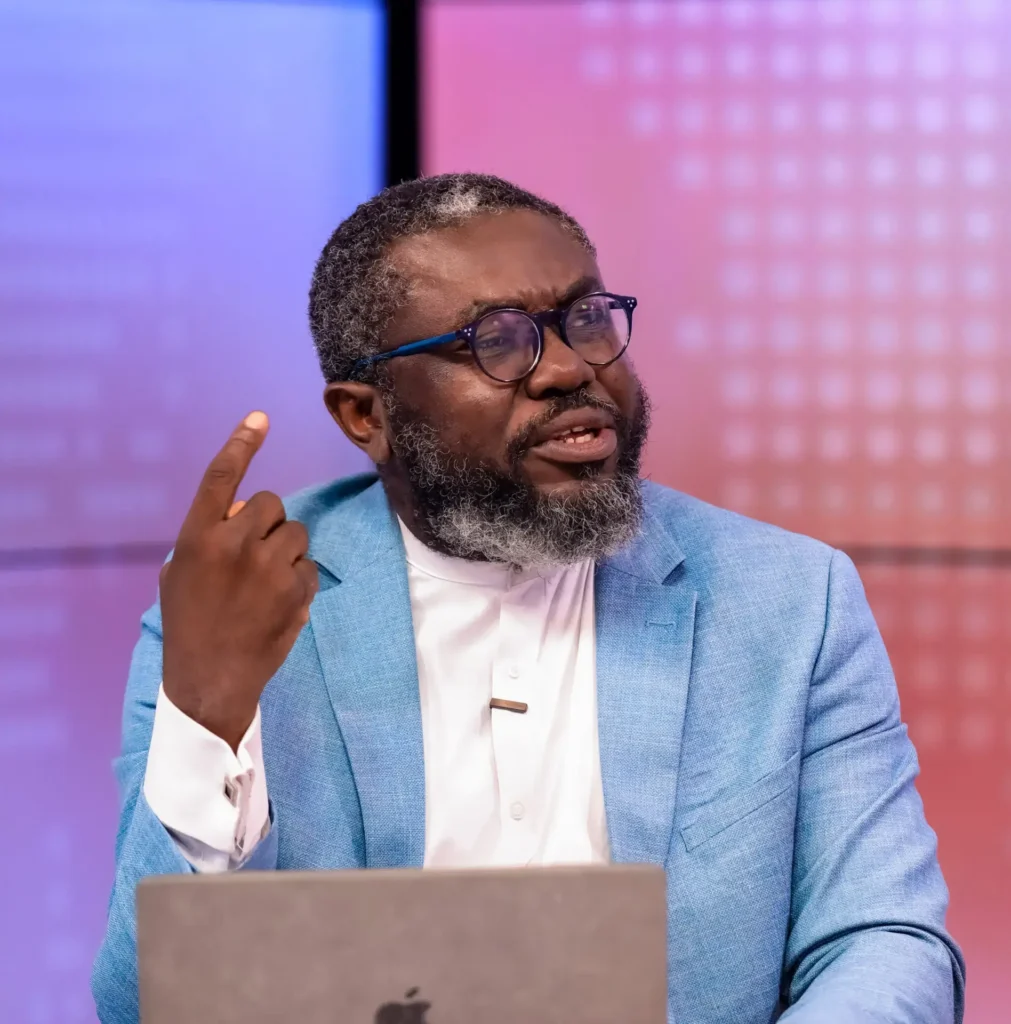
Call for Immediate Legal Reform
Barker-Vormawor urged the government to act through the office of the Attorney General by introducing legal reforms that would limit the prosecutorial powers of the police in cases involving speech offences.
“I think the Attorney General must urgently issue an Executive Instrument to limit the Prosecutorial mandate of the Police to no longer cover Section 208 or Section 76 of the Electronic Communications Act”.
Osagyefo Oliver Barker-Vormawor, Legal Practitioner and Activist
He argued that decisions involving criminal charges linked to speech, public commentary, digital publications, or allegedly false communications should not be left solely to police officers but must instead be reviewed and authorised directly by the Attorney General’s Department.
His remarks have added fresh momentum to ongoing debates about the balance between law enforcement powers and constitutional protections for free expression.
Focus on Section 76 of the Law
Central to Barker-Vormawor’s concerns is Section 76 of the Electronic Communications Act, a legal provision that criminalises the transmission of false or misleading information through electronic communication services under circumstances that may endanger public safety or interfere with emergency services.
Under the law, a person who knowingly sends a communication that is false or misleading and likely to prejudice the efficiency of life saving services or endanger the safety of any person, ship, aircraft, vessel, or vehicle commits an offence and may, upon conviction, face a fine, imprisonment of up to five years, or both.
The law further states that a person may be deemed to have knowledge that a communication is false or misleading if that person fails to take reasonable steps to verify the accuracy of the information before transmitting it.
Although the provision was introduced as a safeguard against harmful misinformation capable of creating public danger, critics have increasingly questioned how broadly such laws can be interpreted and whether their enforcement may unintentionally suppress legitimate criticism, political commentary, or public discourse.
Barker-Vormawor believes that while the law serves an important purpose, decisions on whether such provisions should be invoked must be subjected to higher legal scrutiny rather than immediate police action.
Warning to Government
As one of Ghana’s most outspoken legal activists, Barker-Vormawor has consistently raised concerns about constitutional governance, civil liberties, and the accountability of state institutions.
His latest comments suggest growing unease within legal and civil society circles over what some see as expanding police involvement in matters involving public speech.
By directing his warning specifically at the National Democratic Congress government, Barker-Vormawor appears to be urging the administration to act early before isolated arrests evolve into broader political concerns.

His warning also carries electoral significance, particularly at a time when public expectations for institutional reform, democratic openness, and accountability remain high.
His call for prosecutorial reforms may reignite wider discussions about the role of the police in handling speech-related offences and whether existing legal frameworks provide sufficient safeguards against abuse.
Barker-Vormawor ended his statement with a brief but pointed caution directed at those in authority. “A word to the wise.”
Whether the government or the Attorney General’s Department acts on his proposal remains unclear, but his intervention is expected to deepen ongoing national conversations about free speech, police powers, and the protection of democratic freedoms in Ghana.
READ ALSO: GFIM Liquidity Boom Pushes Trades Past GH₵1.5bn in One Day