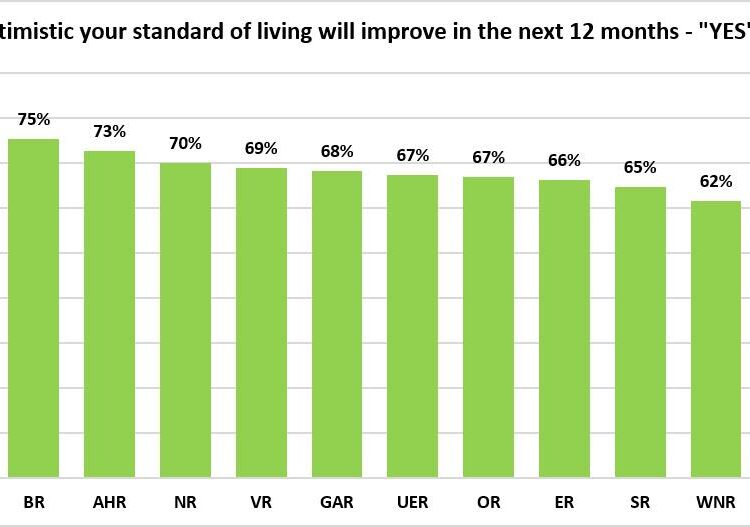
A recent survey conducted by Global InfoAnalytics has revealed that a majority of voters across Ghana’s regions believe their standard of living will improve over the next 12 months.
The findings from the March 2026 poll point to growing economic optimism among citizens despite concerns about the cost of living and regional economic disparities.
Executive Director of Global InfoAnalytics, Mussa Dankwa, provided an analysis of the survey results, explaining that perceptions about living standards are closely linked to inflation trends, income levels and household spending patterns.
According to the poll, the Western, Upper West, Central, Bono, Ahafo and Northern regions recorded confidence levels above 70 percent, making them the regions with the strongest optimism about future living conditions. The findings suggest that many voters expect economic conditions to improve gradually over the coming year.
However, the survey also highlighted pockets of pessimism. The Ashanti, North East, Western North, Greater Accra, Bono East, Northern and Savannah regions recorded the highest levels of concern about living standards over the next 12 months.
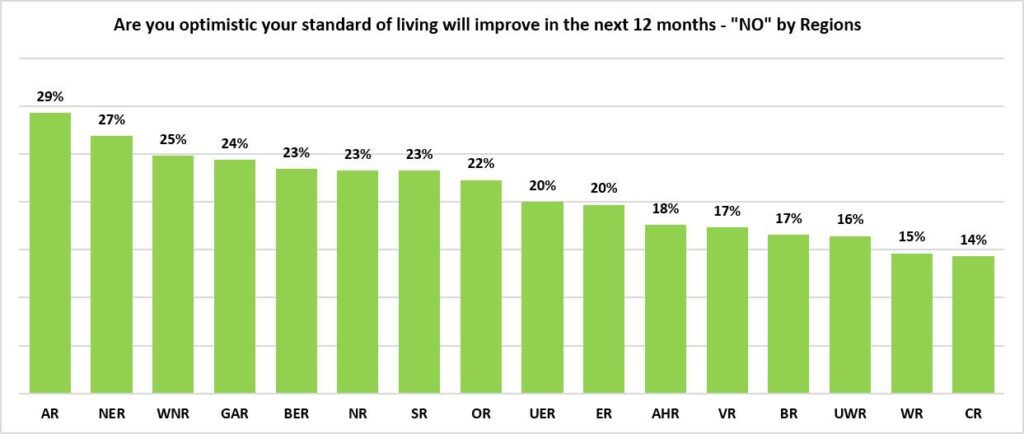
Despite this, the overall data still indicates that more voters in these regions remain hopeful than pessimistic.
Understanding Inflation and Cost of Living
Mussa Dankwa explained that inflation and cost of living are often confused, although they measure different economic realities. He noted that inflation refers to the rate at which prices of goods and services rise over time and is measured through the Consumer Price Index compiled by the Ghana Statistical Service.
For example, if inflation stands at 10 percent, an item that cost GH¢100 a year ago would now cost GH¢110 on average. Cost of living, on the other hand, reflects the amount of money individuals and households need to maintain a particular standard of living.
It includes expenses such as rent, food, transportation, healthcare, utilities, and education. The cost of living differs depending on location, household size, and lifestyle choices.
Mussa Dankwa explained that living in Accra generally costs more than living in cities such as Ho because of higher housing and transportation costs. He stressed that there is no single official measure for cost of living because spending habits vary from one household to another.
How Inflation Affects Daily Life
The analysis further noted that inflation directly affects the cost of living because rising prices increase the amount households must spend on essentials. However, the impact is not always the same for everyone.

According to Mussa Dankwa, if inflation rises by 15 percent but food prices increase by 30 percent while rent remains unchanged, households that spend a larger share of their income on food are likely to feel greater financial pressure.
He also pointed out that wage growth plays an important role in how people experience economic conditions. If salaries increase faster than inflation, households may feel financially better off. However, when wages rise more slowly than inflation, people are more likely to experience hardship even if inflation itself is declining.
Using Ghana’s economic experience between 2022 and 2023 as an example, Mussa Dankwa said inflation reached 54 percent in December 2022, causing sharp increases in fuel, food, and transport prices. As a result, many households, especially in urban centres such as Accra, experienced significant increases in living costs.
Although inflation returned to single digit levels by September 2025, he explained that prices remain higher than they were before the inflation surge. This means consumers may still feel financial pressure despite the slower pace of price increases.
“The key takeaway is that inflation measures how fast prices are rising, while the cost of living measures how much it costs people to live now. High inflation often leads to a higher cost of living unless incomes rise faster.”
Mussa Dankwah, Pollster and Executive Director, Global InfoAnalytics
Regional Differences in Living Standards
The poll also examined how voters assess their current living standards compared with a year ago. The results showed significant regional differences in perceptions.
The Central, Upper West, Volta, Bono, Western, Ahafo and Greater Accra regions recorded the highest proportions of voters who said their living standards had improved over the past year. In these regions, at least 60 percent of respondents said they were better off than they were a year ago.
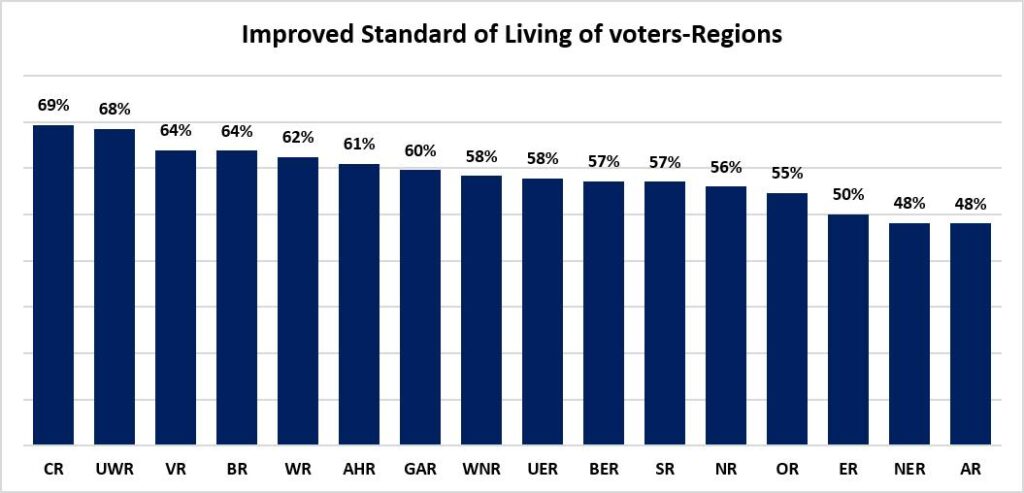
Ashanti Region recorded the lowest level of positive responses, with 48 percent of voters saying their standard of living had improved. Despite being the lowest on the list, this still represented a majority of respondents in the region.
The survey further revealed that Greater Accra had the highest proportion of voters who believed their living standards had worsened. Other regions where at least 20 percent of respondents reported worsening living conditions included Oti, Ahafo and North East.
Mussa Dankwa said the findings show that economic experiences vary across regions and households. He noted that while national inflation figures provide a broad picture of economic conditions, individual experiences are shaped by employment, income growth, and spending patterns.
Economic Outlook Remains Positive
Despite regional concerns and ongoing pressure on household expenses, the overall survey results indicate that many Ghanaians remain hopeful about the future.
The expectation that living standards will improve over the next year reflects growing confidence in economic stability and the possibility of continued recovery after recent inflation challenges.
The findings also underline the importance of policies that support income growth, control inflation and reduce the burden of living costs across different regions of the country.
READ ALSO: Downing Street Accused of Trying to Block Burnham’s Return