
The Ministry of Food and Agriculture (MoFA) has announced that Ghana will host the upcoming West Africa Rice Investment Roundtable from June 2-3, 2026, at the Kempinski Hotel Gold Coast City in Accra, convened in partnership with the Economic Community of West African States (ECOWAS), the World Bank, and the African Development Bank (AfDB).
According to MoFA, the primary objective of the two-day event is to shift regional agricultural policy from theoretical planning to direct financing, focusing on robust import substitution and long-term sustainable production across West Africa. The high-level summit is designed to mobilize immediate capital investments into the sub-region’s rice sector.
Organisers of the roundtable have noted that the event will serve as a regional investment accelerator rather than a platform to rewrite existing national agricultural frameworks, as the gathering brings together private sector investors, development finance institutions (DFIs), sovereign commercial banks, agribusiness operators, government officials, and prominent research entities such as the West and Central African Council for Agricultural Research and Development (CORAF).
Together, these stakeholders will review investor-ready summaries, structured investment packages with quantified costs, and blended finance models designed to de-risk private capital in irrigation, milling infrastructure, logistics, and input distribution systems.
“Rice is West Africa’s fastest-growing staple, accounting for 40% of cereal consumption, with demand growing at 4% annually against 3% domestic production growth. Yet regional self-sufficiency remains at only 61%, forcing ECOWAS countries to import about 12 million metric tons annually – costing US$3.5 billion in 2021 alone”
West Africa Rice Investment Roundtable
For stakeholders, the roundtable is a direct response to this widening gap between domestic rice production and regional consumer demand. Throughout the ECOWAS bloc, changing dietary preferences and rapid population growth have established rice as the fastest-growing food staple.

However, regional production has failed to keep pace with consumption trends, creating a structural dependency on foreign imports that continually drains hard currency from local economies. This structural deficit leaves West African nations highly vulnerable to international market shocks, global supply chain disruptions, and export restrictions imposed by non-African producing countries.
The fiscal strain of this import dependency is severe. In 2021 alone, the aggregate cost of importing milled rice surpassed billions of dollars, emphasizing the urgent economic necessity for sub-regional self-sufficiency. Through transforming the regional rice value chain into a structured asset class, the Ministry and its international partners intend to redirect these capital outlays back into domestic rural economies.
The upcoming roundtable will present portfolios that combine strong development impacts with commercially viable public-private partnership (PPP) models, demonstrating that localized rice production can yield high returns on investment for institutional financiers.
Financed Pillars
The operational baseline for the Accra summit is anchored in long-term strategic decisions enacted by regional heads of state. Over the past two years, all fifteen ECOWAS member states have successfully developed and validated a National Rice Investment Action Plan (NRIAP), aligned with their respective National Rice Development Strategies.
These localized action plans outline distinct, bankable investment pipelines and identify priority production basins, transforming the broader regional framework into localized, project-ready opportunities.
“In December 2024 in Abuja, The ECOWAS Heads of State and Government endorsed the Regional Rice Roadmap (2025-2035), a unified framework guiding interventions across seven thematic areas and twelve priority production basins as part of its Rice Agenda”
West Africa Rice Investment Roundtable
Executing this ten-year framework requires an immense mobilization of financial resources. The total capital investment needed to implement the roadmap is estimated between US 15 billion and US 19 billion, alongside an additional US 4 billion to US 5 billion required for annual operating costs.
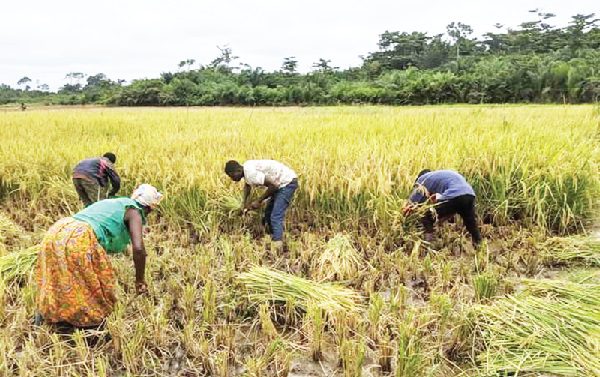
Key areas identified for immediate capital deployment include mechanized storage systems, industrial milling facilities, widespread agricultural mechanization, advanced irrigation networks, integrated input systems, and improved access to commercial agricultural finance.
To catalyze immediate financing commitments from commercial banks, DFIs, and private capital networks, organisers have indicated that the roundtable will feature dedicated business-to-business (B2B) “deal room” sessions that will present clear, quantified investment opportunities addressing major bottlenecks across the twelve priority production basins.
Instead of broad sector overviews, MoFA noted that investors will be presented with specific, high-yield interventions with clearly defined costs and projected returns. Illustrative projects include a US 43 million initiative for the deployment of 3,500 solar community irrigation schemes.
This project aims to increase yields by 2 to 3 tons per hectare, directly benefiting 50,000 smallholder farmers while projecting a return on investment (ROI) of 20 to 30 percent. Also, a 14 million seed multiplication program will be introduced to train 7,000 seed entrepreneurs across 300,000 hectares, unlocking an estimated 0.6 million metric tons of paddy production.
For processing and mechanization, the roundtable will pitch structured leasing models to close 40% to 60% of the mechanization gap, alongside capacity expansions to add 3 to 5 million metric tons of regional milling capacity.
The sub-regional drive to industrialize rice production aligns with global developmental targets aimed at transforming smallholder agriculture.
The World Bank Group’s AgriConnect initiative – which operates in tandem with the African Development Bank, the International Fund for Agricultural Development (IFAD), and the French Development Agency (AFD) – has prioritized West African rice as a critical value chain to accelerate job creation, ensure regional food security, and improve the livelihoods of millions of smallholder farmers globally by 2030.
A primary institutional deliverable of the Accra roundtable will be the revitalization of the ECOWAS Rice Observatory (ERO). Functioning as a specialized market intelligence platform, the ERO will provide real-time trade, pricing, and risk data across the region, operating effectively as a “Bloomberg Terminal for West African rice markets.”

This data infrastructure will monitor investment commitments, track domestic production outcomes, and coordinate follow-up actions across national governments.
The Ministry of Food and Agriculture expects the two-day summit to conclude with the formal endorsement of the Regional Rice Investment Compact, backed by the convening power of ECOWAS, the Government of Ghana, and global development partners.
This compact will formally outline specific financing commitments, institutional roles, and implementation steps, establishing 2026 as the definitive inflection point where West Africa transitions from agricultural planning to direct economic execution.
READ ALSO: GSE Suffers Heavy Blow Despite Fierce Trading Battle