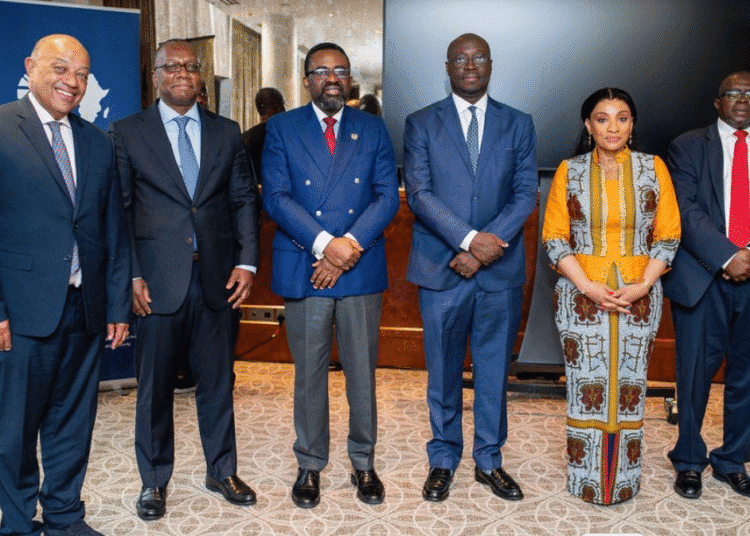
Ghana has intensified efforts to attract international capital as top economic leaders used a high level investment forum to showcase the country’s reform agenda, economic recovery strategy, and readiness for new partnerships.
The event, organised by Ghana International Bank (GHIB) in collaboration with the Ghana High Commission to the United Kingdom and Ireland, brought together influential investors, bankers, policymakers, and representatives of major global financial institutions. The gathering provided a strategic platform for Ghana to present its progress and reaffirm its commitment to economic stability and sustainable growth.
Minister for Finance, Dr. Cassiel Ato Forson, delivered a strong and optimistic message to the international investment community, emphasizing the significant reforms being undertaken to restore macroeconomic stability and strengthen investor confidence.
According to the Finance Minister, Ghana has made substantial progress through debt restructuring initiatives, enhanced fiscal discipline, and improvements in public financial management systems. These measures, he noted, are designed to create a resilient economy capable of delivering sustainable growth and long term prosperity.
“Ghana is undertaking critical reforms to stabilise the economy, rebuild confidence and position the country for sustainable growth,” Dr. Forson stated.
His remarks underscored the government’s determination to move beyond short term economic challenges and focus on creating a competitive and attractive investment environment.
The Minister further declared that Ghana’s reform programme is already laying the foundation for a transformed economy capable of generating opportunities for both domestic and international investors.
“Ghana is reforming. Ghana is stabilising. Ghana is transforming, and Ghana is ready. Ready for investment. Ready for partnership. Ready for opportunity,” he stressed.
The statement resonated strongly with participants who are closely monitoring emerging market opportunities amid shifting global investment trends.
GHIB Recognised as Strategic Economic Asset
Dr. Forson also highlighted the critical role of Ghana International Bank in supporting trade and investment flows between Ghana and the global financial community.
He described GHIB as a strategic institution that continues to bridge African economies with international markets, helping businesses access financing opportunities while facilitating cross border transactions.
According to him, institutions such as GHIB are essential to Ghana’s broader economic vision because they strengthen connections between local enterprises and global investors.
As Ghana seeks to increase foreign direct investment and expand export opportunities, the role of financial institutions capable of linking international capital with domestic opportunities is becoming increasingly significant.
Bank of Ghana Reinforces Confidence in Financial Sector
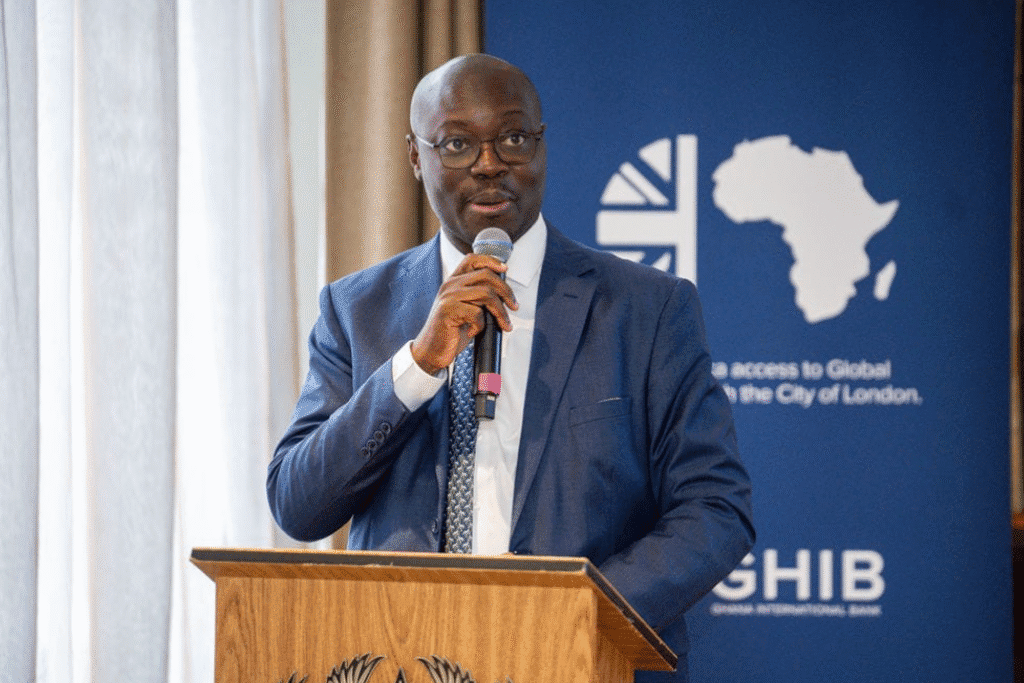
Governor of the Bank of Ghana, Dr. Johnson Pandit Asiama, reinforced the Finance Minister’s message by outlining the central bank’s ongoing efforts to strengthen financial sector resilience and improve transparency.
The Governor explained that regulatory reforms and policy interventions introduced by the Bank of Ghana are helping to create a stable and predictable business environment.
This stability, he said, remains one of the most important factors investors consider when evaluating opportunities in emerging economies.
Dr. Asiama noted that the central bank remains committed to maintaining sound financial sector governance while ensuring that the banking system remains robust and capable of supporting economic expansion.
His remarks provided further assurance to investors seeking confidence in Ghana’s financial infrastructure and regulatory framework.
Agriculture, Energy and Technology Lead Investment Prospects
A key highlight of the meeting was the identification of sectors with significant growth potential and investment opportunities.
Dr. Asiama pointed to agriculture, energy, infrastructure, and digital innovation as strategic sectors capable of driving Ghana’s next phase of economic development.
These sectors, he explained, offer substantial opportunities for international investors seeking long term value creation while contributing to Ghana’s national development objectives.
Agriculture remains central to Ghana’s economic transformation agenda due to its potential to create jobs, improve food security, and boost exports. Energy investments are also expected to play a critical role in supporting industrial growth and economic competitiveness.
Infrastructure development continues to be a priority area as Ghana seeks to improve connectivity and facilitate business activities, while digital innovation is increasingly emerging as a powerful driver of productivity and economic inclusion.
Ghana Positions Itself for the Future
The GHIB Breakfast Meeting served as more than a networking event. It became a powerful demonstration of Ghana’s determination to reposition itself as a preferred destination for international investment.
With reforms gaining momentum, macroeconomic indicators showing signs of improvement, and policymakers presenting a united vision for growth, Ghana is making a strong case for renewed investor engagement.
As global capital searches for promising opportunities in emerging markets, Ghana is actively positioning itself at the forefront of investment conversations. For investors looking toward Africa’s future growth markets, Ghana is signalling that the time for engagement is now.
READ ALSO: Government Raises GH¢5.8bn from Primary Market Despite Rising Rates