
The opening of the Ghana-Belarus Business Forum in Minsk has emerged as a critical platform for strategic economic partnership against the backdrop of international trade undergoing major transformations – shaped by shifting supply chains, rising protectionism, and changing geopolitical dynamics.
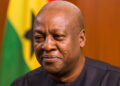
Addressing an audience of foreign dignitaries, including Belarus’s Deputy Prime Minister Viktor Karankevich, senior administrative officials, and corporate leaders, at the ‘Ghana-Belarus Business Forum,’ the President of the Republic of Ghana, His Excellency John Dramani Mahama, has signaled a historic evolution in bilateral relations.
He noted that while formal diplomatic ties between Accra and Minsk have stood strong for more than three decades, the current administration is actively steering the relationship beyond legacy diplomatic cordiality toward a deep, highly dynamic, and mutually beneficial manufacturing and investment framework.
“Our cooperation must be guided by a simple principle: where Belarus possesses the expertise, Ghana offers the opportunity. And where Ghana offers the opportunity, Belarus can find profitable partnerships. Today we are gathered here not merely to exchange ideas but to create opportunities to forge partnerships and lay the foundations for a new chapter in Ghana-Belarus cooperation”
President John Dramani Mahama
In his high-level address, President Mahama framed the business forum as a practical space where governments serve as institutional facilitators while the private sectors of both nations directly connect, innovate, and construct long-term commercial relationships.
The strategic logic underpinning this cooperation is rooted in the highly complementary nature of the two economies, as Belarus commands significant global strength in heavy agricultural mechanization, industrial manufacturing, fertilizer production, pharmaceuticals, agro-processing, and engineering technology.
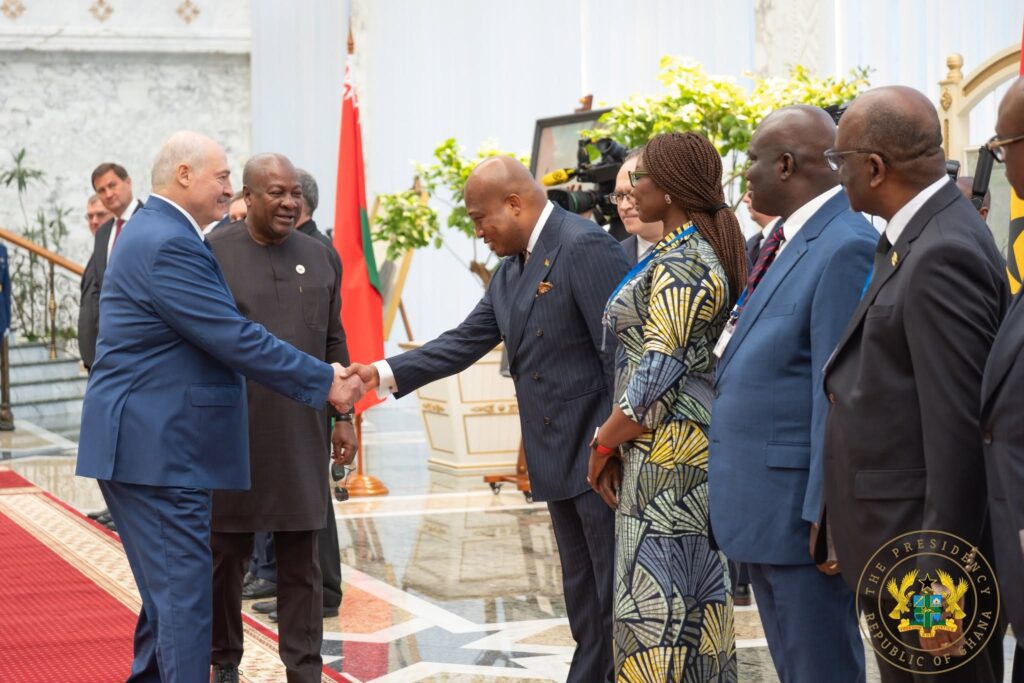
Conversely, Ghana presents an ideal landscape for capital deployment, characterized by deep political stability, abundant natural resources, an advantageous geographic position on the Atlantic coast, a highly dynamic youthful workforce, and direct entry into some of the fastest-expanding consumer markets on earth.
According to President Mahama, the challenge facing both leadership teams is not an absence of potential, but rather the creation of specific mechanisms required to unlock these latent commercial channels.
Vectors for Growth
Central to the President’s speech was the extraordinary macroeconomic turnaround achieved by his administration. Upon assuming office in January 2025, the Mahama administration inherited a domestic economy beset by deep structural imbalances and severe fiscal challenges.
In response, the government initiated a comprehensive program centered on strict fiscal discipline, aggressive economic stabilization, and long-term structural transformation. The data resulting from these synchronized policy interventions demonstrate a rapid restoration of macroeconomic predictability and a strong return of international investor confidence.
“Inflation has fallen dramatically from about 54% in 2023 to 3.4% in 2026. Our international reserves have strengthened considerably from $8.6 billion in 2024 to $13.9 billion in 2025. The cedi has stabilized – it appreciated in 2025 at 46% against major trading currencies. Interest rates have declined significantly, and investor confidence has returned”
President John Dramani Mahama
Fueled by this regained macroeconomic stability, Ghana’s real economic growth reached approximately 6% over the course of 2025, an expansion that pushed the nation’s Gross Domestic Product past the 100 billion dollar mark, with official metrics placing the economy at $114 billion.
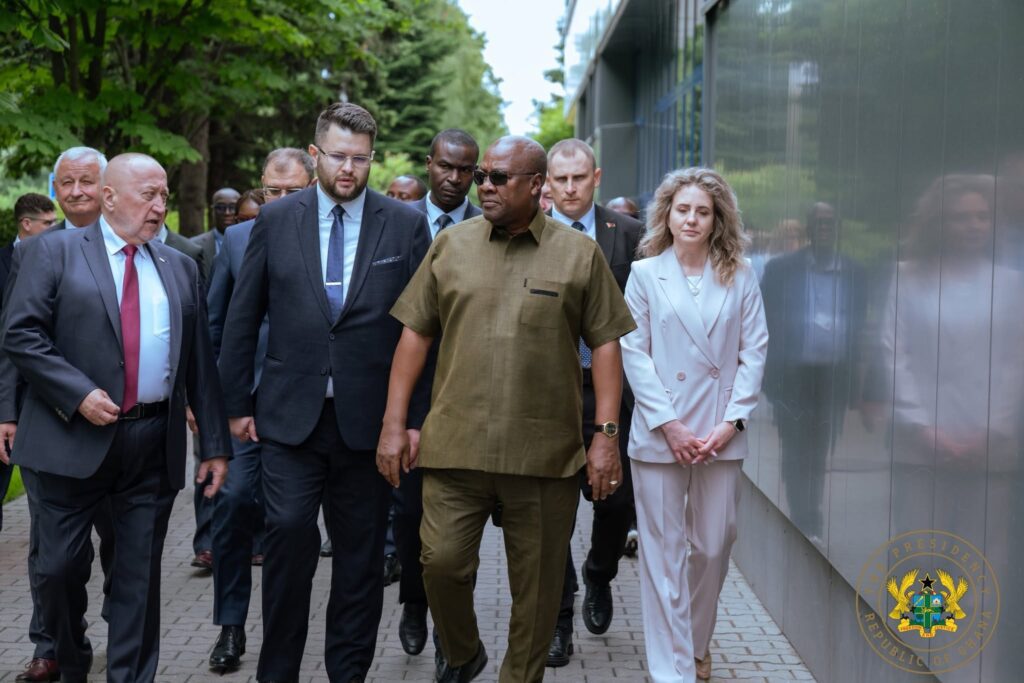
President Mahama noted that this milestone establishes Ghana as the eighth-largest economy on the African continent, drastically improving its international credit outlook and causing global rating agencies to re-evaluate the state’s fiscal management.
For Belarusian manufacturing giants looking to establish overseas operations, these metrics mean that Ghana no longer represents a speculative frontier market, but rather a stable, fast-growing, and highly competitive economic base.
Beyond pure stabilization metrics, President Mahama explained that his administration is actively rolling out specific structural programs to convert this financial stability into direct industrial output.
At the core of this long-term economic transformation agenda is the institutional rollout of the 24-Hour Economy initiative, paired with the Accelerated Export Development Program, specifically to “maximize domestic productivity, expand industrial manufacturing outputs, generate sustainable, high-skilled employment,” and firmly establish Ghana as the preeminent production and export logistics hub across the wider African continent.
To encourage local industries to run continuous, multi-shift operations, he noted that Ghana is providing targeted support and investments into foundational logistics, energy networks, transport infrastructure, and advanced agro-processing facilities. This continuous production model provides a perfect entry point for Belarusian industrial partnerships.
The 24-hour manufacturing lines planned for Ghana’s industrial zones require a steady supply of heavy agricultural machinery, advanced engineering inputs, and reliable fertilizer supplies – sectors where Belarus possesses world-class, state-backed manufacturing expertise.
“This initiative is creating opportunities for investors seeking reliable partners and scalable markets,” President Mahama stated, reiterating that the successful implementation of these fiscal and industrial policies demonstrates that Ghana’s economic recovery is not an isolated event, but rather the direct result of deliberate, structured policy design.
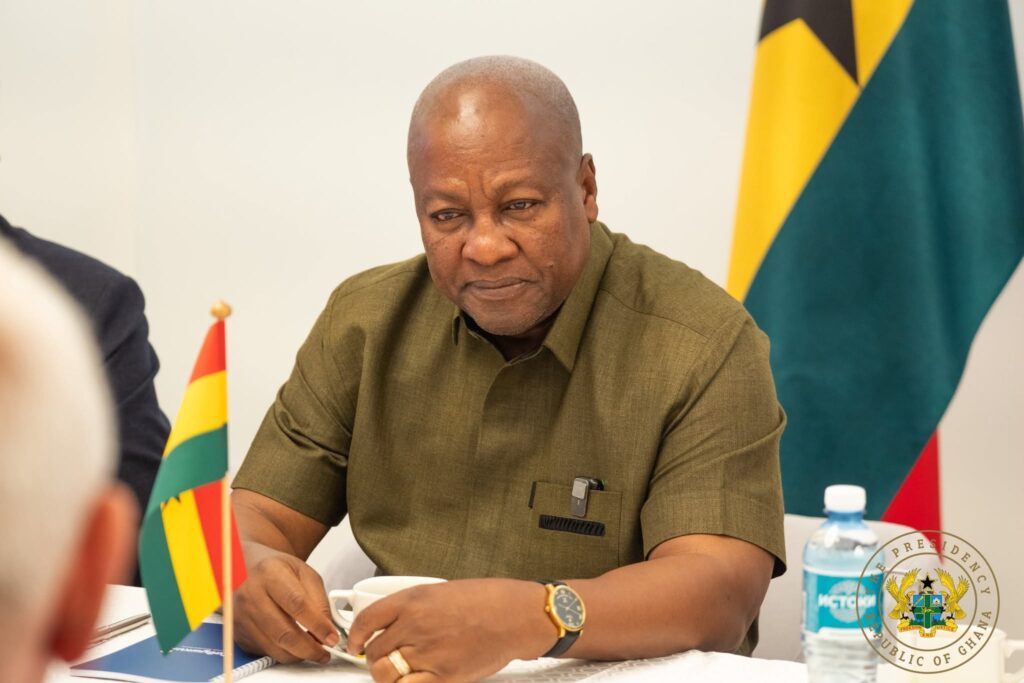
Through stabilizing its currency, crushing inflation, and expanding its industrial horizon through the 24-hour economy framework, the West African nation has built a highly reliable sandbox for global capital.
At the Minsk forum, the strategic message delivered by the Ghanaian government remains clear to the global business community: the country has built the necessary fiscal foundations, restored absolute structural predictability, and is fully open for high-value manufacturing partnerships.
READ ALSO: Jubilee Crude Delivery to Sentou Refinery Marks Local Refining Milestone