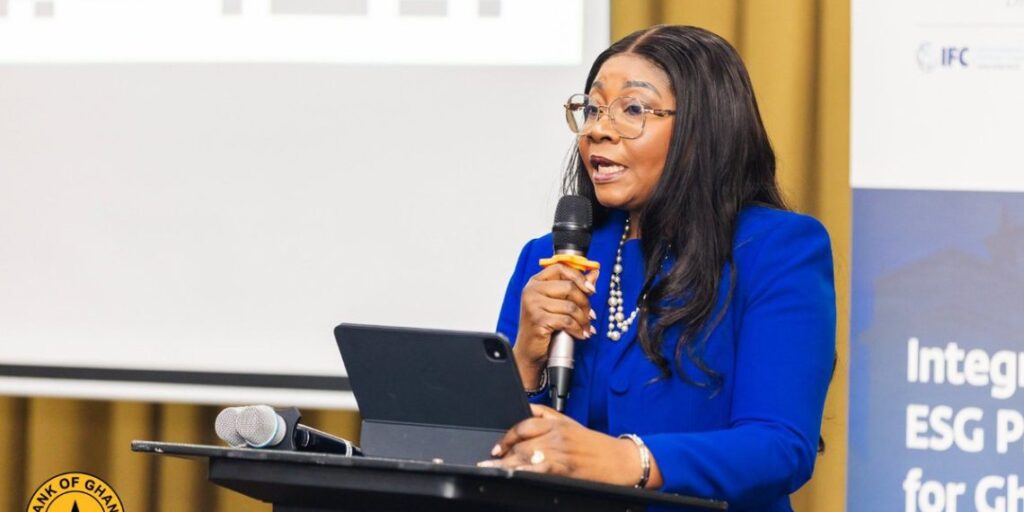
Second Deputy Governor of the Bank of Ghana, Mrs. Matilda Asante-Asiedu, has underscored the critical relationship between public trust in the media and confidence in the financial system, warning that both are essential pillars for national stability and sustainable development.
Speaking at the World Press Freedom Day celebration organized by the Ghana Journalists Association (GJA), Mrs. Asante-Asiedu emphasized that trust and confidence are invaluable assets that must be protected at all costs. According to her, the erosion of either can have serious consequences for institutions, businesses, and the broader economy.
Addressing journalists, media practitioners, policymakers, and other stakeholders, she noted that the role of the media extends far beyond information dissemination. It serves as a key institution in shaping public perception, influencing economic behavior, and supporting democratic governance.
Trust and Confidence Are National Assets
Mrs. Asante-Asiedu drew a compelling comparison between the media and the financial sector, explaining that just as confidence underpins financial stability, trust forms the foundation of a sustainable media ecosystem.
“Trust has become journalism’s most valuable asset. Any erosion of that trust creates a double jeopardy. There is the loss of credibility and the loss of revenue, which can ultimately reduce influence and relevance.”
Mrs. Asante-Asiedu
She explained that in a predominantly private media environment such as Ghana’s, credibility directly affects audience loyalty, advertising revenue, and long-term sustainability. As audiences increasingly scrutinize accuracy, objectivity, and neutrality, media organizations face mounting pressure to maintain high professional standards.
According to her, the same principle applies to the banking sector. Financial institutions can weather temporary setbacks when public confidence remains intact. However, once confidence is damaged, restoring it becomes a far more difficult task.
Ghana Climbs Global Press Freedom Rankings
Mrs. Asante-Asiedu praised Ghana’s media industry for its contribution to democracy and national development while acknowledging ongoing challenges facing the sector.
She highlighted Ghana’s improved standing in the latest World Press Freedom Index published by Reporters Without Borders. Ghana climbed to 39th position out of 180 countries, an improvement from 52nd place in 2025 and its strongest performance in five years.
While describing the achievement as encouraging, she cautioned that structural challenges remain. These include misinformation, disinformation, economic pressures on media organizations, and declining public confidence in information sources.
She stressed that the rise of false information poses a growing threat globally and has become one of the most significant risks confronting societies today.
Misinformation Threatens Stability
The Deputy Governor expressed concern about the increasing influence of misinformation and disinformation in the digital age, describing them as dangers capable of undermining both democratic institutions and economic stability.
She referenced global reports that rank misinformation among the world’s most severe risks, highlighting the potential consequences of inaccurate reporting and misleading narratives.
According to her, the spread of false information can distort public understanding of economic realities, create unnecessary anxiety, and influence market behavior in ways that may not reflect underlying fundamentals.
“Credibility is the currency of journalism,” she emphasized. “Once spent recklessly, it is difficult to regain.”
Mrs. Asante-Asiedu urged journalists to prioritize accuracy, verification, and responsible reporting, particularly when covering economic and financial matters that have direct implications for businesses and households.
Media Plays Key Role in Monetary Policy Communication
The Bank of Ghana official also highlighted the important role the media plays in helping citizens understand monetary policy decisions.
She explained that central bank policies are often technical and their effects may not be immediately visible to the public. As a result, journalists serve as a critical bridge between policymakers and citizens.
According to her, how monetary policy decisions are communicated can significantly influence expectations, confidence, and economic decisions across the country.
To strengthen economic reporting, the Bank of Ghana has intensified training programs for journalists and enhanced engagement with media organizations nationwide.
These initiatives include regular post-Monetary Policy Committee briefings, publication of individual MPC members’ policy submissions, establishment of a Regional Press Corps, and dedicated communication platforms that facilitate continuous dialogue between the Bank and journalists.
Protecting the Cedi Is a Shared Responsibility
Mrs. Asante-Asiedu also addressed developments in Ghana’s foreign exchange market, emphasizing the importance of contextual and responsible reporting on currency movements.
She noted that Ghana operates a managed floating exchange rate system where daily appreciation and depreciation are normal occurrences. However, reports that fail to provide adequate context can create panic and trigger speculative demand for foreign currency.
According to her, stable exchange rates contribute to predictable import prices, moderate transport costs, stable prices for essential goods, and greater certainty for businesses and households.
She therefore called on the media to support efforts aimed at preserving economic stability through accurate and balanced reporting.
Partnership for National Development
Mrs. Asante-Asiedu concluded by urging stronger collaboration between the media and policymakers in promoting national development.
She stressed that countries have often been strengthened or weakened by the way economic information is communicated to the public.
“A responsible press informs without inflaming, questions without prejudging, and reports without distorting.”
Mrs. Asante-Asiedu
As Ghana continues its journey toward economic recovery and sustained growth, she noted that preserving public trust and maintaining financial confidence will remain essential ingredients for long-term prosperity.