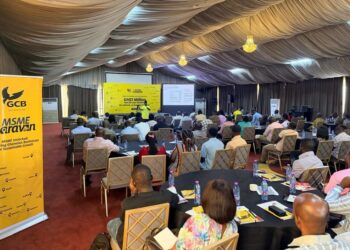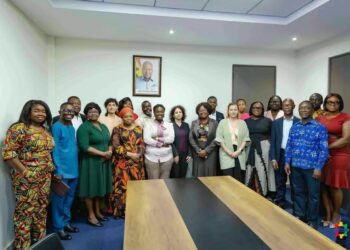
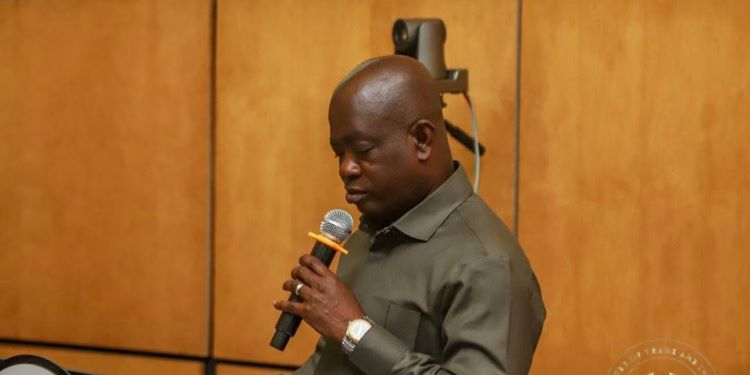
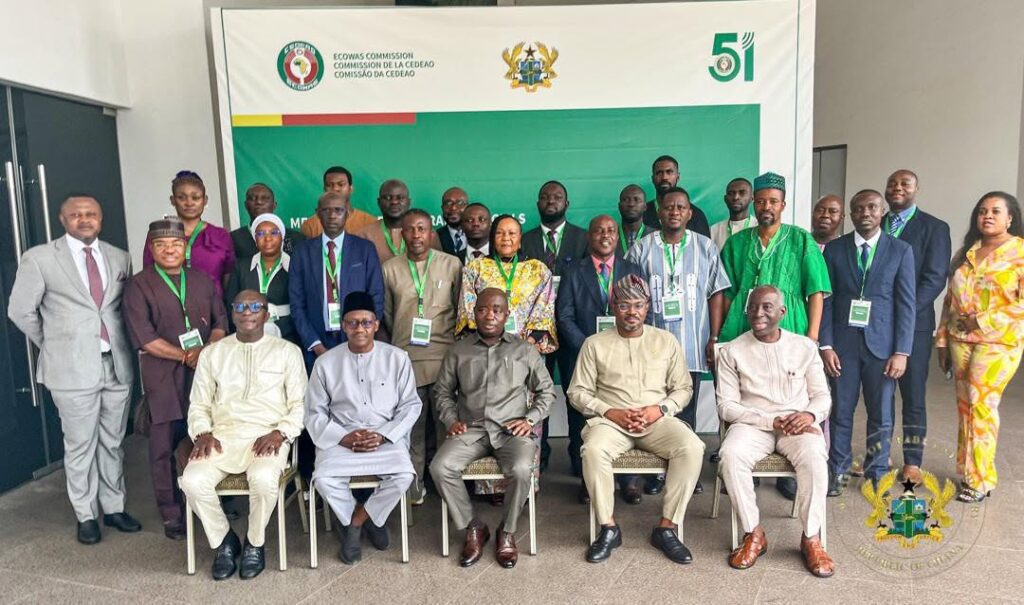
Senior trade officials from across the member states of the Economic Community of West African States (ECOWAS) have commenced a three-day consultative assembly in Accra to build institutional consensus and draft comprehensive policy recommendations ahead of the landmark Fifth Meeting of ECOWAS Ministers of Trade (ECOMOTI-5).
Organized under the guidance of the Ministry of Trade, Agribusiness and Industry (MoTAI), the preparatory platform serves as a vital arena where member nations must align their regional regulatory systems with rapidly shifting global economic realities, for ECOMOTI-5 scheduled to take place June 11 to 12 in Ghana.
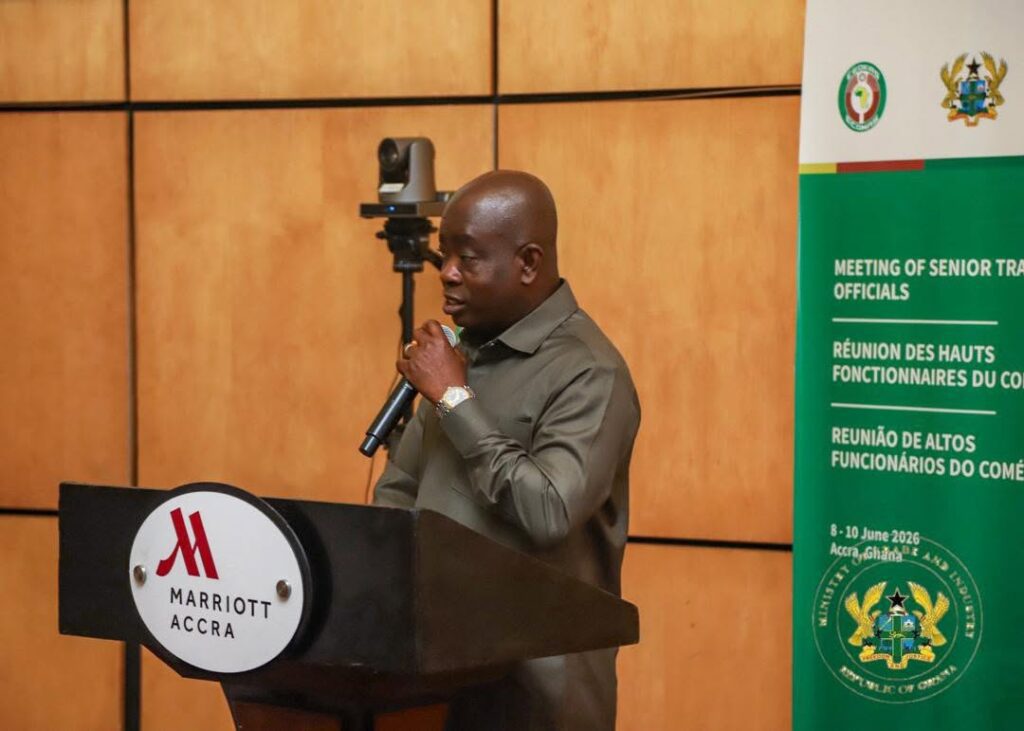
Opening the high-level meeting on behalf of the host nation, the Deputy Minister for Trade, Agribusiness and Industry, Hon. Sampson Ahi, welcomed the regional delegates and trade experts with a sharp assessment of the contemporary global landscape, emphasizing the need for a united economic outlook for the sub-region.
“He described a stronger and more integrated ECOWAS market as an economic necessity, stressing that regional cooperation remains the most effective tool for building resilience, attracting investment, creating jobs, and improving the livelihoods of citizens across West Africa.
“Hon. Ahi urged member states to accelerate the implementation of regional and continental trade frameworks, particularly the African Continental Free Trade Area (AfCFTA), while addressing persistent non-tariff barriers and protecting the integrity of the ECOWAS Customs Union and Common External Tariff”
Ministry of Trade, Agribusiness and Industry
As traditional international trading systems face severe structural strains from rising protectionist measures, complex geopolitical tensions, and localized supply chain disruptions, West African nations must look inward to consolidate their internal marketplace and construct collective economic resilience.
The opening session focused on the systemic challenges threatening West African fiscal stability. In an environment where global growth is slowing and international logistics routes are facing consistent operational blockages, individual West African economies face heightened exposure if they attempt to navigate these headwinds in isolation.
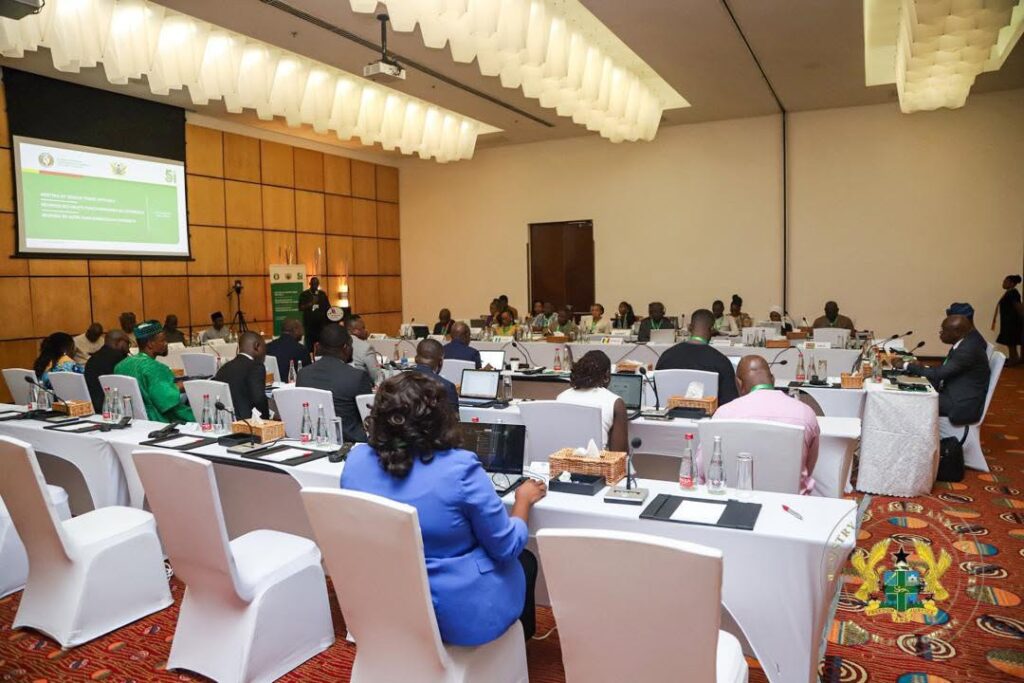
To translate the much-needed solidarity into measurable corporate growth, the assembly focused on the operational realities encountered by private-sector operators moving goods across West African borders.
Representatives of the ECOWAS Commission strongly reinforced the host nation’s stance, highlighting the region’s immense human capital reserves and its vast, unexploited natural resource wealth.
The Commission argued that the primary administrative hurdle is no longer a lack of commercial potential, but rather the urgent need to completely harmonize conflicting national trade policies and establish a frictionless, cross-border corridor for corporate capital, finished manufactures, and professional services.
Bridging the Implementation Gap
The core challenge facing the regional trade bloc remains the visible disconnect between high-level policy formulation and practical, border-level execution. This operational friction was brought directly to the floor by the leadership of the ECOWAS Commission.
Speaking on behalf of the regional body, the ECOWAS Director of Trade, Mr. Kolawole Sofola, presented an objective analysis of West Africa’s current position within international commerce, noting that while the wider African continent continues to display remarkable resilience and stays securely positioned for long-term growth, domestic administrative failures are limiting this expansion.
Mr. Sofola brought forward critical feedback gathered during the regional consultations conducted during ECOWAS’ 50th Anniversary celebrations.
According to him, these widespread institutional audits revealed deep, growing concerns among private-sector business owners, logistics operators, and everyday citizens regarding the slow pace of executing regional integration commitments.
Despite years of legal protocols meant to facilitate the unhindered movement of people and commodities, local enterprises continue to encounter costly non-tariff barriers, arbitrary custom inspections, and slow compliance at national border posts, which artificially raises the cost of doing business within West Africa.
To resolve these structural bottlenecks, the senior trade officials directed their focus toward aligning sub-regional rules with wider continental trade architectures, specifically the ongoing rollout of the African Continental Free Trade Area (AfCFTA).
Because the AfCFTA aims to unite the entire continent into a single multi-trillion-dollar trading bloc, the Accra delegates argued that sub-regional communities like ECOWAS must act as the primary, highly synchronized engines of this expansion.
This requires member states to aggressively accelerate the dismantling of domestic non-tariff barriers while fiercely defending the institutional integrity of the ECOWAS Customs Union and the uniform application of the Common External Tariff (CET).
Hon. Sampson Ahi strongly urged the technical committees to confront these domestic protectionist tendencies directly, noting that allowing individual member nations to implement unilateral import restrictions or maintain arbitrary border fees directly destabilizes the collective bargaining position of the entire trade bloc.
The Ministry’s position is that the long-term economic gains of a completely frictionless, 400-million-person regional market far outweigh any short-term revenue collected through localized border delays, and that securing the customs union is a mandatory prerequisite for West African firms to successfully scale outward into the wider continental arena.
According to the Ministry, the value of this three-day technical convention lies in its role as a factory for actionable trade law, as the various technical sub-committees have been task-oriented toward generating highly specific, binding recommendations across several modern commercial sectors.
A primary area of focus is the drafting of a unified West African post-WTO MC14 roadmap, ensuring that ECOWAS member states maintain a singular, coordinated position within the World Trade Organization to maximize their collective leverage in global tariff and market-access disputes.
Simultaneously, senior trade officials are to finalize detailed frameworks aimed at trade facilitation, regional trade partnerships, and the expansion of the ECOWAS Common Market.
Special emphasis will also be placed on the formalization of digital trade rules, recognizing that the rapid expansion of electronic commerce, cross-border digital financial services, and mobile payment systems in West Africa requires a clear, harmonized regulatory environment to eliminate double taxation and simplify digital documentation.
MoTAI noted that at the end of the three-day consultative assembly, these completed recommendations will be formally presented to the assembled ECOWAS Ministers of Trade during ECOMOTI-5 on June 11-12, giving the ministerial class a practical, data-driven blueprint to accelerate West African economic integration.
READ ALSO: Joey B Set to Release Highly Anticipated ‘Sexy Highlife’ EP on June 10