Ghana is set to host a landmark international conference aimed at advancing the global conversation on reparatory justice, with French President Emmanuel Macron among a distinguished list of world leaders expected to participate.
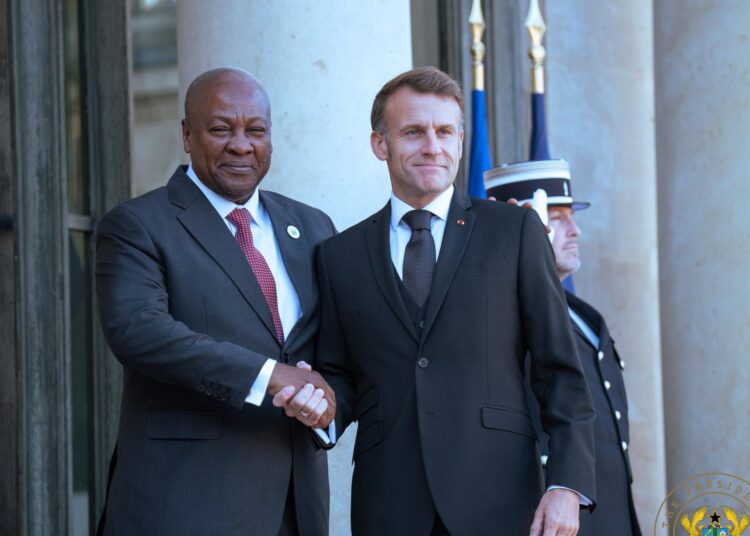
The Government of Ghana has confirmed that President Macron will address the High-Level Next Steps Conference on Reparatory Justice, which will be hosted in Accra under the leadership of President John Dramani Mahama.
The conference, scheduled to take place from June 17 to June 19, 2026, is expected to bring together heads of state, policymakers, legal experts, academics, civil society actors, and representatives from the African diaspora to discuss practical pathways toward reparatory justice for historical injustices committed against Africans.
The gathering follows a major diplomatic achievement led by Ghana at the United Nations General Assembly earlier this year.
Building on a Landmark UN Resolution
The Accra conference comes on the heels of the adoption of a Ghana-sponsored United Nations resolution that declared the transatlantic trafficking and enslavement of Africans as the gravest crime against humanity.
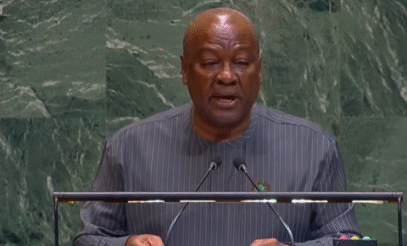
Adopted on March 25, 2026, the resolution received the backing of 123 member states and has been widely viewed as a significant step in international recognition of the enduring consequences of slavery and colonial exploitation.
The upcoming conference seeks to move beyond symbolic acknowledgement by exploring concrete measures that could shape a coordinated global framework for reparatory justice.
As African Union Champion on Reparations, President Mahama is expected to lead discussions focused on translating international commitments into practical action.
Macron’s Expected Contribution
According to the Government of Ghana, President Macron is expected to use the platform to encourage good faith dialogue on historical injustice against Africans.
He is also expected to outline France’s commitment to reparatory justice in the wake of the recently adopted United Nations resolution. His participation reflects increasing international engagement on questions of historical accountability and reconciliation.

France has in recent years taken steps toward addressing aspects of its colonial past, including supporting initiatives related to the return of looted African cultural artefacts and establishing joint historical research mechanisms.
President Macron’s address is anticipated to contribute to broader discussions about how former colonial powers can participate constructively in conversations surrounding reparations.
High Profile Global Participation
The conference is expected to attract several prominent international figures, reinforcing its significance on the global diplomatic calendar. The Chairperson of the African Union Commission, Mahmoud Ali Youssouf, has been confirmed as one of the high level speakers for the event.
His participation is expected to underscore the African Union’s commitment to advancing a unified continental position on reparatory justice.
Also confirmed is Namibian President Ndemupelila Netumbo Nandi Ndaitwah, whose country has been actively engaged in discussions regarding historical injustices stemming from colonial rule.

Senegalese President Bassirou Diomaye Faye is likewise expected to participate in the summit, contributing perspectives from West Africa on reparations and historical redress. In addition, Barbados Prime Minister Mia Amor Mottley has been announced as one of the distinguished speakers.
Barbados has emerged as a leading voice within the Caribbean Community on reparatory justice, advocating for comprehensive approaches that address both historical and contemporary inequalities.
Defining the Next Steps
Organisers say the conference is designed to formulate institutional and policy frameworks capable of advancing reparatory efforts across Africa and the Caribbean.
Participants are expected to explore legal pathways, governance structures, and collaborative strategies that can sustain momentum generated by the United Nations resolution. Discussions are also anticipated to focus on the broader meaning of reparations.
Beyond financial compensation, stakeholders are expected to examine issues relating to restitution, cultural renewal, debt relief, educational initiatives, and guarantees against the recurrence of similar injustices.

The conference seeks to promote a multidimensional understanding of reparatory justice that reflects the complexity of historical harms and their continuing impact.
Summit Programme and Juneteenth Commemoration
The three day conference will feature a combination of technical meetings, ministerial consultations, and high level political engagements.
The opening day on June 17 will focus on technical discussions involving experts and specialists working in areas related to international law, history, public policy, and reparations advocacy.
On June 18, heads of state and ministers will convene for the main summit sessions to deliberate on policy proposals and future directions. The conference will conclude on June 19 with a historic joint Juneteenth commemoration involving African and diaspora communities.
The event will take place at Christiansborg Castle in Osu, a site closely associated with the transatlantic slave trade. Organisers say the ceremony will provide an opportunity for remembrance, healing, reflection, and renewed commitment to justice.
Ghana’s Leadership Role
The hosting of the conference further positions Ghana at the forefront of international conversations surrounding reparatory justice.
Successive Ghanaian administrations have sought to strengthen connections between Africa and its global diaspora, particularly in relation to shared histories of enslavement and resilience.

For President Mahama, the conference represents an opportunity to consolidate international support around a common agenda that seeks both historical recognition and practical outcomes.
As preparations continue, expectations remain high that the Accra summit will help define the next phase of the global reparations movement and establish a framework for sustained engagement among governments, institutions, and affected communities.
The conference is expected to reaffirm the principle that addressing historical injustices requires not only acknowledgement but also meaningful action aimed at promoting justice, dignity, and reconciliation.
READ ALSO: Iran Condemns World Cup Ticket Ban as Tensions Spill Into Football