The race to attract billions of dollars in private capital into West Africa’s mining and energy sectors is facing significant headwinds as investors become increasingly cautious about long-term commitments.
According to Stanbic Bank, a combination of regulatory delays, volatile commodity prices, and rising environmental, social, and governance (ESG) expectations is creating major obstacles to financing critical projects across the region.
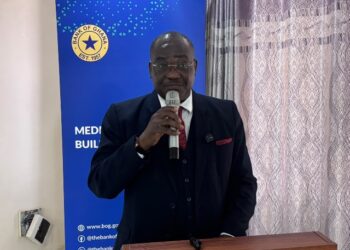
Speaking at the 19th West African Mining and Power Expo (WAMPEX) in Accra, Executive Vice President for Mining and Metals at Stanbic Bank, Lorraine Mac-Pod, outlined the key challenges slowing investment flows into one of Africa’s most strategic sectors.
Her remarks come at a time when governments across West Africa are aggressively seeking private sector participation to support mining expansion, energy infrastructure development, and broader industrial growth.
The Long-Term Capital Challenge
Mining projects remain among the most capital-intensive investments in the world.
From exploration and licensing to construction and production, projects often require billions of dollars and several years before investors begin to see returns.
Mac-Pod explained that this creates a natural mismatch between the financing needs of mining companies and the structure of traditional banking institutions.
Mac-Pod
“One of the challenges is the sheer scale of capital required for these projects. The payback period is often much longer, while most banks operate with deposits that are largely short to medium term in nature. That mismatch can limit the amount of long-term financing available to the sector.”
This challenge has become increasingly important as governments push for larger mining and energy projects aimed at boosting exports, creating jobs, and supporting economic transformation.
Industry analysts note that without innovative financing structures and stronger participation from development finance institutions and private equity investors, many high-potential projects could struggle to reach completion.
Regulatory Delays Creating Costly Uncertainty
Beyond financing constraints, Stanbic Bank identified regulatory bottlenecks as one of the most significant barriers to investment.
Mining projects often require numerous permits, environmental approvals, and government authorizations before construction can begin. Delays in these processes can significantly affect project timelines and financing arrangements.
According to Mac-Pod, lengthy approval periods can disrupt carefully structured funding schedules and increase overall project costs.
Investors and lenders typically seek certainty before committing funds. When approval timelines become unpredictable, risk levels rise, making financial institutions more reluctant to deploy capital.
For countries competing for limited global investment dollars, delays can become a major disadvantage.

Frequent Policy Changes Shake Investor Confidence
Another concern highlighted by Stanbic Bank is the tendency of some jurisdictions to frequently revise tax policies, royalty structures, and mining regulations.
While governments often adjust fiscal regimes to maximize revenue from natural resources, frequent changes can undermine investor confidence and create uncertainty around future project profitability.
“Predictability is very important for investors,” Mac-Pod stated. “When fiscal regimes change frequently, it creates uncertainty around project economics and can make financiers more cautious.”
Mining projects are typically planned over decades rather than years. Investors therefore place significant value on policy consistency and transparency.
Experts argue that countries offering stable regulatory environments are more likely to secure long-term investment commitments and attract global mining companies looking to expand their operations.
Commodity Price Swings Add More Risk
Global commodity markets continue to experience significant fluctuations, driven by geopolitical tensions, economic conditions, supply chain disruptions, and shifts in demand.
For mining companies, these price swings can dramatically alter projected revenues and profitability.
Mac-Pod noted that fluctuating mineral prices remain a key concern for financiers evaluating project viability.
A sharp drop in commodity prices can reduce cash flows and extend project payback periods, increasing the risk profile of investments.
However, she explained that financial risk management tools such as hedging can help mitigate some of these challenges and provide greater certainty for both investors and lenders.
ESG Now Determines Who Gets Funded
Perhaps the most striking message from Stanbic Bank was the growing importance of environmental, social, and governance standards in investment decision-making.
What was once viewed primarily as a compliance requirement has evolved into a critical factor determining access to capital.
“The ESG bar is rising,” Mac-Pod emphasized. “ESG is no longer a compliance overlay; it is a credit determinant.”
She made it clear that projects failing to meet ESG expectations face significant funding challenges. “If a project does not pass our ESG screening, it is unlikely to be funded,” she said.
“Every transaction is assessed through an ESG lens to ensure it meets the standards required by investors and financial institutions.”
The statement reflects a broader global trend where investors increasingly prioritize sustainability, responsible resource management, community engagement, and strong governance practices.
The Winners Will Be Those Who Offer StabilityAs West African nations compete to attract mining and energy investment, the message from industry stakeholders is becoming increasingly clear.
Countries that provide regulatory certainty, transparent governance structures, predictable fiscal policies, and strong ESG frameworks will be best positioned to attract private capital.
The discussions at WAMPEX underscored the growing recognition that investment decisions are no longer based solely on resource potential. Stability, sustainability, and investor confidence have become equally important.
With billions of dollars in potential investment at stake, governments across the region may need to accelerate reforms if they hope to win the race for mining finance and unlock the full economic benefits of their natural resources.
READ ALSO: Iran Condemns World Cup Ticket Ban as Tensions Spill Into Football