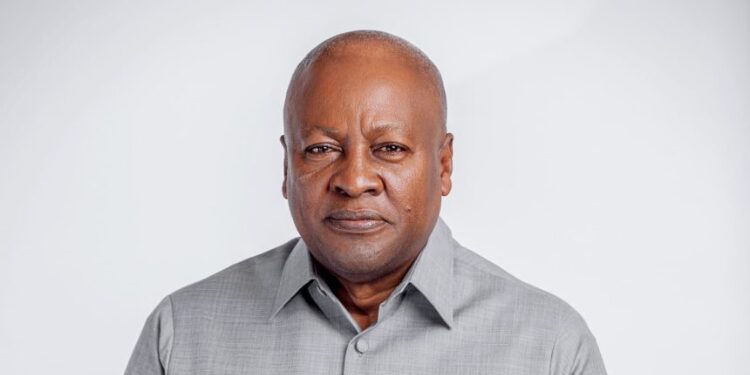
President John Dramani Mahama continues to enjoy the support of a majority of Ghanaians, with a new nationwide survey by the Institute of Economic Affairs (IEA) placing his job approval rating at 58.9 percent.
The findings, contained in an IEA press release issued on Wednesday, June 10, indicate that while public approval of the President remains high, citizens increasingly expect the country’s improving economic indicators to translate into tangible benefits in their daily lives.
President Mahama is currently eighteen months into his administration after assuming office in January 2025. During this period, the government has recorded notable improvements in several key economic indicators.
According to the IEA, inflation declined significantly from 23.5 percent in January 2025 to approximately 3.4 percent by April 2026. The Ghana cedi also appreciated by 26 percent against major international currencies over the same period.
Additionally, the Bank of Ghana’s policy rate fell from 27 percent to 14 percent, while average commercial bank lending rates declined from around 32 percent to approximately 20 percent. Ghana’s debt-to-GDP ratio also dropped from 61.8 percent at the end of 2024 to 45.3 percent by the end of 2025.

Economic Gains Earn International Recognition
The IEA noted that these economic gains have earned international recognition, with Fitch, Moody’s and Standard & Poor’s all upgrading Ghana’s sovereign credit rating, marking the country’s first triple ratings upgrade in several years.
To assess public sentiment on President Mahama’s performance, the IEA conducted a nationwide poll in May 2026 involving more than 1,000 respondents across all sixteen regions of Ghana.
The survey found that 58.9 percent of respondents approved of the President’s handling of his job, while 28.4 percent disapproved. Another 12.8 percent said they had no opinion. Although the latest approval rating remains positive, it reflects a decline from the 68 percent recorded in December 2025.
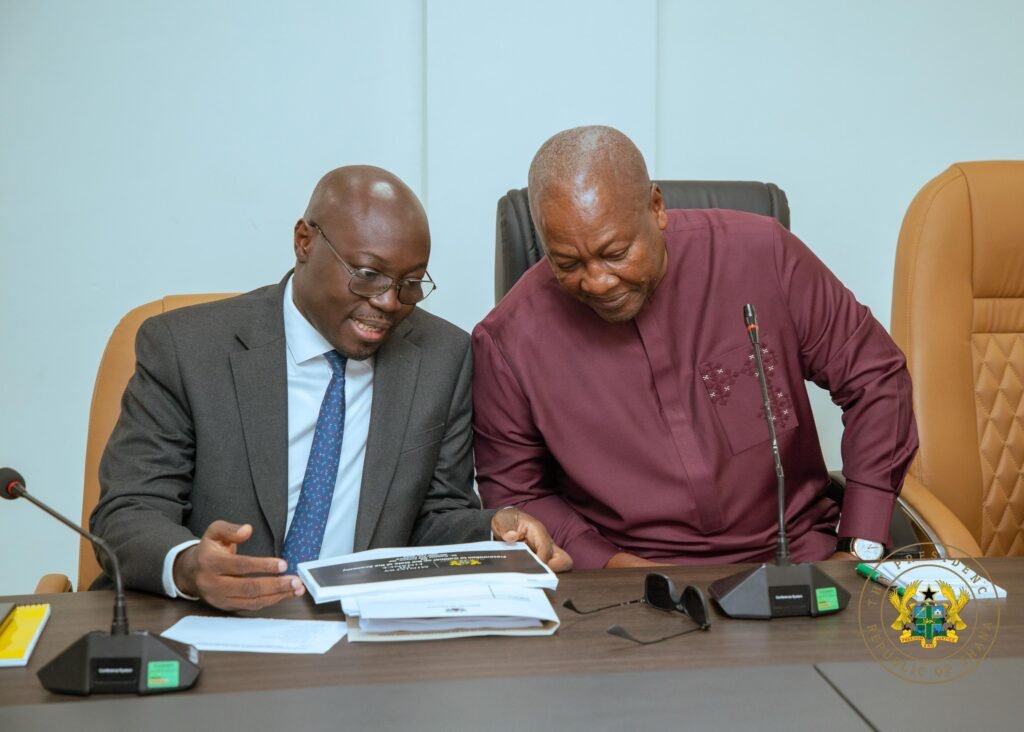
According to the IEA, the reduction suggests that while Ghanaians continue to support the President’s leadership, they are becoming increasingly expectant that the economic progress achieved at the national level will be reflected in improved living conditions.
Among respondents who approved of President Mahama’s performance, 73.5 percent cited the economy as the primary reason for their support. The findings suggest that government efforts to stabilise prices, strengthen the cedi and restore investor confidence have resonated strongly with the public.
Road infrastructure emerged as the second most important reason for approval, accounting for 16 percent of responses. Energy and electricity issues represented 2.7 percent of positive assessments, while 2.1 percent pointed to anti-corruption efforts. Another 6.1 percent cited other factors.
Economy, Power Supply, and Corruption Undermine Mahama’s Job Approval
The survey also highlighted the concerns of those dissatisfied with the government’s performance. Among respondents who disapproved of President Mahama’s stewardship, 30.9 percent identified the economy as their main concern.
The IEA explained that this may not necessarily represent a rejection of the government’s macroeconomic achievements but could instead reflect the reality that many households have yet to experience lower living costs, improved incomes or increased employment opportunities.
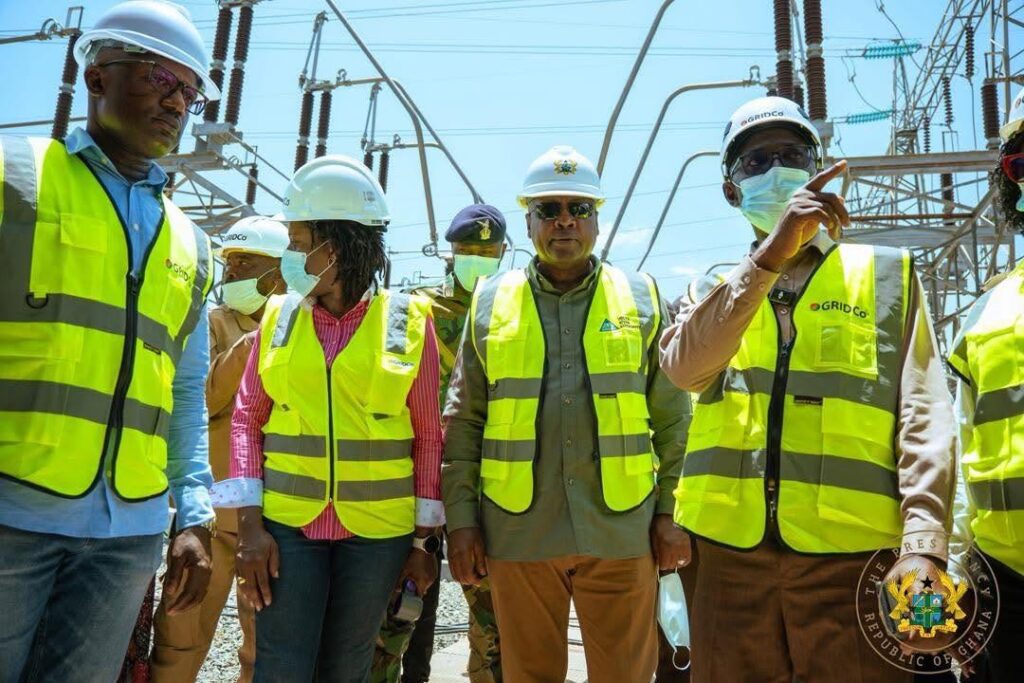
Electricity supply was cited by 29.9 percent of respondents who disapproved of the President’s performance. The poll was conducted shortly after temporary power supply challenges in May 2026, which resulted in frequent outages affecting homes and businesses in parts of the country.
Corruption was another major concern, with 19.1 percent of disapproving respondents citing it as a reason for their dissatisfaction. The findings indicate that many Ghanaians continue to expect stronger and more visible action from government in addressing corruption-related issues.
A Population Broadly Supportive but Highly Expectant
In its summary, the IEA stated that the survey findings point to a population that remains broadly supportive of President Mahama’s leadership while holding high expectations for the future.
“The findings suggest that Ghanaians are broadly supportive of the President’s leadership but are expectant that the progress recorded at the macro level will increasingly be felt in their daily lives.”
Institute of Economic Affairs
The latest poll provides an important snapshot of public opinion midway through President Mahama’s second administration, highlighting both confidence in the government’s economic direction and growing demands for improvements that directly impact the everyday lives of citizens.
READ ALSO: Ghana’s Economy Surges 6.4% as Key Industries Deliver