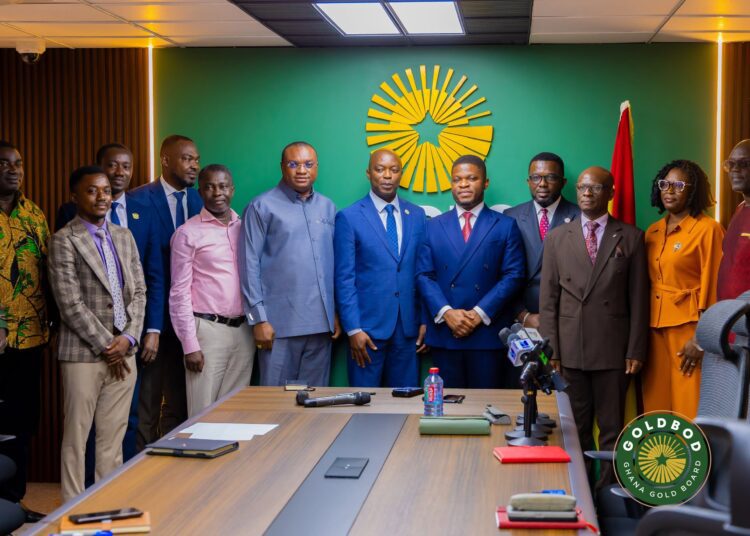
Ghana Gold Board has launched a strategic national reclamation programme, forging a critical partnership with the Ministry of Defence and the Ghana Army Engineering Regiment to restore lands devastated by illegal small-scale mining activities, commonly referred to as ‘galamsey’.
This ambitious initiative marks a pivotal shift in the Board’s operational mandate, moving beyond the traditional procurement of gold for foreign exchange reserves to actively addressing the environmental degradation that has long plagued the nation’s mineral-rich landscapes.
By aligning with the military’s technical capabilities, the Gold Board aims to reverse the ecological damage left in the wake of unregulated extraction, ensuring that the country’s natural capital is not sacrificed on the altar of short-term economic gain.
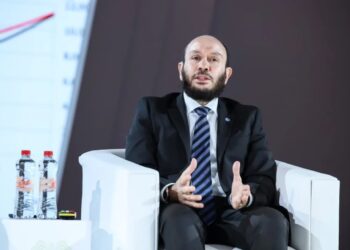
“So the Gold Board has initiated a national programme for the reclamation and restoration of degraded mining lands and has engaged the Ghana Army Engineering Regiment through the Ministry of Defence to undertake reclamation works, pit filling, grading, land reshaping, compaction and site civilisation works among other civil engineering works within certain designated areas.”
Ghana GoldBod CEO, Sammy Gyamfi

This initiative is set to deploy the Ghana Army Engineering Regiment to undertake extensive remediation works, including pit filling, land reshaping, compaction, and site civil engineering across designated hotspots nationwide.
The programme arrives as a direct response to the alarming state of Ghana’s environment, where vast tracts of forest reserves have been compromised by the unchecked activities of both illegal miners and irresponsible players within the large-scale mining sector.
The effort begins in earnest at the Tano-Nimiri Forest Reserve, a site that has transitioned from a protected ecological sanctuary to an infamous symbol of environmental distress.
The project’s primary focus is to stabilize these damaged areas, preventing further erosion and water contamination, while concurrently laying the groundwork for long-term land restoration and community safety.
Restoring the Ecological Integrity of Forest Reserves
The ecological devastation caused by illegal mining extends far beyond the immediate removal of topsoil; it creates a cascade of environmental failures that threaten the country’s biodiversity and climate resilience.
When miners strip away the vegetation cover and excavate the earth, they remove the primary mechanism for carbon sequestration the forest’s ability to absorb greenhouse gases.
The Gold Board’s intervention is essential because the natural recovery of these sites is nearly impossible without systematic human intervention.

By deploying the engineering regiment to perform land reshaping and compaction, the programme addresses the physical scars of mining that cause severe erosion and siltation of vital water bodies.
Forest reserves like Tano-Nimiri are not merely timber stocks; they are complex ecosystems providing essential services, including water purification, soil fertility maintenance, and habitat for endangered species.
Economic Resilience and Foreign Exchange Stability
While the primary driver of this programme is environmental restoration, the economic implications are profound.
Ghana’s economy relies heavily on the agricultural sector, particularly cocoa production, which is increasingly threatened by the encroachment of illegal mining onto farmlands.

By reclaiming these lands, the Gold Board is effectively protecting the primary livelihoods of thousands of smallholder farmers whose yields are often decimated by the pollution of water sources and the encroachment of mining pits.
“Securing the land is synonymous with securing the economic future of our rural populations,” the Gold Board suggests, emphasizing that sustainable mining must coexist with, rather than cannibalize, other pillars of the economy.
A Multi-Sectoral Approach to Sustainable Mining
The partnership between the Gold Board, the Ministry of Defence, and other key stakeholders represents a sophisticated, multi-sectoral approach to a problem that has historically been tackled in silos.
Relying on the Ghana Army Engineering Regiment brings a level of discipline, logistical capability, and speed that is rarely found in civilian contracting.
This “civil-military” cooperation is designed to be a comprehensive model for future land management, ensuring that reclamation is treated as a matter of national security rather than a mere administrative hurdle.
The commitment to “site civilisation works” suggests that this is not just about moving dirt; it is about infrastructure and future land-use planning.

Looking forward, this reclamation drive must serve as a catalyst for a more robust regulatory framework.
The Gold Board’s initiative demonstrates that the regulator is no longer a passive observer of the mining industry but an active participant in the lifecycle of mining operations. By bridging the gap between mining revenue generation and environmental responsibility, this programme could set the benchmark for the entire West African sub-region.
As the Gold Board continues to scale its operations at Tano-Nimiri and beyond, the success of this programme will depend on sustained community engagement and the enforcement of laws that prevent these restored lands from being re-invaded.
It is a bold, necessary step toward ensuring that the gold mined today does not come at the cost of the environment of tomorrow.
READ ALSO: US Ruling on Ofori-Atta Does Not Halt Ghana Investigations — Tuah-Yeboah