
Energy Economist Aephaniel Owusu-Agyemang has cautioned Ghanaian consumers against anticipating massive, prolonged reductions in ex-pump petroleum prices despite the state’s aggressive drive toward local crude oil refining.
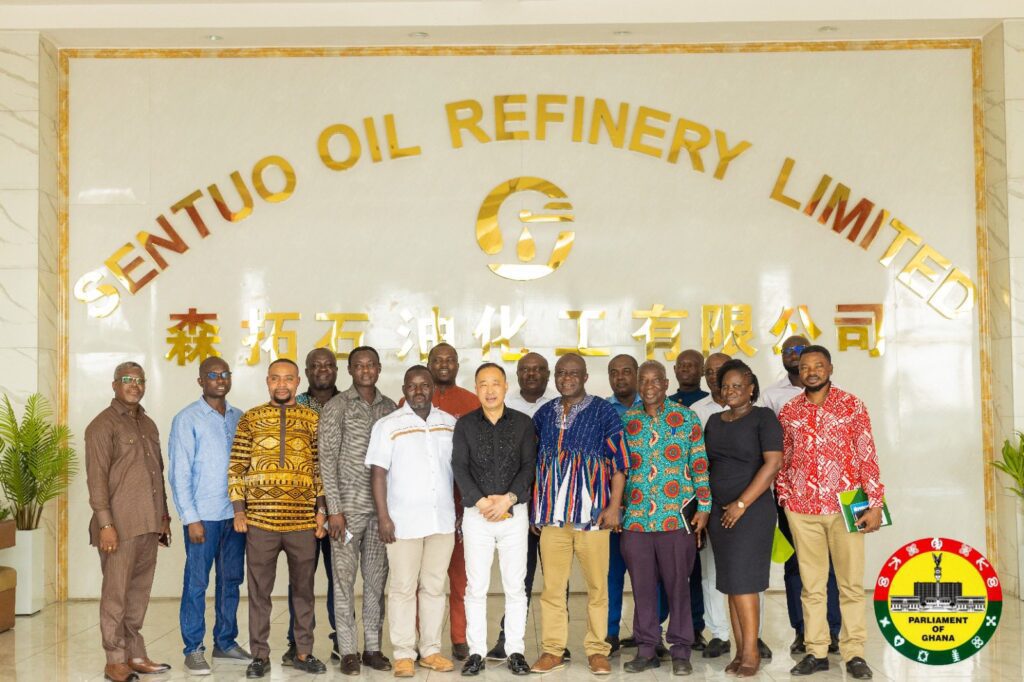
Speaking on the heels of recent high-profile commissioning ceremonies involving Sentuo Oil Refinery and ongoing strategic discussions surrounding the operationalization of the Tema Oil Refinery (TOR), Owusu-Agyemang noted that while localized processing signals a triumph for domestic value addition, its immediate relief at the pump will remain modest.
The expert’s warning surfaces amid heightened public optimism that substituting imported refined petroleum products with locally processed crude would automatically translate into heavily slashed and stable fuel bills for domestic consumers.
“But it’s not something that consumers and households should think that it is going to be sustainable in the long run.So it’s going to be something marginal due to the fact that there are other factors that affect oil pricing in Ghana. And all these things are going to come into force when we are pricing oil. And so households should just know that there are going to be a marginal decrease in terms of oil prices.”
Energy Economist Aephaniel Owusu-Agyemang
Mr. Owusu-Agyemang explained that while the localized refining ecosystem systematically eliminates specific overhead costs, it is incapable of insulating the domestic market from external shocks.

Bulk Distribution Companies (BDCs) and local oil importers are poised to enjoy immediate capital relief through the total omission of international marine freight charges, ocean losses, and specific port-bound import taxes.
However, the economist stressed that these logistical omissions only alter a fraction of the final pricing template, meaning that short-term price drops at retail stations will be marginal and vulnerable to macro-economic forces.
The Illusion of Import Cost Elimination
The Chamber of Bulk Distributors has actively downplayed expectations of a fuel price crash, validating arguments that localized processing does not equal total financial immunity.
When local crude is diverted to facilities like the Sentuo plant or the Tema Oil Refinery, “the only part where it’s going to come down is the fact that most of these importers are not going to pay freight” or typical import taxes.
While this elimination of shipping costs provides a temporary breathing room for the supply chain, the operational costs of local refineries including utility tariffs, equipment maintenance, and domestic distribution margins frequently counter-balance these logistics savings.
Furthermore, industry data reveals that domestic refining infrastructure often operates under complex joint-venture equities where crude is purchased at commercial rates.

Even when processing domestic crude, local refineries must source their raw inputs using international benchmarks, meaning that the foundational price of the crude entering Ghanaian refineries remains tied to global supply strings.
Consequently, the relief felt by households from “not paying import taxes and all that” is a localized variable that cannot completely overthrow the baseline cost of production.
Global Benchmarks and the Foreign Exchange Trap
Data in energy economics reveals that local refining cannot guarantee price sustainability because the government’s oil pricing matrix is fundamentally dictated by external determinants beyond sovereign jurisdiction.
Chief among these is the volatile movement of global crude oil prices, traditionally benchmarked against International Brent crude.
Whether Ghana imports finished gasoline or refines its own Jubilee or TEN field crude locally, the baseline valuation of the commodity is subject to OPEC+ production quotas, geopolitical tensions, and global demand cycles. Local refineries cannot sell under production costs without relying on unsustainable state subsidies.
More critically, the Ghanaian downstream petroleum sector remains severely exposed to currency fluctuations and foreign exchange (FX) illiquidity.
Because crude oil trading on the international market is exclusively denominated in US Dollars, local refiners must constantly secure massive tranches of foreign exchange to settle upstream obligations and purchase parts.
When the local currency depreciates against the dollar, the cost of processing and distribution escalates proportionally, neutralizing whatever financial advantages were gained by bypassing maritime shipping routes.
Balancing Value Addition and Market Realities
The government’s pursuit of value addition within the hydrocarbon space remains an admirable economic milestone for industrialization and national pride.
Developing a robust, self-reliant refining sector retains wealth within the borders, fosters technical capacity, and enhances national energy security during global supply chain disruptions.
However, managing public expectations is crucial for policy stability, as citizens must decouple the concepts of “national self-sufficiency” and “cheap retail commodities.”
Ultimately, petroleum pricing in Ghana is a multifaceted construct heavily weighted by fixed statutory levies, domestic distribution margins, global market forces, and currency health.
While local refining marks a historic step forward, households must brace for an era where fuel prices remain dynamic.
As the economist concluded, the anticipated relief will result in a “marginal decrease in terms of oil prices,” serving as a minor buffer rather than a permanent shield against global market realities.
READ ALSO: GSA, GNCCI Solidify Alliance to Enhance Compliance and Global Market Competitiveness