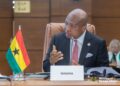
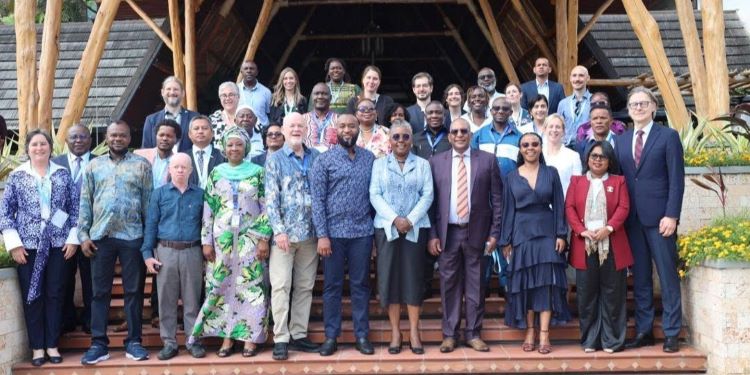
Speaking at the High-Level African Blue Food Leadership Roundtable during the Our Ocean Conference 2026 in Mombasa, Kenya, Ghana’s Minister for Fisheries and Aquaculture Development, Hon. Emelia Arthur, has delivered a powerful and urgent call for heightened political commitment and substantial private-sector investments across the continent.
Far more than a localized fisheries issue, Hon. Arthur framed the sustainable development of marine and inland aquatic resources as a matter of absolute national security and systemic economic transformation for both Ghana and the wider African territory, positioning “blue foods” as a cornerstone in combating malnutrition and climate change.
“The Minister showcased Ghana’s ongoing reforms to strengthen fisheries governance and improve transparency, expand aquaculture production to meet rising demand, and intensify the fight against Illegal, Unreported and Unregulated (IUU) fishing.
“She also announced the inauguration of Africa’s first Blue Food Innovation Hub, established in Ghana in collaboration with the World Economic Forum and the Chamber of Aquaculture Ghana”
Ministry of Fisheries and Aquaculture Development
The gathering highlighted the reality that aquatic food networks serve as an irreplaceable lifeline for millions of citizens across the African continent. Fisheries and aquaculture operations provide vital livelihoods, household income, and fundamental dietary security to vulnerable coastal and inland populations.
Hon. Arthur emphasized that women and youth are the primary operational drivers behind critical segments of the aquatic value chain, particularly in processing and domestic distribution. Consequently, safeguarding these aquatic systems directly protects the economic survival of millions of families while building a more inclusive framework for regional development.

The Minister showcased the inauguration of Africa’s first Blue Food Innovation Hub to explain the unlocking of this massive economic potential. This specialized incubator is to accelerate commercial innovation, support inland aquaculture enterprises, and systematically clear bottlenecks to financial access.
According to Hon. Arthur, the initiative has established a clear, milestone-driven investment target, aiming to mobilize at least ten million US dollars in private sector capital by the year 2032 to ensure the long-term viability of small-scale operators.
The framework relies on a multi-pronged development model. Through its dedicated startup accelerator programme, deep academic research partnerships, and enhanced mechanisms for direct technology transfer, the hub seeks to empower small-scale fishers and aquaculture entrepreneurs.
The government aims to build a modern, self-sustaining blue economy capable of matching rising domestic demand while offering a highly replicable operational blueprint for neighboring West African nations by reinforcing the competitiveness and structural resilience of Ghana’s aquatic food systems.
Confronting Disruptions and Gaps
However, the path to a sustainable blue food revolution faces intense environmental headwinds that require immediate, cross-border intervention.
Hon. Arthur addressed the severe climate challenges currently threatening African maritime territories, citing rising ocean temperatures, increasingly erratic and shifting rainfall patterns, and severe coastal erosion as urgent systemic risks to aquaculture and marine capture fisheries alike.

She argued that patch-work responses are no longer viable, and that sustainable blue food strategies must be deliberately, legally integrated into overarching national climate policies to insulate coastal communities from impending ecological disruptions.
In tandem with addressing climate risks, the Ministry of Fisheries and Aquaculture Development (MoFAD) is aggressively pushing for domestic regulatory reforms that will bring absolute transparency to ocean governance.
The government is intensifying its enforcement mechanisms in the campaign against IUU fishing practices, which have drained local resources and compromised the livelihoods of indigenous artisanal fishers, tightening vessel monitoring, expanding inland aquaculture production capacities, and overhauling fisheries governance frameworks.
Recognizing that the challenges facing the blue economy transcend national borders, the Minister concluded her presentation with a powerful appeal for continental solidarity and collective action.
She urged African nations to establish an African Network of Blue Food Champions to unify maritime policies, expand intra-regional trade, improve fisheries governance, and reduce post-harvest losses through shared infrastructure. The call resonated strongly with the international assembly of ocean diplomats and regional sector managers at the roundtable.
“Leaders enable the way, leaders challenge the status quo, and leaders encourage the heart. Let us be the leaders that enable the way,” Hon. Arthur charged.
The High-Level African Blue Food Leadership Roundtable brought together an influential coalition of global ocean dignitaries, confirming the international significance of Ghana’s policy positions.

The deliberative forum featured active participation from Peter Thomson, the United Nations Secretary-General’s Special Envoy for the Ocean, alongside Jón Erlingur Jonasson, the Special Envoy for the Ocean from Iceland, with continental leadership further represented by Keriako Tobiko of the African Union Development Agency-NEPAD, Hon. Hassan Joho of Kenya, Hon. Inge Zaamwani of Namibia, and Hon. Ahmed Saybom Kanu of Sierra Leone.
The collective presence of these key state planners underlined the growing continental consensus that the long-term success of African economic integration depends heavily on the synchronized management of its massive aquatic wealth.
READ ALSO: MTN MoMo Revenue Soars To GHS1.7 Billion