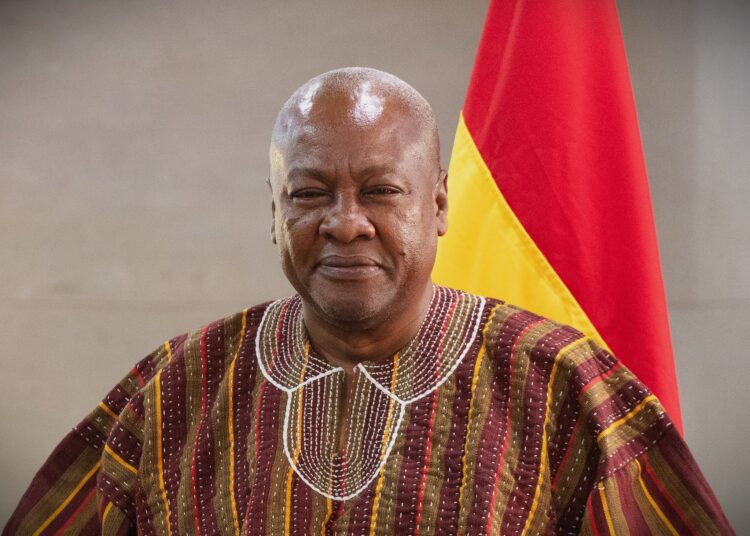
President John Dramani Mahama’s job approval rating has risen to 71 percent, marking the highest level recorded in Global InfoAnalytics’ national tracking polls, according to insights shared by the firm’s Executive Director, Musah Dankwa.
The June 2026 national tracking poll indicates that the President continues to enjoy widespread public support across the country, with voters in all regions approving of his performance in office despite emerging concerns about specific policy areas and governance challenges.
The latest figures suggest a strengthening of public confidence in the President’s leadership at a time when the country continues to navigate economic recovery and implement key policy reforms.

According to Mr Dankwa, the approval rating represents a new high in the polling firm’s national assessments of the President’s performance.
“President job approval climbs to 71%, a new high in national tracking poll as all regions approve of his job performance despite huge drop in NDC party affiliation in the Ashanti region”.
Executive Director for Global InfoAnalytics Mussah Dankwa
Majority Believe Country Is on the Right Path
The poll also revealed that a majority of Ghanaians believe the country is moving in the right direction. According to the findings, 66 percent of respondents said Ghana was headed in the right direction, representing a slight increase from the 65 percent recorded in March 2026.
Meanwhile, the proportion of respondents who believed the country was moving in the wrong direction declined marginally from 28 percent to 27 percent over the same period.
The findings point to sustained optimism among the electorate regarding the country’s trajectory under the current administration. Regional variations, however, paint a more nuanced picture of public sentiment.

While voters in most regions expressed confidence in the country’s direction, respondents in the Ashanti and Northern regions appeared more divided.
In the Ashanti Region, 47 percent of respondents said the country was headed in the wrong direction compared with 46 percent who believed it was moving in the right direction. Similarly, in the Northern Region, 49 percent said the country was on the wrong path, while 47 percent believed otherwise.
Living Standards Show Signs of Improvement
The June tracking poll also assessed public perceptions regarding changes in household living conditions. A majority of respondents reported improvements in their standard of living compared with the previous year.
According to the survey, 57 percent of voters said their living standards had improved over the past twelve months. Although this represented a slight decline from the 58 percent recorded in March, it remained significantly higher than the proportion of respondents expressing dissatisfaction.
The percentage of respondents who believed their living conditions had worsened remained unchanged at 16 percent. Across most regions, voters indicated that their circumstances had improved. The Ashanti Region again stood out as an exception, with public opinion nearly evenly divided.

Thirty nine percent of respondents in the region said their living standards had improved, while 38 percent believed their situation had deteriorated.
The findings suggest that although perceptions of economic wellbeing have improved nationally, regional disparities continue to shape voter experiences.
Ghanaians Remain Optimistic About the Future
Beyond current conditions, the poll measured expectations regarding future economic prospects. The results showed that public optimism remained strong.
Sixty eight percent of respondents expressed confidence that their standard of living would improve over the next twelve months. This figure remained unchanged from the March survey.

Meanwhile, the proportion of voters who did not expect improvements in their living conditions declined from 22 percent to 21 percent. The findings indicate that many Ghanaians remain hopeful about future opportunities despite ongoing economic pressures.
Voters Identify Areas of Concern
Despite the generally positive assessments captured by the survey, respondents also highlighted several areas where they believe government performance requires improvement. The poll identified unemployment as one of the leading concerns among voters.
Respondents also pointed to the broader economy, persistent power supply challenges commonly referred to as dumsor, the implementation of the Operation Recover All Loot initiative, illegal mining activities known as galamsey, and the rollout of the proposed 24-hour economy policy as areas where they expected stronger government action.

Mr Dankwa noted that these concerns represented important signals that policymakers should not overlook. The findings suggest that while voters remain supportive of the administration overall, they continue to demand tangible progress on issues affecting livelihoods and national development.
Interestingly, respondents appeared less concerned about issues such as fuel pricing, cocoa pricing, the cost of living, and currency stability compared with previous periods.
Poll Results Contrast with Earlier Survey
The latest Global InfoAnalytics findings differ from results published earlier by the Institute of Economic Affairs. A nationwide poll released by the Institute of Economic Affairs on June 10, 2026, placed President Mahama’s job approval rating at 58.9 percent.
That survey represented a decline from the 68 percent approval rating recorded by the institute in December 2025. The IEA poll also found that 28.4 percent of respondents disapproved of the President’s performance, while 12.8 percent expressed no opinion.
Among those who approved of the President’s performance, 73.5 percent cited the government’s handling of the economy as the primary reason for their support, while 16 percent pointed to infrastructure development initiatives.
Conducted across all sixteen regions in May 2026, the IEA survey sampled more than 1,000 respondents nationwide. While the differing results reflect variations in methodology and timing, both surveys underscore the importance of public opinion in assessing government performance.
For the Mahama administration, the latest Global InfoAnalytics poll presents encouraging signs of public confidence. At the same time, it serves as a reminder that sustaining voter approval will depend not only on maintaining economic stability but also on addressing the concerns that continue to resonate with citizens across the country.
READ ALSO: U.S, Iran To Sign Peace Deal On Friday