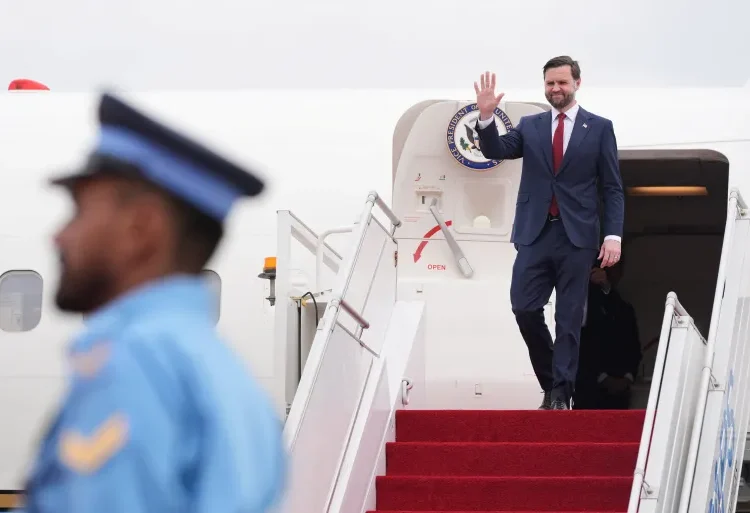
U.S. Vice President JD Vance has pointed to falling oil prices in the immediate aftermath of the announcement of a ceasefire deal between US and Iran.
Vance said he hoped energy prices would decrease, and that he plans to attend the signing ceremony next week in Switzerland.
He also a touted “new era” for the Middle East and praised President Donald Trump for the agreement.

“What the President has done is create the real space to transform that region. And now, hopefully a new era with the Iranians. I think we can safely say, with confidence, that Iran will never have a nuclear weapon… This is just a great thing for the American people.”
JD Vance
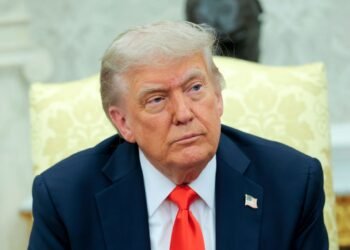
This comes as praise from supporters poured in for the US President. Though the specific terms of the agreement remain unknown, the newly struck deal to end the US-Israel war on Iran was hailed as a strategic victory by Trump and his allies.
US Secretary of State, Marco Rubio connected the announcement to Trump’s 80th birthday on Sunday. “America is lucky to have a leader with such incredible courage, remarkable strength, an unmatched sense of humor, and an unparalleled love of country,” he wrote on X. Several Republicans took to social media to hail Trump as the “deal-maker in chief.”

Congressman Robert Aderholt echoed Trump’s claims that the pending deal with Iran would place more limits on Tehran’s nuclear programme than the 2015 Joint Comprehensive Plan of Action (JCPOA).
That deal, from which Trump withdrew in 2018, was reached under the administration of US President Barack Obama. It saw Tehran curtail its nuclear programme in exchange for sanctions relief. Tehran has for years maintained that it does not seek a nuclear weapon. “Unlike the agreement reached under the Obama administration, this deal will not allow Iran to continue enriching uranium and build up the components necessary to build a nuclear weapon,” Aderholt said.
However, there was no indication that the memorandum would include any immediate commitments on Tehran’s nuclear programme.
There are questions over which commitments would be included in the initial memorandum of understanding (MOU) to be signed on Friday, and which issues, such as Iran’s nuclear programme, would only be opened for negotiations after the deal is inked.
Both sides have said the initial deal would halt fighting on all fronts, including in Lebanon but Iranian officials have for days said the initial agreement would only serve as a launching point for 60 days of negotiations on Iran’s nuclear programme, as well as other deeply entrenched issues, including the future administration of the Strait of Hormuz.
Both sides have also offered varying accounts on when the US would begin releasing frozen assets and lift sanctions as part of any agreement. US officials have maintained that those actions would not be immediate and would occur only if certain commitments are met after a deal is signed.
Democrats Criticize War, Seek Clarity On Peace Deal
Meanwhile, Democrats questioned, as they have for months, whether launching the war alongside Israel on February 28 advanced US interests.
They welcomed the deal reached with Iran while arguing that the war was unnecessary and the agreement simply resets the situation to where it started but only after a devastating conflict.
Senator Chris Coons of Delaware said that while the deal moves the situation in the “right direction,” several questions remain. He warned that competing interpretations of what was agreed could pose risks.
“The fact that we have not seen any text of an agreement, while he and Iranian leaders once again say different things about what has been agreed, highlights why we need to see this deal immediately.
“While a ceasefire and negotiations are a positive development, so far this war of choice has only made American service members and civilians less safe and left many key questions unanswered or unaddressed.”
Chris Coons
Senator Chris Murphy, who serves on the Senate Foreign Relations Committee, said the deal is a “surrender to Iran” but the US should be “glad about it because every day this insane, illegal war continues, we get weaker.” “More war would just make things worse,” Murphy added.
Murphy noted that the only concession Iran made was on the reopening of the Strait of Hormuz, which was open prior to the conflict, and argued that Iran had already been committed under the JCPOA, an agreement Trump later abandoned.
The Trump administration had said that its objectives included degrading Iran’s military capabilities and destroying its nuclear programme. Trump and his top officials also said they hoped the war would foment regime change in Iran.
However, that did not happen, with experts saying the hardline government has become only more hardened in the war, despite the killing of Supreme Leader Ali Khamenei and dozens of other officials. Khamenei’s son, Mojtaba Khamenei, has since assumed his father’s role.
READ ALSO: MoFA to Bolster Food Security with Precision Farming and Fertilizer Distribution Initiative