

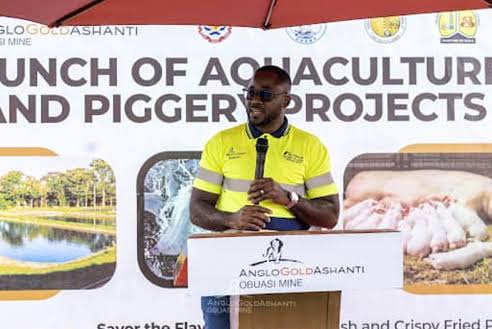
AngloGold Ashanti Obuasi Mine has commissioned a state-of-the-art piggery production centre at Sanso in the Obuasi Municipality, as part of efforts to promote sustainable livelihoods, enhance food security, and diversify local economic activities beyond mining.
The Sanso Piggery Production Centre, established under the mining company’s 10-Year Socio-Economic Development Plan, was officially inaugurated on Thursday at a ceremony attended by traditional leaders, government officials, agricultural experts, community members, and beneficiaries of the programme.
Speaking on behalf of the Mine, the Director of Sustainability Management, Edmund Oduro Agyei, said the project demonstrates the company’s commitment to creating lasting value in its host communities, well beyond the immediate footprint of mining operations.
At AngloGold Ashanti, our purpose is mining to empower people and advance societies. We believe that creating lasting value beyond mining requires investing in sectors that generate sustainable livelihoods and strengthen local economies.
Edmund Oduro Agyei, Director, Sustainability Management, AngloGold Ashanti Obuasi Mine
Building On An Earlier Success
Agriculture remains a key pillar of AngloGold Ashanti’s development agenda, with previous interventions including the Climate Resilience Oil Palm Plantation Programme (CROPP), support for Farmers’ Day celebrations, and the Piggery and Aquaculture Programme launched in 2025.
The Sanso facility did not emerge in isolation. According to Mr Oduro Agyei, the first phase of the piggery programme recorded remarkable success, with nine beneficiary farmers increasing their combined pig population from 173 to 428 animals, representing growth of about 171 percent.
That early performance appears to have given the company the confidence to scale up. Encouraged by the results, AngloGold Ashanti expanded the initiative through the construction of the modern production centre now commissioned at Sanso, moving the programme from a pilot phase into a more structured, permanent operation.
Inside The Facility
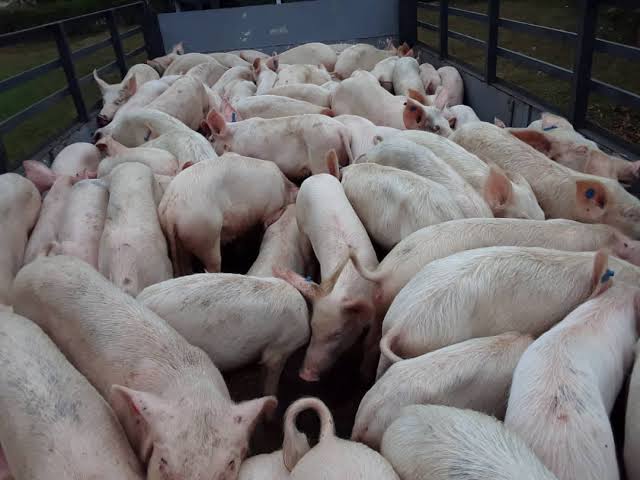
The facility comprises 20 modern pig pens, office and storage facilities, and quality breeding stock. It is also fully powered by solar energy, underscoring AngloGold Ashanti’s commitment to environmentally responsible and climate-smart agricultural development, a detail that fits into the company’s broader sustainability positioning beyond the mining sector itself.
The company disclosed that the project involved an investment of approximately GH¢1.49 million for construction works, while an additional GH¢1.37 million was spent on furnishing, foundation breeding stock, veterinary services, training programmes, and six months of feed support. Taken together, the figures point to a total investment north of GH¢2.8 million in the centre’s establishment and early-stage support.
Local Contractor, Local Capacity
Mr Oduro Agyei noted that the centre was constructed by X-Mell Construction, a local firm, as part of AngloGold Ashanti’s deliberate strategy to promote indigenous businesses, build local capacity, and create employment opportunities within its host communities.
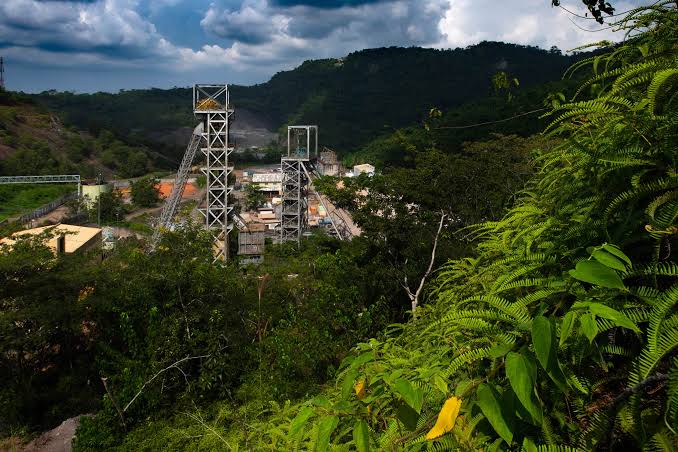
The decision to engage a local contractor rather than an external one reflects a broader pattern in how mining companies operating in Ghana have come under pressure to demonstrate local content commitments, not just in procurement of goods and services, but in the construction of community infrastructure itself.
Cooperative Management For Long-Term Sustainability
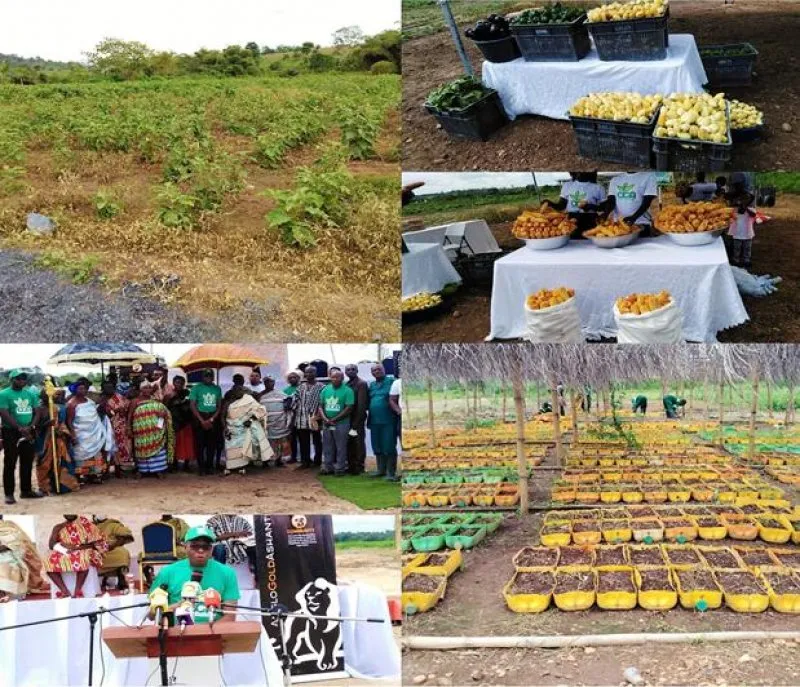
The facility will be managed by the Obuasi Municipal Co-operative Pig Farmers and Marketing Society Limited, whose members have undergone training in modern pig production techniques and cooperative management to ensure the long-term sustainability of the enterprise.
That governance structure matters. Community development projects tied to mining operations have historically struggled to outlive the initial enthusiasm and funding that accompanies their launch. By placing the centre under a trained cooperative society rather than leaving it solely dependent on continued company oversight, AngloGold Ashanti appears to be betting on a model designed to function independently once the company’s direct involvement tapers off.
Partnerships Behind The Project
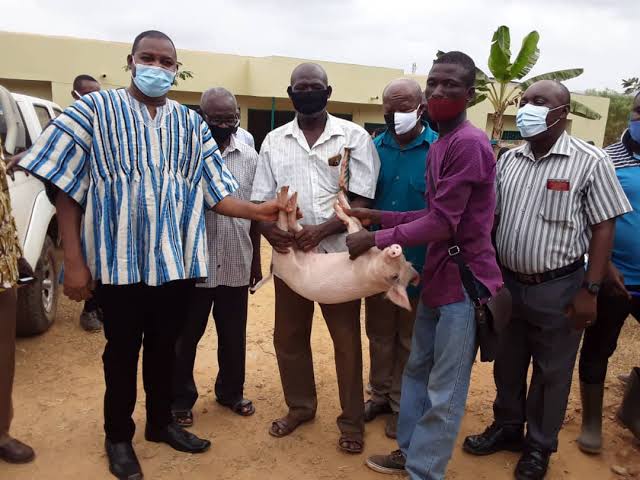
Mr Oduro Agyei expressed appreciation to the University of Cape Coast, the Municipal Assemblies, the Department of Agriculture and Veterinary Services, traditional authorities, and other partners for their support in bringing the project to fruition.
The involvement of an academic institution alongside government agricultural bodies suggests the centre was not simply a corporate social responsibility gesture, but one shaped with technical input on breeding, veterinary care, and farm management practices intended to give the enterprise a genuine chance at commercial viability.
A Model For Community-Led Agribusiness
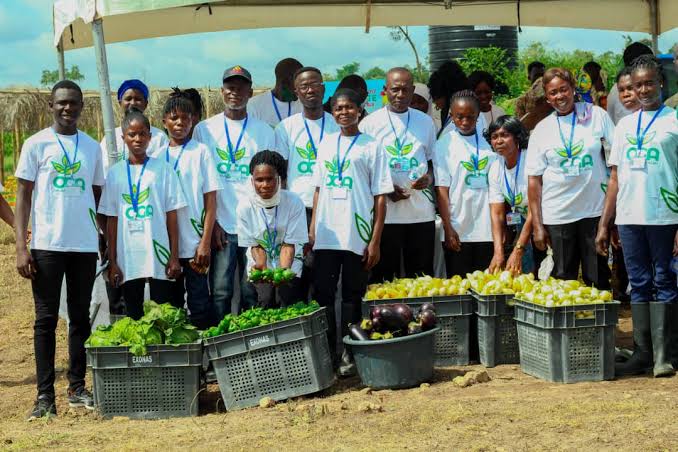
Mr Oduro Agyei urged beneficiaries to make good use of the opportunity and work collectively to transform the centre into a model for successful community-led agribusiness, rather than treating it as a one-off handout.
He described the commissioning as another milestone in AngloGold Ashanti Obuasi Mine’s efforts to create sustainable economic opportunities and build resilient communities capable of thriving beyond the lifespan of mining activities — a phrase that points to the long game underpinning the investment.
Mining, by its nature, is a finite activity. Ore bodies are depleted, operations eventually wind down, and host communities are left to find new sources of livelihood. Projects like the Sanso Piggery Production Centre represent an attempt, however modest in scale relative to the wider mining economy, to seed alternative economic activity ahead of that eventual transition, rather than waiting until closure is imminent to begin the search for what comes next.
READ ALSO: NALAG Launches Exercise Books program to Strengthen Basic Education Access